China’s Premier Presses Grain-Growing Provinces to Secure Autumn Harvest
02 September 2026, Beijing: Chinese Premier Li Qiang conducted a three-day inspection tour of the northeastern grain provinces of Heilongjiang and Jilin from August 24 to 26, urging local officials, researchers and farm operators to take all necessary measures to secure a bumper autumn harvest as the country’s most important grain-producing region enters its critical late-growing-season period.
According to the official government readout of the trip, Li visited Beidahuang Group’s Qixing Farm, a large state-linked agricultural operation, to examine soybean, corn and rice fields, and separately toured agricultural research institutes working on seed innovation and on protecting the region’s black soil, a naturally fertile soil type that underpins much of Heilongjiang’s grain output but has suffered degradation from decades of intensive cultivation. He also visited Chagan Lake to review ecological fishery work and an agricultural cooperative to look at farm business models used by smallholders working with larger operators.
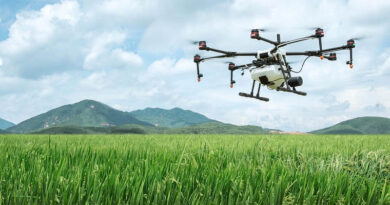
Li’s core message, consistent with longstanding Communist Party doctrine on food security, was that China must keep its rice bowl firmly in its own hands, a phrase Chinese leaders use to describe the goal of minimizing reliance on food imports. He called for stronger field management during this late-season period when crops are most vulnerable, more stable supply and pricing for agricultural inputs such as fertiliser and seed, faster adoption of artificial intelligence and other smart farming tools, and stronger disaster prevention capacity given weather risks facing the region this year.
Heilongjiang and Jilin together account for close to one-fifth of China’s total annual grain output, and the autumn harvest nationally typically represents roughly three-quarters of the country’s full-year grain production, making the two provinces’ late-season conditions disproportionately important to China’s overall food security numbers. The visit came against a backdrop of concern among Chinese officials and international observers about El Nino-linked weather volatility affecting major growing regions this year, as well as broader anxiety about global commodity and fertiliser supply chains that have been disrupted at points during 2026 by conflicts affecting shipping routes.
The tour sits within the broader mandate of China’s Ministry of Agriculture and Rural Affairs, which has run the ministry under Agriculture Minister Zhang Zhu since his appointment in April 2026, when he replaced Han Jun after a tenure of under two years. Zhang previously spent more than two decades in agricultural administration roles in Xinjiang and Ningxia before taking the national post. While MARA officials were not the primary voices quoted in coverage of this particular tour, the ministry is the agency responsible for translating the Premier’s field-level directives on input supply, disaster response and smart farming adoption into concrete programs at the provincial level.
For international agri-input suppliers and buyers, high-level Chinese government attention to grain security in its top-producing provinces is a signal worth tracking closely, because it typically precedes concrete policy action, whether that is expanded domestic input subsidies, adjusted fertiliser export controls to preserve supply for Chinese farmers, or accelerated approvals for new seed varieties and agricultural technology aimed at boosting yields. China’s stated preference for stabilizing input supply and pricing during the harvest window is also consistent with the pattern of export restrictions on urea and phosphate fertilisers that Beijing has maintained through much of 2026.
For India and other major food-importing economies, a China more focused on self-sufficiency and tighter control of its own agricultural inputs generally means less flexibility in Chinese import demand and continued caution around Chinese fertiliser export availability, both factors that ripple into global grain and fertiliser price benchmarks that Indian buyers and policymakers monitor.
Why it matters: High-level Chinese political attention to grain security in its top-producing provinces typically foreshadows tighter input export controls and stronger domestic self-sufficiency measures, both of which affect the fertiliser and grain supplies available to Indian and other importing markets.
Also Read: Syngenta Welcomes Trevor Watson As Turf Territory Manager For Mid-atlantic And Northeast Region
Global Agriculture is an independent international media platform covering agri-business, policy, technology, and sustainability. For editorial collaborations, thought leadership, and strategic communications, write to pr@global-agriculture.com