ICRISAT Secures Gene Editing Deployment License to Strengthen Small Farms, Farmer Profitability Across Asia, Africa
04 August 2026, Africa: In a key milestone for food security and climate-resilient agriculture, the International Crops Research Institute for the Semi-Arid Tropics (ICRISAT) has secured long-term access to CRISPR-Cas9 in order to deploy gene editing, one of the world’s most transformative new technologies, across smallholder Asian and African farms.
Unlike conventional breeding, which can take many years to combine desirable traits, gene editing enables researchers to accelerate the development of crop varieties with improved tolerance to drought, heat, pests, and diseases, while enhancing productivity, nutritional quality, and other farmer-preferred characteristics, all without introducing DNA from unrelated species.
The long-term humanitarian licensing agreement with Corteva and The Broad Institute, Inc. is especially significant in developing seed solutions for smallholder farmers across Asia and Africa, creating a powerful new pathway to accelerate improved crop varieties that can withstand extreme weather, like droughts and floods, improve farmer income, which could have ramifications for entire rural communities, and help feed growing regions in Asia and Africa without adding more land to production.
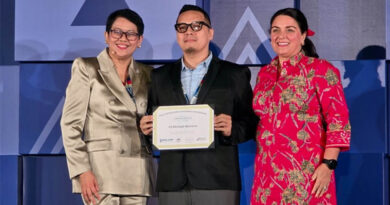
Acknowledging Corteva and The Broad Institute, Inc. for their leadership in making the agreement possible, ICRISAT Director General Dr Himanshu Pathak said it was a transformative humanitarian milestone for ICRISAT and for the millions of smallholder farmers and their families who depend on dryland agriculture.
“Corteva’s leadership in gene editing, combined with ICRISAT’s world-leading breeding programs and our other long-standing partnerships with national agricultural research systems, this new capability will accelerate the delivery of practical crop innovations that strengthen food security, improve livelihoods and build more resilient agricultural systems across Asia and Africa,” said Dr Pathak.
The agreement now enables the full pathway from research and product development to the deployment of novel gene-edited solutions across ICRISAT’s mandate crops of pulses, millets and oilseeds, including sorghum, pearl millet and other millets, chickpea, pigeonpea and groundnut.
The agreement further strengthens ICRISAT’s internationally recognized expertise in genomics, crop breeding, phenomics, seed systems, and partnerships with national agricultural research systems, creating an integrated innovation pipeline that accelerates the journey from scientific discovery to deployment of improved crop varieties in farmers’ fields.
We’re proud to collaborate with ICRISAT and help smallholder farmers across Asia and Africa access gene editing technology,” said Dr Wendy Srnic, Vice President, Biotechnology for Corteva.
“We look forward to working together to develop crops that can better withstand extreme weather events, pests and diseases and help farmers feed their communities while building a more resilient global food system”, said Dr Srnic.
Also Read: Western Sydney International Airport Strengthens Australia’s Trade And Biosecurity Future
Global Agriculture is an independent international media platform covering agri-business, policy, technology, and sustainability. For editorial collaborations, thought leadership, and strategic communications, write to pr@global-agriculture.com