Novonesis to Invest €600 Million in India to Expand Advanced Enzyme Production Facility
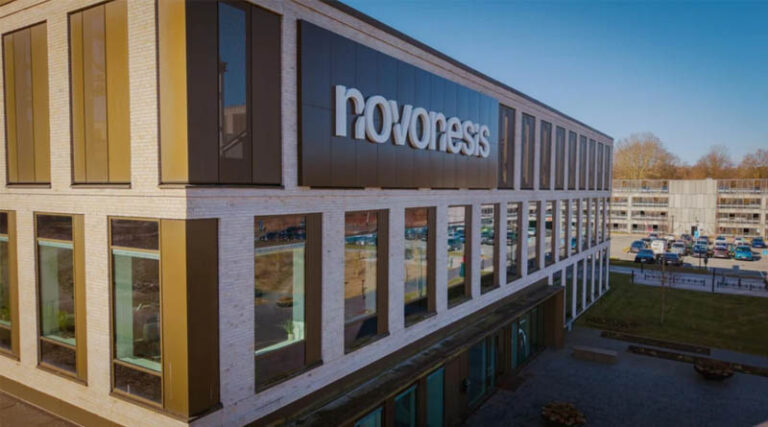
03 September 2026, Mumbai: Novonesis is investing more than ₹6,660 crore (€600 million) to expand its facility in Patalganga, Maharashtra, and build one of the world’s most advanced enzyme production facilities.
The expansion is aimed at meeting growing global demand for biosolutions while making the company’s supply network more flexible and resilient. The expanded facility is expected to be fully operational by 2030.
The Patalganga site will manufacture enzymes used across several industries, including biofuels, household care, food and beverages and industrial bioprocessing. The investment is also expected to strengthen Novonesis’ ability to serve customers across emerging markets, particularly India, South Asia, the Middle East and Africa.
Novonesis President and CEO Ester Baiget said the investment was an important step in executing the company’s strategy and supporting sustainable growth.
The company said the expansion would bring production closer to customers in markets that are expected to grow faster than developed economies in the coming years.
Building a stronger global production network
The Patalganga investment forms part of Novonesis’ wider programme to expand and strengthen its global manufacturing footprint.
The company has also invested in production facilities in Rayong, Thailand; Franklinton, North Carolina; Taicang, China; Araucaria, Brazil; and West Allis, Wisconsin.
According to Novonesis, these investments are designed to increase production capacity, improve operational resilience and provide greater flexibility in supplying customers across different regions.
Anders Lund, Chief Operating Officer at Novonesis, said rising demand for biosolutions across industries was making additional production capacity a priority.
He said the Patalganga expansion would improve the company’s scale, efficiency and supply flexibility while bringing production closer to customers in key growth markets.
A major investment in India’s bioeconomy
The investment also comes as India places greater emphasis on developing its bioeconomy and expanding the use of biotechnology across industries.
Krishna Mohan Puvvada, Regional President for Middle East, India & Africa at Novonesis, said the company sees the investment as supporting India’s ambitions for a more self-reliant and low-carbon economy.
India’s BioE3 policy, which focuses on biotechnology for the economy, environment and employment, is expected to play an important role in expanding the country’s industrial biotechnology ecosystem.
Novonesis said its expanded production and innovation capabilities in India would help strengthen local supply chains and accelerate the adoption of biosolutions in areas including energy, food and beverages, animal feed and industrial bioprocessing.
The company already has a significant presence in India and said the Patalganga expansion reflects its longer-term commitment to the country.
Focus on water and energy efficiency
Sustainability is also being built into the design of the expanded facility.
Novonesis said the Patalganga plant will incorporate technologies designed to reduce water and energy consumption. Freshwater recycling will reduce the amount of water drawn from external sources, while integrated heat pumps will reduce the energy needed for operations. These measures are expected to help lower the facility’s Scope 1 and Scope 2 emissions.
Lund said the company’s objective was to increase production while using fewer resources. The Patalganga project, he added, brings together lessons from Novonesis’ existing production network and represents another step towards lower-emission manufacturing.
Also Read: Syngenta Welcomes Trevor Watson As Turf Territory Manager For Mid-atlantic And Northeast Region
Global Agriculture is an independent international media platform covering agri-business, policy, technology, and sustainability. For editorial collaborations, thought leadership, and strategic communications, write to pr@global-agriculture.com