Disclosed EPA Records Show Bayer Helped Shape Its Own Dicamba Mitigation Rules Before 2026 Reapproval
14 September 2026, Washington, D.C: Newly released government records show that the US Environmental Protection Agency let Bayer choose among competing drift and runoff mitigation options for dicamba in 2025, months before the agency finalized a reapproval of the controversial herbicide in February 2026. The documents, obtained through litigation brought by the Center for Biological Diversity and the Center for Food Safety and first reported on September 10, 2026, show EPA officials effectively invited the registrant to pick its preferred level of regulation rather than setting restrictions independently.
According to the records, EPA presented Bayer with two volatility-control options and three runoff-mitigation options on May 12, 2025. Eight days later, on May 20, 2025, Bayer responded by email selecting the less restrictive volatility option, which allows dicamba applications at temperatures between 85 and 95 degrees Fahrenheit with reduced treated-acreage limits. In a separate communication, Bayer proposed that full-field treatments be allowed at higher temperatures provided the product was not tank-mixed with other chemicals. EPA officials then met with Bayer executives in June 2025 to discuss related litigation, proposed regulations matching Bayer’s chosen options in July 2025, and issued a final rule in February 2026 that retained most of the company’s preferences.
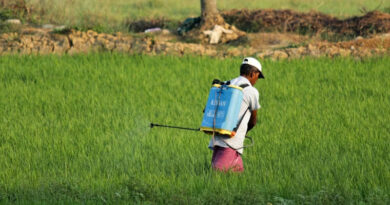
Dicamba is a widely used herbicide paired with genetically engineered, dicamba-tolerant cotton and soybean varieties across the US Midsouth and Midwest. It has been a persistent regulatory flashpoint because of its tendency to volatilize and drift onto neighboring fields, damaging crops, trees and vegetation that are not resistant to it. Federal courts vacated EPA’s prior dicamba approvals in both 2020 and 2024, in each case finding that the agency had understated the extent of drift damage and failed to adequately weigh those risks before allowing continued use. The February 2026 reapproval is the subject of ongoing litigation from the same environmental and food-safety groups that obtained the newly disclosed records.
Nathan Donley, environmental health science director at the Center for Biological Diversity, said the arrangement amounted to EPA “allowing Bayer to choose mitigation measures as if ordering dinner à la carte.” Bill Freese, science director at the Center for Food Safety, characterized the agency’s reliance on registrant input as evidence of regulatory capture. An EPA branch chief, Lindsay Roe, is quoted in one internal email describing the process as simply “getting feedback from registrants on what mitigation… they would like to move forward with.” Wendy Wagner, a University of Texas law professor who studies regulatory process, said research shows industry-agency communications of this kind tend to shift outcomes toward less protective rules.
Bayer has not issued a public response specific to this document release as of publication. The company’s dicamba products, sold under brand names tied to its Xtend cropping system, remain approved for the 2026 growing season under the mitigation package that traces back to Bayer’s own May 2025 selections.
Also Read: UPL Expands Nature-Based Agriculture Portfolio with Investment in Japan’s PhytoChrome
Global Agriculture is an independent international media platform covering agri-business, policy, technology, and sustainability. For editorial collaborations, thought leadership, and strategic communications, write to pr@global-agriculture.com