14 September 2026, United States: Internal U.S. Environmental Protection Agency records made public this month show the agency asked Bayer to choose between two possible drift restrictions for the herbicide dicamba fifteen months before finalizing the chemical’s reapproval in February 2026, and the company’s preferred, less restrictive option became the rule EPA ultimately adopted.
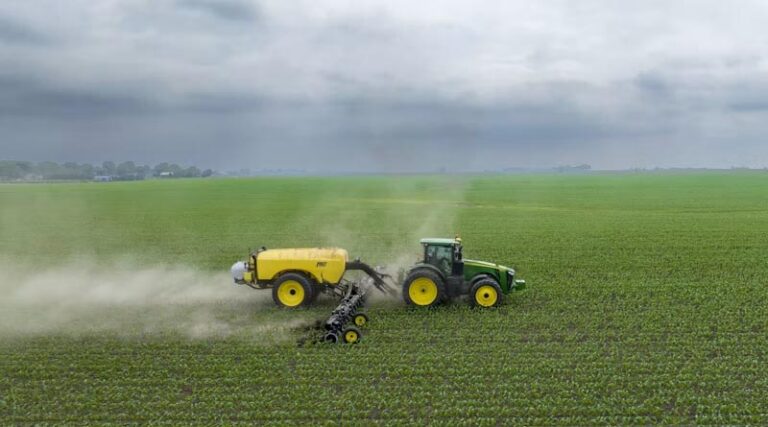
The documents, obtained through litigation by the Center for Biological Diversity and the Center for Food Safety and made public on September 10, 2026, cover a presentation EPA’s Office of Pesticide Programs made to Bayer representatives on May 12, 2025. According to the release, the agency laid out two mitigation options for over-the-top use of dicamba on dicamba-tolerant cotton and soybeans, one that would have barred applications when temperatures exceeded 85 degrees Fahrenheit, and another that allowed applications up to 95 degrees with additional restrictions attached. An EPA slide from the presentation, titled “Registrant response needed,” reportedly asked Bayer directly which option it preferred to move forward with.
Bayer responded on May 20, 2025, selecting the higher temperature, less restrictive option. EPA proposed that same option in July 2025 and made it final when the agency reapproved dicamba in February 2026, according to the records. Lindsay Roe, a branch chief in EPA’s Office of Pesticide Programs, is quoted internally as describing the next step as getting feedback from the registrants on what mitigation option they would like to move forward with, a phrase now central to the advocacy groups’ criticism of the process.
Nathan Donley of the Center for Biological Diversity said the arrangement amounted to letting pesticide companies write their own regulations. Bill Freese of the Center for Food Safety said the episode showed the agency giving weight to industry funded science over independent research. Neither EPA nor Bayer’s comments on the specific records were included in the released material reviewed for this story.
Dicamba has a long and contentious regulatory history in the United States. First used commercially in 1967, it became a much larger part of U.S. row crop agriculture after dicamba tolerant cotton and soybean varieties were introduced around 2015, prompting a sharp rise in complaints about the herbicide drifting off target fields and damaging neighboring crops, trees and gardens. Federal courts vacated dicamba’s registration in 2020 after finding EPA had understated the extent of that damage, and again in 2024 after finding the agency had failed to adequately involve the public and address drift victims’ concerns before reapproving the product. The February 2026 reapproval, now under fresh scrutiny because of the newly released records, is being challenged separately by the Center for Biological Diversity and farming organizations, who allege the decision violates the Federal Insecticide, Fungicide, and Rodenticide Act and the Endangered Species Act. Some states, including Minnesota and Illinois, already restrict dicamba applications above 85 degrees, a threshold EPA’s own presentation to Bayer treated as one of only two options on the table.
For global agribusiness stakeholders, the dispute matters well beyond the specific temperature cutoff. Dicamba is one of the most widely used herbicides on U.S. soybean and cotton acreage, and its regulatory status directly affects planting decisions, seed trait sales and input costs for a large share of North American row crop production. A pattern of repeated court challenges, combined with new allegations that a major registrant helped shape its own mitigation requirements, raises the risk of further legal delay or another vacatur, which would disrupt supply planning for distributors, retailers and growers who have built weed control programs around dicamba tolerant systems. It also feeds into a broader international conversation about how much influence pesticide manufacturers have over the design of the restrictions meant to govern their own products, a question regulators in other major markets are likely to face as they weigh their own herbicide drift and resistance management rules.
Global Agriculture is an independent international media platform covering agri-business, policy, technology, and sustainability. For editorial collaborations, thought leadership, and strategic communications, write to pr@global-agriculture.com