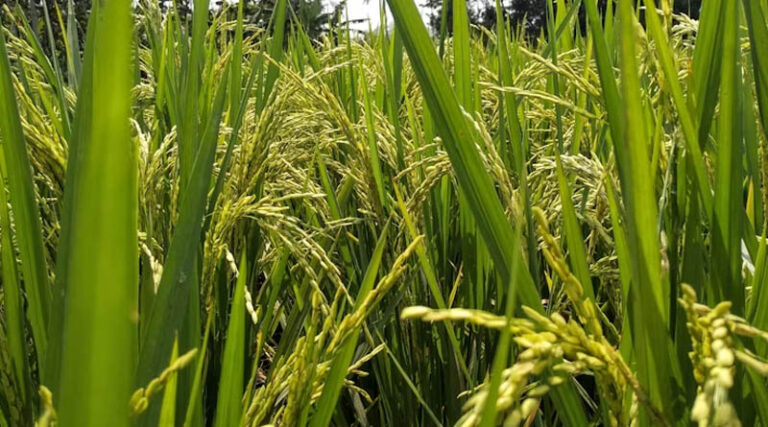
EPA Opens Comment Period on Iptriazopyrid, Novel Rice Herbicide From Nissan Chemical
12 September 2026, Washington, D.C.: The US Environmental Protection Agency has opened a 30 day public comment period on three new pesticide active ingredients, including a rice herbicide from Japan’s Nissan Chemical Corporation that belongs to a chemical class not yet used commercially in any registered herbicide. The comment window, tied to a Federal Register notice published August 20, 2026, closes September 21, 2026, giving growers, competitors and public health groups roughly two more weeks to weigh in before EPA moves toward a registration decision.
The notice, titled “Pesticide Product Registration, Receipt of Applications for New Active Ingredients (June 2026),” covers applications reviewed by three separate divisions inside EPA’s Office of Pesticide Programs. The lead application, filed by Nissan Chemical Corporation under docket EPA-HQ-OPP-2026-1784, seeks registration for an active ingredient called iptriazopyrid, proposed as a foliar herbicide for rice at 98.5 percent purity in technical form and as a 100 g/L suspension concentrate formulation containing 9.1 percent active ingredient. EPA’s records show the application was originally received on November 26, 2025, meaning the compound has been under agency review for roughly ten months before this public notice stage.
Iptriazopyrid belongs to a chemical group known as azole carboxamides and works by inhibiting an enzyme called 4-hydroxyphenylpyruvate dioxygenase, or HPPD, which plants need to make carotenoids. Blocking the enzyme causes susceptible weeds to bleach white and die. HPPD-inhibiting herbicides already exist for corn and other row crops, but according to research published by Nissan Chemical scientists in the Journal of Agricultural and Food Chemistry, iptriazopyrid would be the first foliar-applied HPPD inhibitor developed specifically for rice, a crop where most existing HPPD chemistry is not safe to use directly on the growing plant. The research, conducted jointly with Japan’s National Institute of Advanced Industrial Science and Technology, found that rice breaks the compound down quickly through its own metabolism while target weeds such as barnyard grass and red sprangletop cannot, which is what gives the herbicide its crop safety margin.
The same Federal Register notice also covers two unrelated new active ingredient applications, filed independently and reviewed by different EPA divisions. The table below lists all three applications included in the notice.
| Applicant | Active ingredient | Proposed use | EPA docket | Reviewing division |
|---|---|---|---|---|
| Nissan Chemical Corporation | Iptriazopyrid | Foliar herbicide for rice | EPA-HQ-OPP-2026-1784 | Registration Division |
| Bedoukian Research, Inc. | z-9-Hexadecenal | Mating disruption pheromone for moth pests | EPA-HQ-OPP-2026-5413 | Biopesticides and Pollution Prevention Division |
| ReliOx Corporation | Styrene/divinylbenzene copolymer (product name Whiff!) | Antimicrobial for indoor surface disinfection | EPA-HQ-OPP-2026-4786 | Antimicrobials Division |
None of the three products has been approved yet. Publication of a receipt-of-application notice only starts the statutory public comment clock and does not indicate EPA has reached a decision on safety or efficacy. A fourth docket number, EPA-HQ-OPP-2026-0333, functions as the umbrella docket for the notice itself, where the public can file comments through regulations.gov ahead of the September 21 deadline.
For herbicide resistance management, a genuinely new mode of action matters more than the specific crop it targets first. Weed populations across rice growing regions in the United States and Asia have built up resistance to older chemistries including ALS inhibitors and several existing HPPD products used in other crops, narrowing the tools available to rice growers who rotate herbicide groups to slow resistance development. A foliar rice herbicide with a distinct mechanism, if approved, would give growers and agronomists another rotation option specifically calibrated for rice weed spectrums such as barnyard grass, a species already showing resistance to multiple existing herbicide classes in parts of the US Mid-South and in several Asian rice belts. Because Nissan Chemical is a major global agrochemical supplier with an established presence in Asian rice markets, any US registration is also likely to be an early step toward wider registration filings in other rice producing countries, making this a molecule worth tracking well beyond the American market it is currently filed in.
Also Read: UPL Expands Nature-Based Agriculture Portfolio with Investment in Japan’s PhytoChrome
Global Agriculture is an independent international media platform covering agri-business, policy, technology, and sustainability. For editorial collaborations, thought leadership, and strategic communications, write to pr@global-agriculture.com