Director-General Closes The Sixth And Most Successful World Food Forum Yet
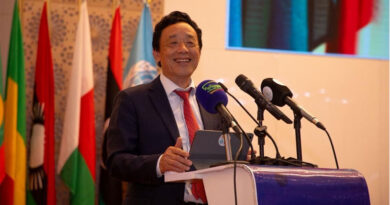
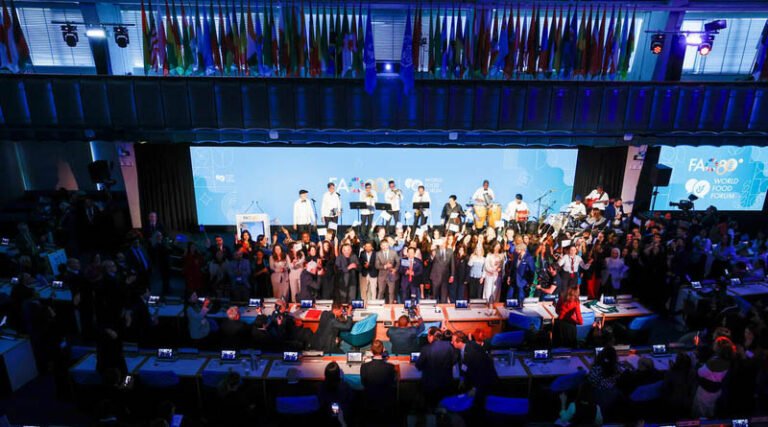
22 October 2026, Rome: FAO Director-General QU Dongyu closed the sixth and most successful World Food Forum (WFF) yet, as a week of events culminating in World Food Day 2026 attracted record audiences in Rome and around the world.
Established by the Director-General soon after he took office in 2019, this year’s WFF opened with the “From Seeds to Foods” exhibition at Rome’s historic Circo Massimo, once the centre of ancient chariot racing.
Speaking at the opening ceremony, Qu said the journey from seeds to foods extends beyond production, connecting livelihoods, natural resources, science, culture and the people whose knowledge and work sustain agrifood systems worldwide.
“Innovation must deliver practical and affordable solutions for food security and nutrition,” Qu said, noting that innovation spans the entire value chain – from resources and knowledge to production, processing, transport and markets.
The exhibition featured six regional pavilions showcasing the diversity of agrifood systems through products, stories, innovations and traditions, while chefs from around the world hosted cooking demonstrations celebrating local ingredients and culinary heritage.
The programme also featured talks, discussions, cultural performances, workshops and interactive activities for children and families.
Monday’s WFF opening was preceded by the Global Youth Forum, which brought together young people from around the world to advance action towards more sustainable, inclusive and resilient agrifood systems.
At the opening ceremony, the Director-General highlighted the growing reach of FAO’s youth engagement initiatives. The forum marked the launch of 33 new National Youth Chapters, bringing the total to more than 100 and extending the movement’s reach to communities worldwide.
Opening the WFF on Monday afternoon, the Director-General highlighted the significance of this year’s theme: “Innovate Today. Nourish Tomorrow.”
“The actions we take today – the new technologies we deploy, the traditional and indigenous wisdom we leverage, the young people we empower – will determine whether tomorrow’s agrifood systems can truly nourish a growing and changing world,” Qu said.
On Monday, the Director-General also addressed the opening of the Global-Hub on Indigenous Peoples’ Food and Knowledge Systems. Held in two Sámi lavvus on the grounds of FAO headquarters, the ceremony highlighted the shared history and ancestral connections linking all people to Indigenous Peoples. Qu described the Global-Hub as a bridge for passing knowledge from one generation to the next.
On Tuesday, the Director-General opened meetings of the WFF’s two other pillars: the Science and Innovation Forum (SIF) and the Hand-in-Hand Investment Forum.
Addressing SIF participants, Qu called for accelerating and scaling up science and innovation “so that our Members can drive progress across the Four Betters, leaving no one behind.”
The Hand-in-Hand Investment Forum highlighted a record $20.16 billion in proposed agrifood investments, which Qu said is “changing how these investments are designed, de-risked and financed.”
Following the opening of the Hand-in-Hand Investment Forum, the Director-General hosted a high-level reception with private-sector representatives, including the World Business Council for Sustainable Development and the International Chamber of Commerce, urging partners to “go beyond dialogue” and engage in coordinated investment.
On Wednesday, the Director-General opened the 2026 edition of the Rome Water Dialogue, calling for more efficient water use, fairer allocation and a shift towards circular and regenerative approaches. Recent El Niño events, he noted, have underscored the urgency by demonstrating how changes in rainfall can rapidly trigger droughts and floods.
The Director-General also participated in a Science and Innovation Forum session titled Lost in Translation: Strengthening Science-Policy Interfaces for Evidence-Informed Decision-Making. The discussion explored science communication, misinformation and the implications of AI as an emerging gatekeeper of scientific knowledge. Qu highlighted the importance of strengthening dialogue between science and policy.
Qu also took part in a Special Event on the Lobito Corridor, a Hand-in-Hand project aimed at strengthening a strategic transport and economic route linking the Democratic Republic of Congo and Zambia to Angola’s Atlantic coast. He emphasized the importance of developing agrifood markets alongside infrastructure investments.
Another side event on Wednesday reviewed progress under FAO’s One Country One Priority Product (OCOP) Initiative, which now includes more than 90 Members across all five regions and promotes over 50 special agricultural products, including soybeans in Ghana, cocoa in Samoa and dates in Iraq.
The Director-General also attended the launch of A taste of SIDS: Food, culture and resilience of Small Island Developing States, an FAO recipe book highlighting traditional and contemporary dishes from SIDS regions around the world. The publication explores how local foods can support healthy diets, biodiversity, sustainable livelihoods, cultural identity and resilient agrifood systems.
On Thursday, the Director-General honoured 100 Women Heroes in Agrifood Systems and Rural Development, recognizing women whose work is transforming agrifood systems and rural communities. Qu paid tribute to the awardees and recalled the influence of his grandmother, who taught him farming, cooking and the values of hard work, resilience and respect for the land.
Qu also welcomed nearly 1,000 students aged 9 to 13 in person, with many more joining online, for Junior World Food Day. Members from the Italian Rugby Federation and the Italian Taekwondo Federation, alongside the nutritionist for the Cabo Verde National Football Team, joined Italian celebrity chef Max Mariola and responsible fashion expert Matteo Ward for the celebration.
The Director-General also attended a Special Event on Unlocking Finance for Resilient Coffee Value Chains Through Data and Innovation, which highlighted investment opportunities in Kenya.
The week concluded on Friday with World Food Day 2026, where the Director-General emphasized the role of innovation in achieving the long-standing goal of ending hunger and building resilient agrifood systems.
At the ceremony, which featured special messages from Pope Leo XIV and UN Secretary-General António Guterres, Qu warned that the gap between scientific advances and their adoption by farmers remains too wide. He stressed that the most effective solutions are developed with farmers, fishers, pastoralists and rural communities and adapted to local realities through investment and partnerships.
The WFF concluded on Friday afternoon with a renewed commitment to end hunger.
This year’s edition featured more than 200 sessions, exhibitions and side events. More than 90,000 people from 189 countries participated, with in-person attendance doubling from the previous year to 32,000. WFF content and messaging reached an estimated 2.4 billion people online.
Also Read: New US Manufacturer Viriterra Launches Perseus Herbicide Built on In-House Pyroxasulfone
Global Agriculture is an independent international media platform covering agri-business, policy, technology, and sustainability. For editorial collaborations, thought leadership, and strategic communications, write to pr@global-agriculture.com