EU Ministers Edge Closer to Post-2027 Farm Policy Deal
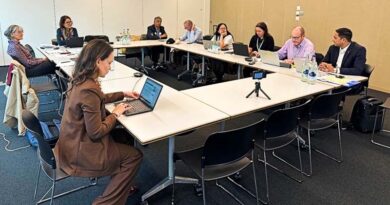
29 September 2026, Brussels, Belgium: European Union agriculture ministers made incremental progress toward a new Common Agricultural Policy framework at a meeting in Brussels on September 28, narrowing the list of disputes that must be resolved before the bloc can agree on how it will fund and regulate farming after 2027.
Ireland, which holds the rotating EU presidency, chaired the session. Irish Agriculture Minister Martin Heydon said the talks had brought member states “another step closer” to an agreement, while cautioning that several difficult questions remain open. The presidency’s stated goal is to secure what is known as a partial general approach, a preliminary Council negotiating position, at the next Agriculture Council meeting scheduled for October 26 and 27.
Three issues dominated the September 28 discussion. The first is how strictly to define an “active farmer” for the purposes of receiving CAP payments, with some member states resisting EU-wide rules that would require farming to be a person’s principal economic activity in order to qualify for support. The second is the design of what negotiators call degressive area-based income support, a mechanism for tapering payments as farm size grows, where countries including Sweden have raised questions about whether the structure should favor smaller farms, younger farmers or those in greater economic difficulty. The third is the broader balance between common EU-wide rules and the flexibility individual governments get in deciding how to spend their allocated funds, with several capitals pushing for simpler rules and less administrative burden alongside greater national discretion.
Fertiliser independence also on the table
Ministers also used a working lunch to discuss the European Commission’s fertiliser action plan, an initiative the Commission put forward earlier this year to address rising costs and supply security concerns following years of volatile natural gas prices, which are a key input for nitrogen fertiliser production. The plan centers on three goals: reducing the EU’s dependence on fertiliser imports, boosting domestic production capacity, and encouraging farmers to adopt alternatives to synthetic chemical fertiliser, including organic and bio-based options. The September 28 session did not produce new decisions on the plan but reflected ministers’ continued interest in tying fertiliser policy to the wider CAP negotiation, since input costs are one of the most immediate pressures European farmers have raised in the CAP debate.
Ministers additionally discussed targeted support measures for regions hit by drought and extreme weather, and took up the market situation shaped by Russia’s ongoing invasion of Ukraine, an item joined by Ukrainian Agriculture Minister Taras Vysotskyi. The invasion has continued to disrupt Black Sea grain trade routes and pricing, an issue that has remained on the Council’s agenda through several successive presidencies. No new budget figures for the CAP were released at this meeting, since overall funding remains tied to the EU’s broader 2028-2034 multiannual budget negotiations, which are proceeding on a separate track.
What to watch next
The real test comes at the October 26-27 Council meeting, where the Irish presidency hopes to lock in a common Council position that can then move into three-way negotiations with the European Parliament and the Commission. Until member states resolve the active-farmer and payment-tapering questions, the shape of Europe’s post-2027 farm subsidy system, and by extension the production incentives facing EU farmers, will remain unsettled.
The outcome carries indirect but real consequences for agri-input markets outside Europe. A serious EU push to cut fertiliser import dependence and scale up domestic nitrogen production, if it gains traction, could eventually reduce European buying pressure on global ammonia and urea markets, a dynamic that has historically fed through into prices Indian fertiliser importers pay. Any near-term easing in EU import demand also has some relevance for Latin American and other exporters of raw materials used in fertiliser production. Separately, however the CAP subsidy redesign lands, particularly the treatment of smaller versus larger farms, it will shape the cost structure and output levels of European agriculture relative to competitors in India, Brazil and Argentina, all of which sell into overlapping global grain, oilseed and dairy markets.
Global Agriculture is an independent international media platform covering agri-business, policy, technology, and sustainability. For editorial collaborations, thought leadership, and strategic communications, write to pr@global-agriculture.com