Turning Around Underperforming Country
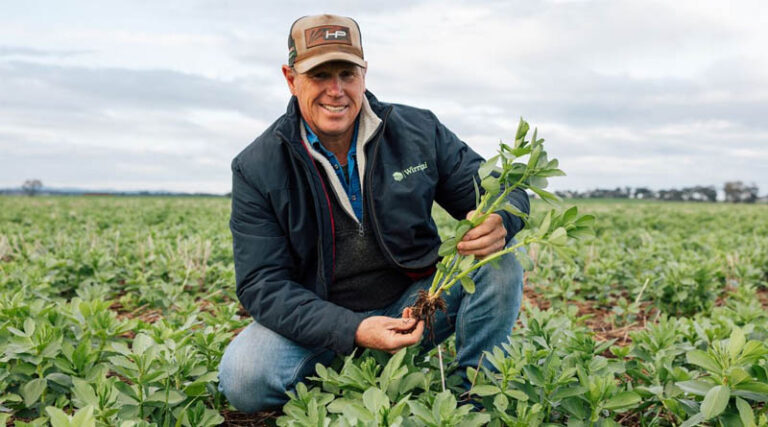
02 September 2026, AU: For Narromine mixed farmer Scott Vincent, some of his farm’s poorest-performing paddocks have become some of the most productive through a combination of soil improvement and weed management practices.
Soil types on the farm include a mix of self-cracking clays, sodic clays and alluvial soils, meaning management practices need to be tailored to each paddock.
One strategy that has helped improve some of the property’s most challenging country has been the use of raised beds to improve drainage and maintain soil aeration on country prone to waterlogging.
“We’ve had some paddocks go underwater 5 times in a year and still been able to harvest them. Without the raised beds, we wouldn’t have harvested anything,” Scott says.
The combination of raised beds and faba beans has led to particularly strong results.
Using faba beans on the beds and then returning to our normal wheat rotation has turned some of our lowest-performing country into some of our highest-yielding paddocks.
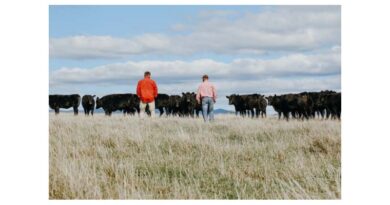
For Narromine mixed farmer Scott Vincent, some of his farm’s least productive paddocks have become some of its most productive. Photo: Little River Studio
Chaff lining for weeds
Turning around underperforming paddocks has also meant tackling another long-running challenge – annual ryegrass.
“We heard all the GRDC research on windrow burning, so back in 2017 we started doing it on nearly every paddock,” he says. “Windrow burning was fantastic – we went from wanting to walk away from some paddocks to, within 3 years, not needing to spray at all.
“We had up to $1,800/ha difference in income in the drought where we had windrow burnt for 3 years and where we didn’t.”
Despite the benefits, Scott says windrow burning comes with a significant labour cost.
“It was such a time-consuming job that tied up most of our nights. We were irrigating as well, so we were windrow burning at night and irrigating during the day. It wasn’t a sustainable solution, so we needed to look at other options.”
In 2019, Scott switched to chaff lining instead of windrow burning. Chaff lining now forms a key part of the business’s weed management strategy, and the practice is used on all of Scott’s dryland broadacre crops.
He says it plays a huge role in annual ryegrass control and allows a reduced chemical outlay while also providing a feed source for an Angus herd.
Scott estimates approximately 15% of farm businesses in his area are now chaff lining – a higher uptake limited by the time needed to remove and refit kits during harvest, and the fact that many contract harvesters don’t offer the practice.
But for Scott, the benefits of chaff lining far outweigh the disadvantages.
“Whenever we don’t do it, we see the negative result of not doing it in the form of a blowout of annual ryegrass. Chaff lining has also reduced our chemical costs significantly,” he says.
Also Read: Syngenta Welcomes Trevor Watson As Turf Territory Manager For Mid-atlantic And Northeast Region
Global Agriculture is an independent international media platform covering agri-business, policy, technology, and sustainability. For editorial collaborations, thought leadership, and strategic communications, write to pr@global-agriculture.com