El Niño Puts India’s Agriculture on Alert as FAO Maps Global Drought Hotspots
FAO warns that a new El Niño cycle could weaken India’s monsoon and threaten rainfed crops across key agricultural regions
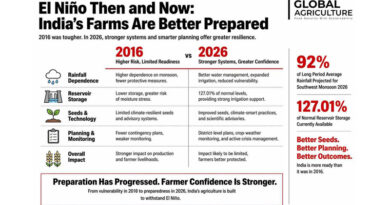
29 June 2026, Rome: A new El Niño event is expected to develop within weeks, raising concerns for agricultural production worldwide, with India among the countries facing heightened drought risks during the upcoming cropping season. According to the Food and Agriculture Organization of the United Nations (FAO), historical analysis suggests that El Niño could weaken India’s summer monsoon, placing major rainfed crops under stress at a critical stage of growth.
Drawing on 41 years of satellite data from FAO’s Agricultural Stress Index System (ASIS), the organization has identified regions where strong and very strong El Niño Southern Oscillation (ENSO) events have historically caused severe agricultural drought. The assessment comes as the World Meteorological Organization (WMO) forecasts a stronger-than-usual El Niño cycle.
India among Asia’s key agricultural hotspots
FAO’s analysis indicates that agricultural drought risk stretches from Pakistan and India through Myanmar, Thailand, Cambodia, Viet Nam, the Philippines, Indonesia and Timor-Leste. For India, the greatest concern lies in the potential weakening of the southwest monsoon, which supplies rainfall for nearly half of the country’s cultivated land.
Live Newsroom
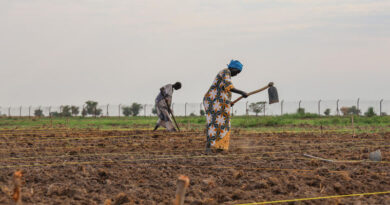
Rainfed crops such as rice, maize and pulses remain particularly vulnerable during El Niño years. Previous strong El Niño events, including 2015-16, led to reduced rice and maize production in several Asian countries, contributing to higher food prices and supply disruptions.
Global food security concerns
Beyond Asia, FAO identifies significant drought risks across the Sahel, Southern Africa, Central America’s Dry Corridor, and the Caribbean, where some agricultural and grazing areas face more than a 50% probability of drought in the coming months.
Many of these regions also continue to grapple with conflict, economic hardship and food insecurity, increasing their vulnerability to climate shocks. FAO estimates that more than 80% of drought-related agricultural losses occur in low- and middle-income countries.
“This isn’t like previous El Niños. The planet is much warmer today, and with conflict and food insecurity widespread, this new phase will hit hardest in places that are already vulnerable and have limited coping capacity,” said Jorge Alvar-Beltrán, FAO Natural Resources Officer.
Early action can reduce losses
To prepare for the anticipated climate impacts, FAO and the World Food Programme (WFP) have launched a US$202 million anticipatory action appeal aimed at protecting 8.8 million people across 22 high-risk countries. Planned interventions include support for farmers and pastoralists, early cash assistance, improved weather forecasting and strengthened early warning systems.
FAO says detailed drought-risk mapping, down to one square kilometre in some locations can help governments target assistance more effectively by directing irrigation support, drought-tolerant seeds, livestock feed and emergency resources to the most vulnerable farming communities before crop losses occur.
According to Riccardo Soldan, FAO Natural Resources Officer, precision forecasting enables governments to focus resources where they are needed most instead of spreading assistance too thinly.
With El Niño expected to develop in the coming weeks, FAO stresses that timely decisions by governments, extension agencies and farmers will be critical in reducing agricultural losses and safeguarding food security in India and other vulnerable regions.
Also Read: EU Mandates Digital Labels for Plant Protection Products from 2028
Global Agriculture is an independent international media platform covering agri-business, policy, technology, and sustainability. For editorial collaborations, thought leadership, and strategic communications, write to pr@global-agriculture.com