GM Crops: India’s Policy Dilemma Amid a Rapidly Changing Global Agriculture Landscape
By Dr. Vinod Kumar Sahu, DST-Centre for Policy Research, Indian Institute of Technology, Indore, Madhya Pradesh, India and Dr. Nishi Mishra, Department of Biotechnology, JNKVV, Jabalpur, Madhya Pradesh, India
05 September 2026, New Delhi: India’s long-running debate over genetically modified (GM) crops has gained renewed attention, driven by developments both at home and abroad.
Domestically, the regulatory and legal status of GM mustard remains under scrutiny, with the issue before the Supreme Court and the government reviewing its broader policy approach to GM crops. At the same time, farmers in several cotton-growing states, including Madhya Pradesh, continue to face challenges from the sale of unauthorised HT-BT cotton seeds and the growing incidence of pink bollworm.
Globally, however, the picture is very different. GM crops are cultivated extensively across major agricultural economies, while newer technologies such as genome editing are prompting governments to reconsider traditional regulatory frameworks.
Bt cotton remains India’s only commercially approved GM crop
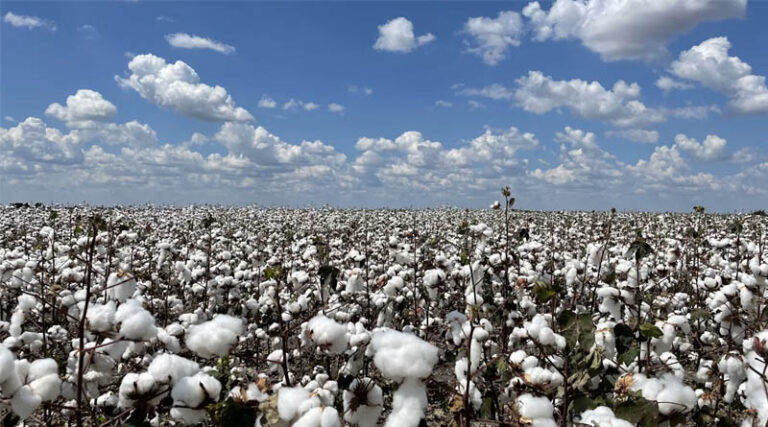
India’s commercial GM crop landscape remains largely confined to Bt cotton.
According to the country’s regulatory framework, Bt cotton received conditional approval from the Genetic Engineering Appraisal Committee (GEAC) in 2002. No other GM crop has been authorised for commercial cultivation in open fields.
GM mustard, particularly the DMH-11 hybrid, has received permission for limited environmental release, but its broader commercial use remains subject to legal and policy considerations. Bt brinjal continues to face a moratorium on commercial cultivation, while GM research programmes involving crops such as soybean, maize and wheat have not received commercial approval.
Current regulatory position in India
| Crop | Technology/Variety | Regulatory position |
|---|---|---|
| Cotton | Bt cotton (Cry1Ac/Cry2Ab) | Commercial cultivation approved since 2002 |
| Mustard | DMH-11 GM hybrid | Limited environmental release; broader commercial use remains under legal and policy review |
| Brinjal | Bt brinjal | Commercial cultivation not permitted |
| Rice | Genome-edited varieties | Certain SDN-1/SDN-2 applications covered by regulatory exemptions |
| Soybean, maize, wheat | Various GM research lines | No commercial cultivation approval |
GM mustard keeps the policy debate alive
GM mustard has emerged as one of the most closely watched biotechnology issues in Indian agriculture.
In July 2024, a two-judge Supreme Court bench delivered a split verdict concerning the Centre’s 2022 environmental approval for GM mustard. Both judges, however, agreed on the need for a national policy on GM crops. The matter has subsequently moved towards consideration by a larger bench.
The government’s ongoing policy deliberations could therefore have implications not only for GM mustard but also for the future regulatory approach to biotechnology in Indian agriculture.
The debate has gained additional significance as India’s agricultural trade relationship with major GM-producing countries continues to evolve. The United States, Brazil and Argentina, for example, cultivate GM crops on a large scale, making biotechnology an increasingly relevant issue in global agricultural trade and supply chains.
India is taking a different approach to genome editing
While commercial GM crops remain tightly regulated, India has taken a more flexible approach towards certain genome-editing technologies.
In 2022, the government exempted SDN-1 and SDN-2 categories of site-directed nuclease technology from the more extensive regulatory process applicable to conventional GM organisms under specified conditions.
Unlike conventional transgenic GM technology, these techniques can involve targeted changes to a plant’s own DNA without permanently introducing an external gene.
The regulatory distinction has enabled Indian agricultural research institutions to accelerate the development of genome-edited crops, including rice varieties. The development represents an important shift in India’s biotechnology strategy: while conventional GM crops remain subject to intense regulatory scrutiny, some forms of genome editing are being treated differently.
Unauthorised HT-BT seeds remain a challenge for cotton farmers
The policy debate over GM technology is taking place alongside a significant challenge in India’s cotton fields, the spread of unauthorised herbicide-tolerant Bt cotton seeds.
Reports from several cotton-growing regions, including Madhya Pradesh’s Nimar region, have highlighted the availability of unauthorised HT-BT seeds marketed under names such as “5G” and “Super Bt”.
For farmers, the problem is compounded by confusion surrounding the difference between hybrids, GM crops and genome-edited varieties.
Greater awareness about which seeds are legally approved, which traits they contain and how they should be used is therefore critical to preventing farmers from unknowingly purchasing unauthorised planting material.
Pink bollworm raises questions over long-term Bt effectiveness
Another major concern for India’s cotton sector is the increasing incidence of pink bollworm.
The repeated use of the same Bt trait has contributed to concerns over the development of resistance in pest populations. Similar challenges have also been reported in cotton-growing regions of countries such as China and Pakistan.
The experience highlights an important lesson for biotechnology adoption: genetic traits cannot be viewed as a stand-alone solution to pest management.
Integrated pest management, refuge strategies, crop monitoring and other agronomic measures remain essential for maintaining the effectiveness of Bt technology over the long term.
GM crops continue to expand globally
India’s cautious approach contrasts sharply with developments in many major agricultural economies. According to the International Service for the Acquisition of Agri-biotech Applications (ISAAA), more than 30 countries have commercially cultivated biotech or GM crops, covering more than 20 crop types.
The United States remains the largest producer by cultivated area, followed by countries including Brazil, Argentina, India and Canada.
Soybean, maize, cotton and canola continue to dominate global biotech agriculture. Soybean alone accounts for more than 100 million hectares of GM cultivation globally, while cotton has been adopted across the largest number of countries among major GM crops.
Major GM crop-producing countries
| Country | Major GM/biotech crops | Key feature |
|---|---|---|
| United States | Soybean, maize, cotton, canola | Largest GM crop cultivation area globally |
| Brazil | Soybean, maize, cotton | Major GM crop producer and agricultural exporter |
| Argentina | Soybean, maize | One of the leading adopters of GM soybean |
| India | Cotton | GM cultivation largely limited to Bt cotton |
| Canada | Canola, maize, soybean | Major producer of GM canola |
An important shift is also taking place in the geography of GM agriculture. Developing countries now account for a larger share of global biotech crop cultivation, reflecting growing interest in technologies that can potentially address productivity, pest pressure, climate stress and farm profitability.
The technology is also expanding beyond conventional food and feed crops. Drought-tolerant maize, disease-resistant bananas and biotech forestry applications illustrate the increasingly diverse range of traits being developed through modern biotechnology.
Pakistan explores commercialisation of GM sugarcane
Pakistan is also moving forward with biotechnology research and regulatory consideration.
Two GM sugarcane varieties developed by the University of Agriculture Faisalabad—one designed for insect resistance and another for herbicide tolerance—have been considered for commercialisation.
The development highlights the different regulatory trajectories emerging across South Asia. While India continues to apply a cautious approach to the commercial cultivation of GM food and cash crops, neighbouring countries are exploring wider applications of biotechnology.
Europe moves towards a separate framework for gene-edited crops
Europe is also changing its approach to new genetic technologies. For years, the European Union largely regulated newer genome-editing techniques under the same framework developed for conventional GM organisms. However, legislative work initiated by the European Commission in 2023 has moved towards creating a differentiated regulatory pathway.
Under the emerging framework, plants carrying genetic changes comparable to those achievable through conventional breeding can be subject to a simpler approval process, while more complex modifications remain under stricter GMO rules.
Traceability and labelling provisions are also intended to provide greater transparency within the seed and agricultural supply chain.
The European shift is significant for India because the country had already introduced a distinction between certain genome-editing techniques and conventional GM technology in 2022.
What farmers need to know
As biotechnology evolves, farmers need clear and reliable information about the seeds they purchase.
Check the seed packet: Farmers should verify the company name, approved variety or hybrid number, lot number and relevant regulatory details rather than relying on marketing names.
Buy from authorised dealers: A proper GST invoice showing the relevant lot information should be obtained with every seed purchase. The invoice can be important evidence in case of quality disputes or crop losses.
Report unauthorised seed sales: The sale of unauthorised GM mustard, Bt brinjal or HT/HT-BT seeds should be reported to the local agriculture department or the nearest Krishi Vigyan Kendra (KVK).
Adopt integrated pest management: Farmers should not depend solely on Bt technology to manage pests such as pink bollworm. Refuge strategies, pest monitoring and scientifically recommended IPM practices are important components of sustainable cotton production.
Understand the technology: Hybrid seeds, conventional GM crops and genome-edited crops are not the same. Better extension services and farmer education are needed to ensure that regulatory and technological developments are clearly understood at the farm level.
India faces a choice between caution and competitiveness
India’s GM crop debate is increasingly moving beyond a simple question of whether GM technology should be accepted or rejected.
The larger challenge is to develop a science-based regulatory system that balances farmer interests, environmental safety, food security, scientific innovation and agricultural competitiveness.
While the Americas have demonstrated the scale at which GM crops can be integrated into commercial agriculture, Europe is developing a differentiated approach to genome editing. India, meanwhile, has already begun separating certain genome-editing technologies from conventional GM regulation while maintaining a cautious position on commercial GM crops.
The coming years could therefore be decisive for India’s agricultural biotechnology policy.
For farmers, however, the immediate priority is simpler: access to legally approved, quality-assured seeds and clear information about how new technologies can be used safely and effectively.
As biotechnology advances, regulatory clarity and farmer awareness will be just as important as the technology itself.
Also Read: Syngenta Welcomes Trevor Watson As Turf Territory Manager For Mid-atlantic And Northeast Region
Global Agriculture is an independent international media platform covering agri-business, policy, technology, and sustainability. For editorial collaborations, thought leadership, and strategic communications, write to pr@global-agriculture.com