Stronger Legal Action Against Adulteration and Fraud
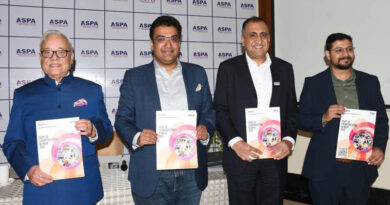
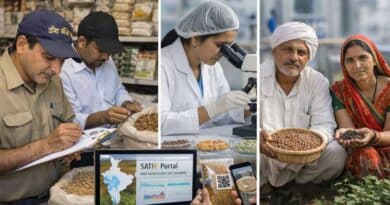
27 April 2026, New Delhi: At a press conference in Lucknow on April 24, India’s Union Minister for Agriculture & Farmers’ Welfare and Rural Development, Shivraj Singh Chouhan, said the Government of India is preparing to introduce stricter provisions in the Seeds Act and the Pesticides Act so that strong action can be taken against those who cheat farmers and sell fake agri inputs. He said the existing legal framework is not sufficiently strict to deal with fake seeds and pesticides, and in many cases only minor fines are prescribed, which fail to create an effective deterrent against offenders.
The remarks were made during the Northern Regional Agriculture Conference, organised by the Government of India as part of its wider effort to give a new direction to agriculture and farming in northern India.
Region-Specific Agriculture Planning for India
Addressing the media, Chouhan said future agricultural development can no longer be driven through one uniform policy for all regions. He said planning must now move according to regional requirements, climatic conditions, water availability and local crop situations. According to him, India has therefore been divided into five regions, with separate regional agriculture conferences being organised to develop area-specific strategies. The Lucknow conference is the second phase of that process.
He said the Government of India has schemes for agricultural development, scientific institutions and administrative capacity, but agriculture remains a state subject. Because of this, successful implementation depends on cooperation with state governments. He said the central and state governments are jointly preparing a concrete roadmap for the coming kharif and rabi seasons, while also discussing broader issues linked to farmer income, production and markets.
Focus on Farmers’ Income, Credit and Productivity
The Union Minister said discussions are no longer limited to seasonal crop planning. The conference agenda also includes agricultural diversification, profitability, self-reliance in pulses and oilseeds, horticulture promotion and processing opportunities. He said India has achieved new records in foodgrain production and made significant progress in wheat and paddy output, but self-reliance in pulses and oilseeds remains a national priority.
According to Chouhan, the Indian government’s agricultural strategy is advancing on six pillars: increasing production, reducing cultivation costs, ensuring farmers receive fair value for their work, providing compensation when losses occur, promoting diversification and linking farming with markets. He said dependence only on wheat-paddy systems will not be sufficient for the future, making it necessary to strengthen pulses, oilseeds, horticulture, fruits, vegetables, food processing and value addition.
He also highlighted the situation of small farmers, particularly in states such as Uttar Pradesh where many cultivators operate on limited landholdings. He said integrated farming models that combine crops with fruits, vegetables, livestock, fisheries, beekeeping and tree-based farming can help generate higher income from smaller areas. The Government of India has prepared such models and will share them with states for adaptation according to local needs.
During the press conference, Chouhan strongly emphasised the Kisan Credit Card scheme and said a special campaign will be launched to ensure every eligible farmer receives one. He said timely and affordable credit enables farmers to use better seeds, fertilisers, machinery and other resources, leading to higher productivity and income.
Fertiliser Relief and Natural Farming Push
He described Farmer ID as a major reform in agricultural governance, saying it will bring land records, khasra numbers, livestock details and other farmer-related information onto a single platform. This will reduce the need for repeated paperwork and help deliver benefits under government schemes in a faster and more targeted manner. He added that crores of Farmer IDs have already been created and states have been asked to complete the remaining work quickly.
On fertiliser prices, the minister said the burden of rising international prices will not be allowed to fall on farmers. He said the recent Cabinet meeting chaired by Prime Minister Narendra Modi approved an additional Rs 41,000 crore so that urea continues to be available at Rs 266 per bag and DAP at Rs 1,350 per bag.
Speaking on adulteration and fake inputs, Chouhan said the issue is not only related to farmers’ crops but is also a matter of human health. He said adulteration in fruits, vegetables and other food products, along with imbalanced chemical use, increases health risks. While the Government of India is promoting natural farming through the National Mission on Natural Farming, it is also running a campaign against fake and adulterated agricultural products.
He acknowledged that farmers shifting to natural farming may face challenges in the initial years and said financial assistance per hectare has been provided so that farmers do not feel unsupported during the transition.
The conference in Lucknow is being viewed as important for northern India at both policy and practical levels. Its recommendations are expected to guide preparations for the upcoming kharif and rabi seasons and shape future action on farmer income, crop diversification, nutritional security, technology transfer and sustainable agriculture. Chouhan said the broader goal is to make agriculture region-specific, science-based, market-linked and profitable, while keeping the farmer at the centre of every policy decision.
Global Agriculture is an independent international media platform covering agri-business, policy, technology, and sustainability. For editorial collaborations, thought leadership, and strategic communications, write to pr@global-agriculture.com