10 March 2026, New Delhi: India’s foodgrain production is projected to reach record levels in the 2025–26 crop year, according to the Second Advance Estimates released by the Ministry of Agriculture & Farmers Welfare. The estimates were approved by Union Agriculture and Farmers’ Welfare Minister Shivraj Singh Chouhan.
According to the estimates, Kharif foodgrain production is projected at 1741.44 lakh metric tonnes (LMT), while Rabi foodgrain production is estimated at 1745.13 LMT, indicating a strong overall production outlook for the year. Compared with last year’s estimates of 1694.60 LMT for Kharif and 1691.66 LMT for Rabi, the current projections represent increases of 46 LMT (2.8%) and 53 LMT (3.2%), respectively.
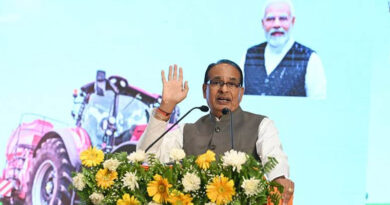
Releasing the estimates, Chouhan said the government has been consistently working to strengthen the agricultural sector under the leadership of Prime Minister Narendra Modi, aiming to enhance farmer prosperity and ensure steady growth in agricultural production.
Rice and Wheat Output
Rice production continues to remain strong. Kharif rice production is estimated at 1239.28 LMT, up from 1227.72 LMT in 2024–25, reflecting an increase of 11.56 LMT. Rabi rice production is estimated at 167.20 LMT.
Meanwhile, wheat production is estimated at 1202.10 LMT, higher than the previous year’s output of 1179.45 LMT, marking an increase of 22.65 LMT.
Coarse Cereals and Maize
Production of nutri/coarse cereals is also expected to grow significantly. Kharif nutri/coarse cereals output is estimated at 425.89 LMT, while Rabi production is projected at 213.41 LMT.
Within this category, maize production has reached record levels, with Kharif maize estimated at 302.47 LMT and Rabi maize at 159.03 LMT.
Production of Shree Anna (millets) is estimated at 123.43 LMT in Kharif and 30.98 LMT in Rabi.
Pulses Production
Among pulses, the estimates indicate stable output levels. Tur (pigeon pea) production is estimated at 34.55 LMT, while gram production is projected at 117.92 LMT. Lentil production is estimated at 17.33 LMT.
Oilseeds and Commercial Crops
Oilseed production also remains strong. Kharif oilseeds production is estimated at 265.33 LMT, while Rabi oilseeds output is projected at 144.65 LMT.
Groundnut production in the Kharif season is estimated at 112.94 LMT, higher than last year’s 104.12 LMT, while Rabi groundnut production is estimated at 7.97 LMT.
Soybean production is estimated at 127.20 LMT, and rapeseed and mustard production is projected at 133.31 LMT, marking another record level.
Among commercial crops, cotton production is estimated at 290.91 lakh bales (170 kg each), while sugarcane production is projected at 5001.97 LMT, also at a record level. Jute production is estimated at 81.27 lakh bales (180 kg each).
Methodology Behind the Estimates
The production estimates are based on crop area data reported by states and validated through multiple sources, including remote sensing data, the Weekly Crop Weather Watch Group, and other agencies.
Yield estimates are derived from Crop Cutting Experiments (CCEs), historical trends, and other contributing factors. The ministry noted that some CCEs for crops such as tur, sugarcane, and castor are still underway, meaning the estimates may be revised in future assessments.
The current estimates cover Kharif and Rabi seasons, while summer crop production will be incorporated in the Third Advance Estimates, expected later in the year.
Global Agriculture is an independent international media platform covering agri-business, policy, technology, and sustainability. For editorial collaborations, thought leadership, and strategic communications, write to pr@global-agriculture.com