Empowering Women In Business Through Improved Chicken In Tanzania
08 September 2026, Tanzania: In the coastal villages of Tanzania’s Lindi region and the highland communities of Kilimanjaro, smallholder poultry farmers long struggled with low-yielding local breeds, high disease risks, and limited market access. Deep-seated cultural expectations further restricted women from pursuing commercial livestock farming. To overcome these systemic barriers, the International Livestock Research Institute (ILRI) launched the Women in Business (WiB) project, fostering an enabling environment that combined technical innovation, youth entrepreneurship, accessible financing, and gender-transformative advocacy across four districts.
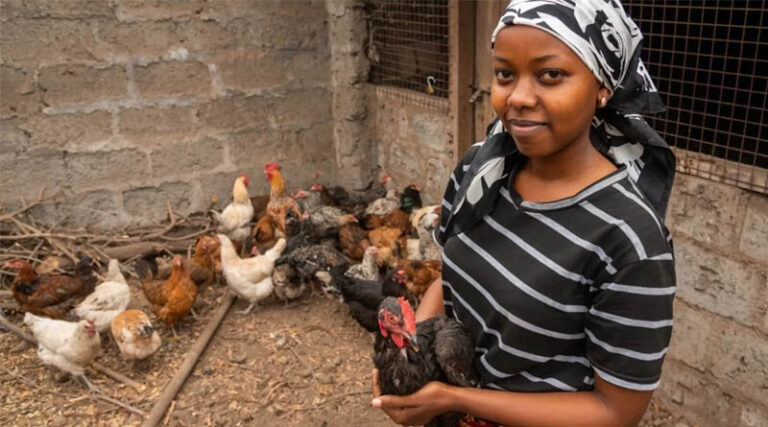
The initiative established a business incubation model that trained 20 young women with veterinary skills as local poultry vendors. Partnering with the Tanzania Livestock Research Institute and AKM Glitters, these vendors supplied dual-purpose Kuroiler chicks, provided essential vaccinations, and delivered hands-on technical advice before connecting farmers directly to urban markets. Vendors like Anande Munisi inspected coops, monitored flock health, and ensured proper brooding practices, establishing a reliable service network that transformed smallholder farming into a profitable business. To resolve financial bottlenecks, local district councils facilitated low-interest loans from local women’s funds, enabling farmers to build proper housing and purchase quality feed.
Addressing social norms was central to the strategy. In partnership with Shujaaz Inc., the project launched the #BintiShujaaz campaign across social media, radio broadcasts, and community dialogues, reaching 4.4 million young people to champion female entrepreneurship. Recognizing the tangible economic gains, local district councils in Siha and Mtama integrated vendor support directly into their municipal budgets to sustain the model long after the initial pilot concluded.
The WiB initiative yielded remarkable results across the region. Seventeen active vendors delivered over 21,600 Kuroiler chicks to more than 4,200 farms, nearly 2,900 of which were managed by women. Participating households saw significant income growth, enabling farmers to pay school fees, reinvest in additional livestock, and achieve higher levels of economic independence. In project areas, female empowerment metrics rose 15 percent higher than in non-participating control regions. By combining local trust, public-private partnerships, and gender-inclusive social campaigns, ILRI created a scalable framework that is now expanding into dairy, goat, and sheep value chains across Sub-Saharan Africa.
Also Read: Bayer Advances Plan to Launch 10 Blockbuster Products Over the Next 10 Years
Global Agriculture is an independent international media platform covering agri-business, policy, technology, and sustainability. For editorial collaborations, thought leadership, and strategic communications, write to pr@global-agriculture.com