Prepare for scorchio
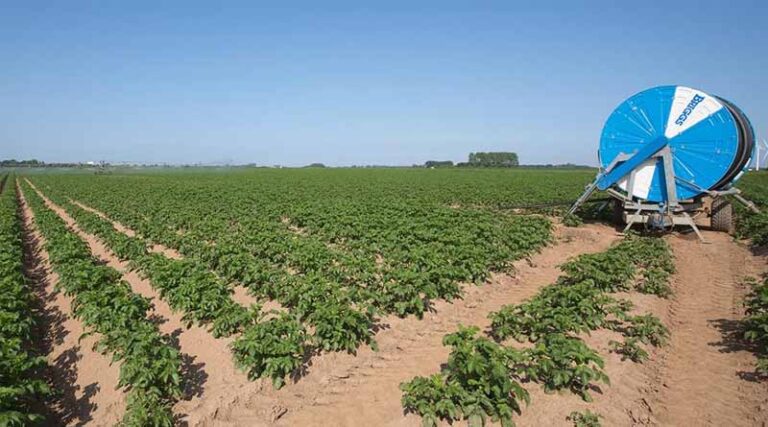
22 June 2026, UK: Potato crops have already faced repeated extremes of heat this season, with climate shift trends highlighting more to come through the summer.
That becomes an increasing challenge as the growing season progresses, when potato plants become less able to cope with heat and impacts on plant performance become more serious, warns Syngenta Technical Manager, Andy Cunningham.
“As the growing season progresses, the optimum temperature for potato plant photosynthesis declines, with performance falling off at higher temperatures,” he highlights. “That can be crucial through tuber bulking and associated yield.”
The Met Office has already issued a warning of ‘an increased chance of heatwaves and heat-related impacts’, while World weather services predict a 90% chance of El Niño returning this year – with its associated extremes of heat events and storms.
With more frequent heat events occurring, Andy advocates the use of QUANTIS biostimulant can pre-condition plants ready for a stress event. “Upregulating the plant’s genes naturally responsible for heat resistance means that it is primed and ready to respond when the stress hits.
“In research proven by Nottingham University, enhancing this natural mechanism can prolong the period the plant is able to withstand the heat, before adverse effects on its cells and function.
“The potato can essentially continue to photosynthesise more efficiently, which continues to build tuber size and yield.”
Furthermore, when the heat stress event eases, QUANTIS treated plants can recover faster and continue healthy growth more effectively.
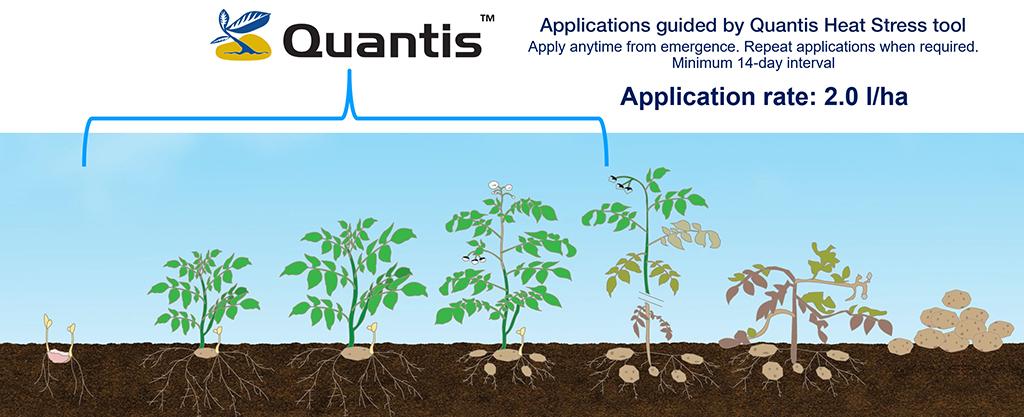
Key to this success is to make QUANTIS treatments ahead of any heat event occurring, to enable plants to build up their resistance mechanism.
Heat risk warning
New for the 2026 season, the acclaimed Quantis Heat Stress forecast, forecast is now incorporated within the company’s popular Cropwise Spray Assist App, along with BlightCast.
Now potato growers and agronomists will be able to receive advance warnings of localised heat risk periods affecting potato crops, to enable timely QUANTIS application. A finalist for innovation in the British Potato Awards, the App includes notifications, along with integrated application advice indicating opportunities to spray, nozzle recommendations and tank mix advice.
Mid-season blight strategies should look include products active on both early and late blight, such as AMPHORE PLUS, as well as any opportunity to prevent potential stress points and reduce the early defoliation impacts of alternaria. Where alternaria continues to increase in severity, new Syngenta development fungicides would provide a highly effective solution.
Cropwise Spray Assist enables growers to quickly create a plan for their whole farm’s cropping and field area, which then provides relevant crop agronomy and management support advice.
Alternaria severity
Potato agronomists advise that crop stress is a precursor of alternaria (early blight) attacks. With more severe climate shift stresses and many growers forced to cut back inputs this season, there’s a risk of more frequent and severe alternaria outbreaks.
Also Read: FMC and Corteva Partner to Expand Rimisoxafen Herbicide Access Across the Americas
Global Agriculture is an independent international media platform covering agri-business, policy, technology, and sustainability. For editorial collaborations, thought leadership, and strategic communications, write to pr@global-agriculture.com