Simon’s Seasonal Insights – Downy Mildew Challenge After Good Start To Leafy Salad Season
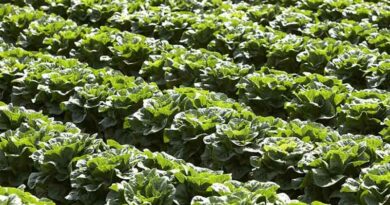
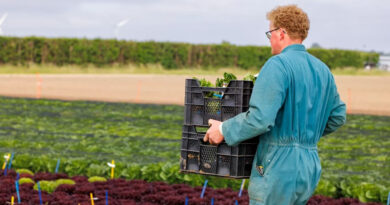
22 May 2026, UK: The 2026 leafy salad season has, agronomically, had a positive start to date. After such a difficult 2025 season, the recent good conditions for planting and some bright sunny days have been ideal for the growth of protected crops.
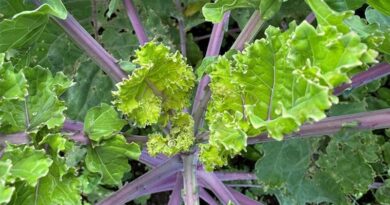
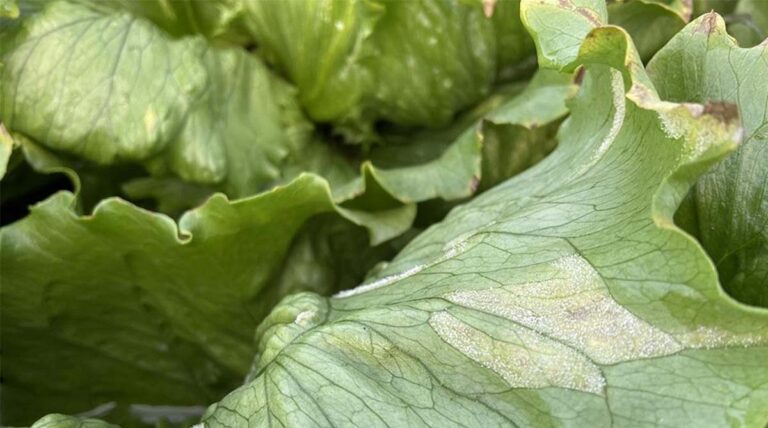
However, recent changeable weather across the country in early May created ideal conditions for downy mildew. There have already been some reports of disease in leafy crops (below), mostly in varieties where their resistance profile has a few key mildew strains missing. This is a reminder that all components of integrated pest management should be used together to ensure crop quality.
Adding to the fungicide options as part of the IPM strategy, Syngenta has continued to expand the range of products available to growers, to help ensure season long protection.
The recent approval of ORONDIS® Vip with a high level of efficacy and short 10-day harvest interval is ideal for the penultimate application when crops have full canopy. Or as an earlier application to ensure protection in high disease pressure situations.
Furthermore, ORONDIS® Vip compliments REVUS® and AMISTAR® in the disease control programme. AMISTAR® is ideally positioned as a protectant soon after planting, with the short 7-day harvest interval of REVUS® positioning it at the end to keep crops clean for harvest.
A new additional solution for 2026 through the growing season, is the on-label approval of SL567A, with a 10-day harvest interval.
With both ORONDIS® Vip and SL567A including the important highly-systemic active metalaxyl-M, our advice would be to use an alternative product in between applications, and to always partner SL567A® with a tank mix product which has good efficacy against downy mildew.
Suggested positioning shown below in the table below, where specific strategies can be adopted according to disease pressure and speed of crop growth.
Downy mildew strategies for 2026 season
| Scenario | Application 1 | Application 2 | Application 3 | Application 4 | Application 5 |
| Fast growing crops | AMISTAR® | Alternative ai fungicide | ORONDIS® Vip | REVUS® | |
| Early or late season crops | Alternative ai fungicide | AMISTAR® + SL567A | REVUS® | ORONDIS® Vip | Privest |
| High disease pressure | Alternative ai fungicide | ORONDIS® Vip | Privest | AMISTAR® + SL567A® | REVUS® |
| Comments | Focus on protectant in open canopy crops at lower risk of infection | As canopy increases so does downy mildew risk, particularly in favourable weather conditions. Strong protectant required in high disease risk | Typically slower growing crops and higher disease pressure. Continue with strong protection and retain a short PHI product for finish. | ||
Pest threats
The other burning question will be, what will aphid pressure be like this season?
Tracking activity so far, using the Rothamsted Insect Survey trap data, it would suggest that cereal aphid numbers are much higher than the 10-year average, whereas some of the key veg crop aphids are less abundant or around average, such as Cabbage aphid and Myzus persicae. In summary, it’s still a challenge to predict.
| Aphid species | Total catches to date 2026 (up to 10th May) | 10-year average | Comments |
| Grain aphid | 416 | 66 | Not pests of salads; included for illustration |
| Cabbage aphid | 49 | 667 | |
| Peach potato aphid | 384 | 273 | |
| Currant-lettuce aphid | 5 | – | 10-year data not recorded |
| Data source – Rothamsted Insect Survey | |||
Biological boost
With all the challenges of climate shift for leafy salad crops, the MAXICROP® range can help maintain yield and quality by promoting and sustaining growth, despite variable growing conditions. Our mantra is ‘making every growing day count’.
| Scenario | Application 1 | Application 2 | Application 3 | Application 4 | Application 5 |
| Fast growing crops | AMISTAR® | Alternative ai fungicide | ORONDIS® Vip | REVUS® | |
| Early or late season crops | Alternative ai fungicide | AMISTAR® + SL567A | REVUS® | ORONDIS® Vip | Privest |
| High disease pressure | Alternative ai fungicide | ORONDIS® Vip | Privest | AMISTAR® + SL567A® | REVUS® |
| Comments | Focus on protectant in open canopy crops at lower risk of infection | As canopy increases so does downy mildew risk, particularly in favourable weather conditions. Strong protectant required in high disease risk | Typically slower growing crops and higher disease pressure. Continue with strong protection and retain a short PHI product for finish. | ||
Pest threats
The other burning question will be, what will aphid pressure be like this season?
Tracking activity so far, using the Rothamsted Insect Survey trap data, it would suggest that cereal aphid numbers are much higher than the 10-year average, whereas some of the key veg crop aphids are less abundant or around average, such as Cabbage aphid and Myzus persicae. In summary, it’s still a challenge to predict.
| Aphid species | Total catches to date 2026 (up to 10th May) | 10-year average | Comments |
| Grain aphid | 416 | 66 | Not pests of salads; included for illustration |
| Cabbage aphid | 49 | 667 | |
| Peach potato aphid | 384 | 273 | |
| Currant-lettuce aphid | 5 | – | 10-year data not recorded |
| Data source – Rothamsted Insect Survey | |||
Biological boost
With all the challenges of climate shift for leafy salad crops, the MAXICROP® range can help maintain yield and quality by promoting and sustaining growth, despite variable growing conditions. Our mantra is ‘making every growing day count’.
Also Read: China’s Fertilizer Trade Sees Strong Export Growth in Jan–April 2026, Potash Imports Remain Critical
Global Agriculture is an independent international media platform covering agri-business, policy, technology, and sustainability. For editorial collaborations, thought leadership, and strategic communications, write