Cambodia Builds Capacity For More Accurate Methane Tracking In Rice Cultivation
23 July 2026, Cambodia: To support its national climate goals, Cambodia is enhancing the expertise of government agencies and research institutions in measuring methane emissions from rice cultivation.
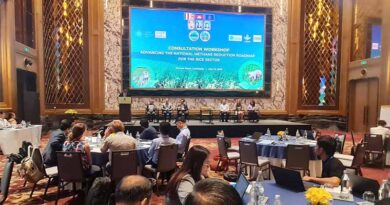
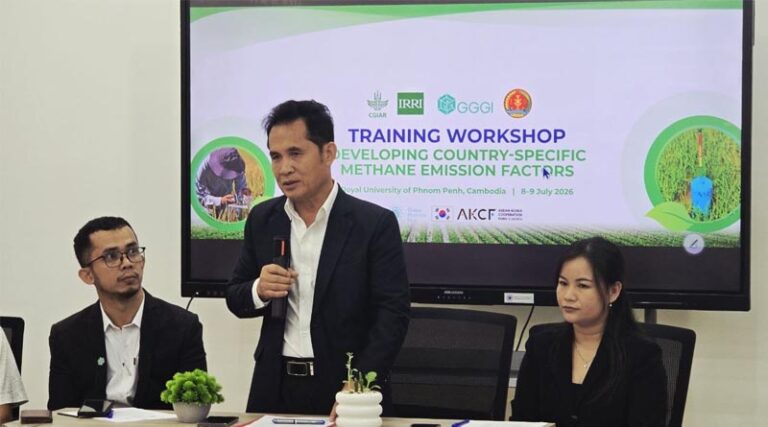
Strengthening this effort, the International Rice Research Institute (IRRI), in collaboration with the Global Green Growth Institute (GGGI) and the Royal University of Phnom Penh (RUPP), co-organized a hands-on training workshop to strengthen national capacity in developing country-specific methane emission factors. This important initiative was made possible through the generous support of the Global Methane Hub and the ASEAN-Korea Cooperation Fund.
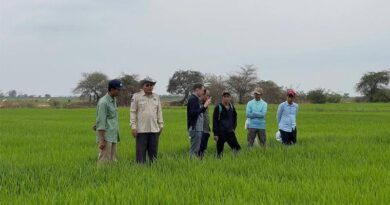
The workshop combined interactive lectures, a laboratory tour, and a practical field visit to Kvek village in Kampong Thom province. This comprehensive curriculum provided participants with fundamental knowledge of field-based greenhouse gas (GHG) measurement techniques and requirements.
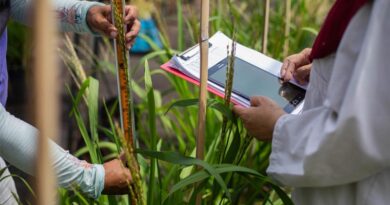
Attendees learned how to quantify methane emissions from rice fields using standardized protocols and equipment, gaining a thorough understanding of the entire process, including site selection, chamber installation, sampling frequency, laboratory gas analysis, and emission calculation.
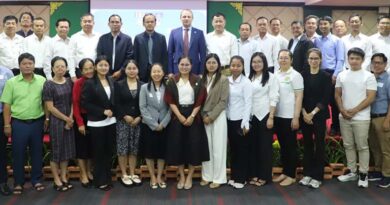
Key attendees included management and technical officials from Cambodia’s Ministry of Agriculture, Forestry, and Fisheries (MAFF); the Ministry of Environment (MoE); the General Department of Agronomy; the Cambodian Academy of Agricultural Sciences; the Royal University of Agriculture; and RUPP.
In his opening message, Dr. Yorn Try, Deputy Director of MAFF’s General Directorate of Agriculture recognized the event’s importance as a timely capacity-building platform for government agencies and stakeholders to master comprehensive emission measurement methodologies.
While Cambodia had previously paid limited attention to agricultural greenhouse gases, he noted that the country is now actively aligning with global climate goals by setting ambitious new methane reduction targets.
Delving into the science behind these efforts, IRRI scientist Dr. Bui Tan Yen explained during his lecture that methane emissions from rice production, which primarily stems from flooded fields and residue burning, require highly accurate quantification to support effective climate action.
Dr. Yen explained that GHG emissions can be estimated using three levels of quantification accuracy, or Tiers. He emphasized that transitioning from Tier 1, which only relies on generic regional estimates, to Tier 2, which uses country-specific emission factors (EFs) derived from local field measurements will significantly improve. the credibility of Cambodia’s national GHG inventories, Biennial Transparency Reports (BTRs), and Nationally Determined Contributions (NDC) report. However, he noted that developing these Tier 2 EFs requires representative field experiments conducted under standardized, directly measured conditions.
Specialized technical sessions were led by key experts to equip participants with skills to establish Tier 2 standards. Mr. Akara Ouk of IRRI guided participants through site selection and experimental field setup; Dr. Vibol San of RUPP detailed sampling protocols and analytical equipment; and Dr. Vo Thuong of IRRI discussed the various factors influencing GHG emissions alongside laboratory data quality control.
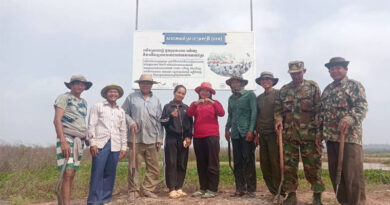
Bridging theory and practice, participants also visited a laboratory at RUPP to examine specialized measurement equipment, followed by a hands-on field trip to Kampong Thom Province to observe the entire process of field setup and gas sample collection firsthand.
During the final reflection session, Ms. Chheng Tharika, Chief of the GHG inventory Office of MoE, highlighted that the practical and technical knowledge provided by IRRI and RUPP is vital for both MoE and MAFF as they build the capacity to track methane emissions from setup to analysis.
She reaffirmed MoE’s commitment to collaborating with all relevant stakeholders, noting that while agricultural methane emissions do not fall directly under MoE’s mandate, the ministry remains fully dedicated to supporting these collaborative climate initiatives.
Also Read: Bayer Launches New Insecticide Trance for Cotton in India
Global Agriculture is an independent international media platform covering agri-business, policy, technology, and sustainability. For editorial collaborations, thought leadership, and strategic communications, write to pr@global-agriculture.com