INFAH’s 15th AGM Calls for AI-Driven, Preventive Approach to Animal Health in India
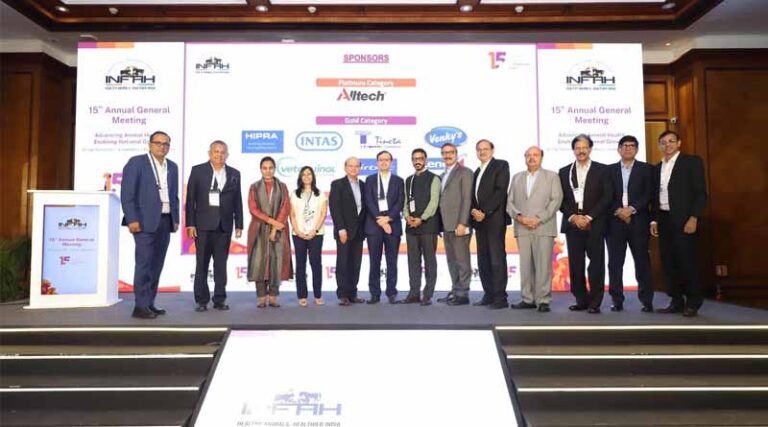
31 August 2026, Mumbai: India’s livestock sector needs to move from a reactive approach to animal healthcare toward preventive, technology-enabled systems that can improve livestock productivity, farmer incomes and food security, industry stakeholders said at the 15th Annual General Meeting (AGM) of the Indian Federation of Animal Health Companies (INFAH).
Held at Taj Lands End in Mumbai, the AGM brought together policymakers, regulatory officials, veterinary scientists and industry leaders to discuss the future of India’s animal health ecosystem. INFAH emphasized that preventive healthcare, disease surveillance, digital technologies and stronger collaboration will be important to building a more resilient livestock sector as India advances its broader Viksit Bharat objectives.
Moving from Reactive Treatment to Disease Prevention
The discussions focused on strengthening animal health through vaccination, diagnostics, nutrition, animal welfare and biosecurity rather than relying primarily on treatment after diseases occur.
Burjis Godrej, Chairperson of Godrej Agrovet, highlighted the importance of integrating animal health, nutrition and welfare to support sustainable livestock growth. He also called for greater investment in diagnostics, vaccination and biosecurity infrastructure to strengthen the sector’s ability to prevent and manage diseases.
Dr. Rubina Bose, Deputy Drugs Controller (India) at the Central Drugs Standard Control Organisation (CDSCO), emphasized the importance of developing regulatory systems that maintain safety and quality standards while creating space for innovation within the animal health industry.
Dr. Naveen Kumar, Director of the ICMR-National Institute of Virology (NIV), Pune, stressed the need for stronger disease surveillance, biotechnology and vaccine development to address emerging zoonotic threats and improve preparedness across the livestock sector.
Artificial Intelligence Emerges as a Tool for Farm-Level Management
Artificial intelligence and digital technologies were another major area of discussion at the AGM, with participants highlighting their potential to make livestock management more predictive and data-driven.
Amit Vyas, Managing Director of Amul Dairy, demonstrated how technology-enabled veterinary services can contribute to improved milk production and farmer profitability. The discussion highlighted the potential for digital tools to support farmers and veterinarians in identifying animal health issues at an earlier stage and making more informed management decisions.
Hareesh Tibrewala, Founder and CEO of Manabu AI Solutions, presented applications involving computer vision, predictive analytics and digital traceability across dairy, poultry, aquaculture and companion animal segments. Such technologies can support early identification of health risks, disease management and more efficient farm-level decision-making.
INFAH Marks 15 Years of Industry Advocacy
The 15th AGM also marked 15 years since the establishment of INFAH. During the milestone event, the federation reaffirmed its role as a platform representing the animal health industry and engaging with policymakers, regulators and other stakeholders on issues affecting the sector.
The organization said its focus will remain on translating common industry challenges into structured policy discussions while strengthening collaboration between industry, government, research institutions and academia.
Industry Veterans Recognized for Contributions
As part of the 15-year celebrations, INFAH presented its annual industry awards to Dr. Ramesh C. Sikka and Dr. Raghuvir Krishnarao Trifale in recognition of their contributions to the animal healthcare sector.
Six Strategic Priorities for Animal Health Growth
Under its vision of “Healthy Animals, Healthier India,” INFAH outlined six broad priorities for the sector. The federation identified preventive healthcare and biosecurity as key areas for strengthening early disease defense systems. It also emphasized the need for predictable and innovation-friendly regulation, alongside greater integration of artificial intelligence and digital technologies into farm-level animal healthcare.
Farmer prosperity was highlighted as another central priority, with improved livestock productivity, precision nutrition and effective disease management seen as important contributors to farm profitability. INFAH also linked animal health with India’s wider nutritional security objectives, noting the importance of a healthy and productive livestock population to the country’s food and nutrition systems.
The federation further called for deeper collaboration across the animal health ecosystem, bringing together government agencies, private industry, veterinary professionals, academic institutions and research organizations to address sector-wide challenges.
Building a More Resilient Livestock Ecosystem
The discussions at the AGM reflect a growing emphasis on prevention, early intervention and technology in India’s livestock sector. By combining stronger biosecurity and disease surveillance with digital tools, improved nutrition and collaborative policymaking, INFAH said the animal health industry can contribute to higher livestock productivity, stronger rural livelihoods and India’s broader food and nutritional security goals.
Also Read: Glyphosate Use in Caldor Fire Restoration Draws Strong Opposition at Lake Tahoe Meeting
Global Agriculture is an independent international media platform covering agri-business, policy, technology, and sustainability. For editorial collaborations, thought leadership, and strategic communications, write to pr@global-agriculture.com