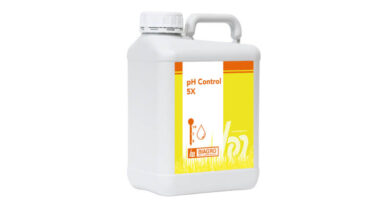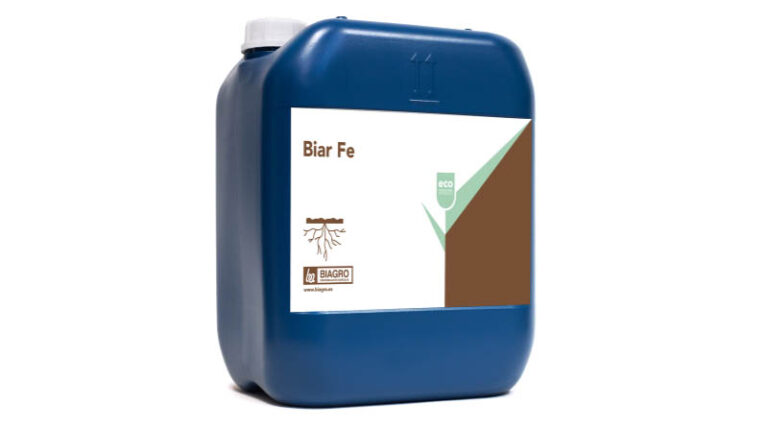
Biar Fe — Complexed Iron Solution
02 August 2026, Valencia: Iron deficiency is one of the most common and visually obvious nutritional problems growers encounter in the field. When a crop can’t access enough iron, the tell-tale sign is interveinal chlorosis — a yellowing of the leaf tissue between the veins, which remain green. Left untreated, this condition slows photosynthesis, weakens plant vigor, and can significantly reduce both yield and fruit quality. Biar Fe was developed specifically to address this challenge by delivering iron in a form that plants and soils can actually use.
At the core of Biar Fe’s formulation is iron complexed with lignosulphonic acid. Complexation is a chemical strategy that binds the iron ion to an organic molecule, protecting it from reacting with other elements in the soil solution — particularly calcium carbonate, which is notorious for locking up iron in alkaline and calcareous soils. This is especially relevant across Mediterranean growing regions, where high-pH, calcareous soils are common and iron chlorosis is a recurring seasonal headache for citrus, fruit trees, vineyards, and vegetable crops alike. By keeping iron in a soluble, plant-available form, Biar Fe helps ensure that the nutrient actually reaches the root zone instead of precipitating out before the plant can absorb it.
What sets Biar Fe apart from a simple iron fertilizer is the addition of fulvic acids to the formulation. Fulvic acids are low-molecular-weight organic compounds derived from humified organic matter, and they play a dual role in this product. First, they act as natural chelating and complexing agents themselves, further enhancing the stability and mobility of iron in the soil-plant system. Second, and just as importantly, fulvic acids have a well-documented biostimulant effect on soil biology and root physiology. They improve the permeability of root cell membranes, which accelerates nutrient uptake, and they support beneficial microbial activity in the rhizosphere. This means Biar Fe isn’t just correcting a deficiency — it’s actively working to regenerate the soil environment so that future nutrient uptake becomes more efficient as well.
This edaphic (soil-applied) approach distinguishes Biar Fe from purely foliar iron treatments. While foliar sprays can offer a quick fix for visible chlorosis symptoms, they don’t address the underlying issue in the root zone, and the effect tends to be short-lived because new growth still lacks adequate iron. By applying Biar Fe to the soil through drip irrigation or conventional fertigation systems, growers are treating the problem at its source: making iron continuously available as roots explore the treated zone throughout the growing season. This is particularly valuable for perennial crops like citrus, stone fruit, pome fruit, and grapevines, where a single seasonal correction needs to support sustained canopy development over many months.
Growers managing iron chlorosis also appreciate that Biar Fe fits naturally into an integrated fertigation program. Because it is a liquid formulation, it disperses evenly through irrigation systems without clogging emitters, and it can be combined with other compatible nutrient solutions to build a complete crop nutrition plan. This flexibility makes it a practical tool not just for acute chlorosis outbreaks, but as a preventive, season-long strategy in soils that are known to be problematic for iron availability — think high-pH soils, soils with excess irrigation water bicarbonates, or soils that have been heavily limed over the years.
Beyond correcting visible chlorosis, restoring adequate iron status has cascading benefits for overall plant performance. Iron is a cofactor in numerous enzymatic processes, including chlorophyll synthesis, electron transport in photosynthesis, and respiration. A plant that is iron-sufficient photosynthesizes more efficiently, which translates into better carbohydrate production, stronger root and shoot development, and ultimately more consistent fruit set and fill. In crops where fruit quality and marketability are directly tied to canopy health — such as citrus, where leaf yellowing can indirectly affect fruit size and sugar accumulation — maintaining iron status through a product like Biar Fe is not a cosmetic fix but a genuine productivity investment.
For growers and agronomists evaluating iron correction strategies, the combination of lignosulphonic acid complexation and fulvic acid enrichment in Biar Fe offers a balanced approach: immediate correction of iron availability paired with longer-term improvements to soil organic matter dynamics and root efficiency. It is a solution designed not just to treat a symptom, but to regenerate the underlying soil conditions that make iron — and other micronutrients — more consistently available over time. For any operation dealing with recurring chlorosis in calcareous or high-pH soils, Biar Fe represents a well-targeted, fertigation-friendly tool worth incorporating into the annual nutrition calendar.
Also Read: Bayer Launches New Insecticide Trance for Cotton in India
Global Agriculture is an independent international media platform covering agri-business, policy, technology, and sustainability. For editorial collaborations, thought leadership, and strategic communications, write to pr@global-agriculture.com