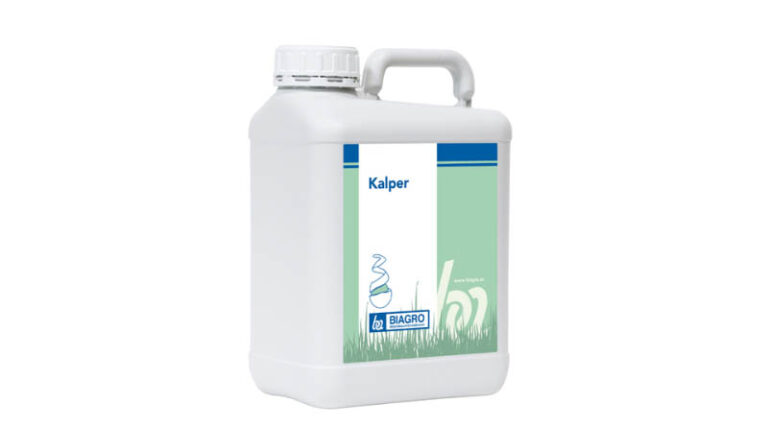
03 August 2026, Valencia: Calcium’s structural role in plant cell walls extends beyond simple tissue firmness — it also carries meaningful implications for how well a plant’s tissue resists pathogen penetration, since the same middle lamella structure that calcium reinforces to provide physical firmness also serves as a physical barrier that pathogens must breach to establish infection. Kalper was formulated to support this dual structural and defensive function, delivering a liquid calcium deficiency corrector complexed with lignosulfonic acid designed to promote both stronger cell walls and improved disease resistance.
The lignosulfonic acid complexation used in Kalper’s formulation follows an established approach for maintaining calcium solubility and plant availability. Free calcium ions are highly reactive, prone to precipitating out as insoluble calcium carbonate or phosphate compounds when in contact with other common fertigation and soil components — a persistent challenge in calcium nutrition management generally. By binding calcium to an organic lignosulfonic acid complex, Kalper helps keep the nutrient in a soluble, plant-available form as it moves from application through to actual uptake, improving the practical delivery efficiency compared to simpler, uncomplexed calcium salt alternatives.
The connection between calcium status and disease resistance operates through a fairly direct structural mechanism: calcium pectate, formed when calcium ions cross-link pectin molecules within the middle lamella, contributes significant structural rigidity to plant cell walls. Well-calcified cell walls present a more substantial physical barrier to pathogen penetration compared to calcium-deficient tissue, where weaker cell wall structure can allow pathogens — particularly certain fungal and bacterial species that rely on mechanical or enzymatic breakdown of cell wall material to establish infection — an easier route into plant tissue. This is part of why calcium deficiency is associated not just with physical firmness issues but also with increased susceptibility to certain disease pressures in many crops.
Beyond this structural defensive function, calcium also plays a role in various signaling pathways related to the plant’s induced defense responses, participating in the cellular signaling cascades that trigger the plant’s own biochemical defense mechanisms in response to pathogen attack or other stress stimuli. While this signaling role is more complex and less directly visible than calcium’s structural contribution, it represents an additional dimension through which adequate calcium status can support a plant’s overall resilience against disease pressure.
Given calcium’s well-documented immobility within the plant — moving almost exclusively through the transpiration stream and showing very limited capacity for redistribution once deposited in a given tissue — maintaining consistent calcium availability throughout periods of active tissue development is essential for ensuring newly formed tissue achieves adequate structural and defensive calcium status. This makes application timing for a product like Kalper particularly important during periods of rapid tissue expansion, when newly forming cell walls have the greatest ongoing need for calcium incorporation.
Growers managing crops with known susceptibility to diseases associated with weaker cell wall structure, or those simply seeking to build a stronger general foundation of tissue integrity as part of a broader integrated disease management strategy, often incorporate calcium correction products like Kalper as a complementary tool alongside more targeted fungicide or bactericide applications, recognizing that healthier, better-structured plant tissue generally presents a more resilient starting point against disease pressure regardless of what specific pathogen-targeted controls are also being used.
Practically, Kalper’s liquid, complexed formulation supports both foliar and fertigation application, offering flexibility depending on whether direct delivery to specific developing tissue or broader, sustained root-zone calcium availability better fits a grower’s specific situation and objectives.
For growers looking to strengthen cell wall structural integrity as part of a broader disease resistance and tissue quality strategy, Kalper offers a complexed calcium solution designed to support both the physical and physiological dimensions of plant defense that adequate calcium status underpins.
Global Agriculture is an independent international media platform covering agri-business, policy, technology, and sustainability. For editorial collaborations, thought leadership, and strategic communications, write to pr@global-agriculture.com