Fertilizer Prices Extend Climb as Potash Export Capacity Gets $500 Million Boost
01 October 2026, Nebraska: Retail fertilizer prices in North America rose further in the week to September 30, led by a sharp jump in anhydrous ammonia, according to DTN’s weekly survey of agricultural retailers. The increase comes as Canpotex, the export marketing group for major Saskatchewan potash producers, confirmed a 500 million Canadian dollar investment to expand loading capacity at a key export terminal in Vancouver, a move aimed squarely at relieving bottlenecks in the global potash supply chain.
DTN’s survey, which has tracked retail fertilizer prices weekly since 2008, found that six of the eight major fertilizers it tracks were higher than a month earlier. Anhydrous ammonia led the increase, rising 6 percent to average 977 dollars per ton. DAP averaged 926 dollars per ton and MAP 970 dollars per ton, while potash came in at 498 dollars per ton, urea at 675 dollars per ton and UAN32 at 479 dollars per ton. Only two products eased slightly over the month: 10-34-0 liquid starter fertilizer, down to 701 dollars per ton, and UAN28, down to 423 dollars per ton.
The more striking figures are the year-on-year comparisons. Every one of the eight fertilizers DTN tracks is now more expensive than it was in September 2025. Anhydrous ammonia has risen 25 percent over the past year, by far the steepest increase, followed by urea at 9 percent and MAP and 10-34-0 at 5 percent each. DAP is up 3 percent, potash 2 percent, and the two UAN liquid nitrogen products are each up 1 percent.
A Terminal Upgrade Aimed at Supply Bottlenecks
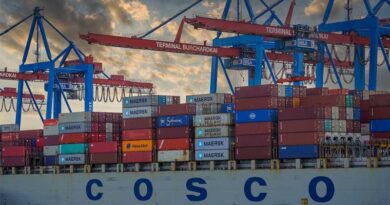
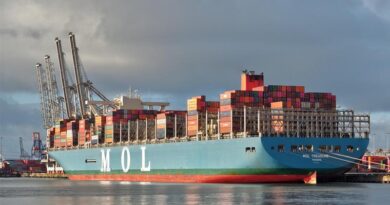
Against that backdrop, Canpotex’s investment in Neptune Bulk Terminals at the Port of Vancouver stands out as a structural response rather than a short-term trading decision. The 500 million dollar project, confirmed by the company and corroborated across Canadian trade and business press in recent days, will expand the terminal’s capacity to load potash onto ocean vessels bound for export markets. Canpotex represents Nutrien and Mosaic, two of the largest potash producers in the world, and the upgrade is explicitly framed as a response to growing global demand for Saskatchewan potash rather than a reaction to any single near-term price swing.
Josh Linville, an analyst at StoneX who tracks fertilizer markets closely, has pointed to renewed industry interest in potash supply deals as part of the broader sentiment driving current pricing, even as potash itself has risen only modestly compared with nitrogen products this year. The gap between potash’s relatively muted 2 percent annual increase and anhydrous ammonia’s 25 percent jump reflects how differently nitrogen and potash markets have been squeezed over the past 12 months, with natural gas costs and nitrogen plant economics weighing more heavily on ammonia-based products than on potash, which is driven more by mining capacity and export logistics.
Why Rising Input Costs Resonate Globally
Fertilizer price trends in North America rarely stay contained to one region, because urea, DAP and potash are all globally traded commodities with benchmark prices that move together across continents. India has essentially no domestic potash reserves and depends almost entirely on imports, drawing from Canada, Belarus, Russia, Jordan and Israel to meet farmer demand, which makes Canadian export capacity investments like the Neptune terminal upgrade directly relevant to how reliably and cheaply Indian buyers can secure supply. Rising global anhydrous ammonia and urea costs also feed directly into the subsidy bills faced by import-dependent governments, since higher landed costs for nitrogen fertilizer are typically absorbed by the state rather than passed through to farmers at the retail counter. Input suppliers, cooperative buyers and government procurement agencies across India and Latin America should treat this latest round of DTN data less as a US market story and more as an early read on where global benchmark prices for the rest of this fertilizer season are heading.
The next DTN survey, due in early October, will show whether anhydrous ammonia’s sharp monthly gain was a one-off adjustment tied to fall application demand in the US Midwest or the start of a steeper climb that other nitrogen-dependent markets will also have to absor
Global Agriculture is an independent international media platform covering agri-business, policy, technology, and sustainability. For editorial collaborations, thought leadership, and strategic communications, write to pr@global-agriculture.com