Brazilian Federal Court Orders Nationwide Aerial Spraying Ban on Three Neonicotinoids, Sets Deadline for Fipronil Review
18 September 2026, São Paulo: A panel of Brazil’s Federal Regional Court of the 3rd Region (TRF3) ruled unanimously this week that the country’s Ministry of Agriculture and Livestock (MAPA) must fully implement, within 180 days, environmental restrictions that formally prohibit the aerial spraying of three widely used neonicotinoid insecticides, imidacloprid, clothianidin and thiamethoxam, across all crops nationwide. The decision, issued by the court’s 4th Panel and reported by Brazilian agribusiness outlets on September 16 and 17, 2026, also set a firm timeline for the country’s environmental agency, Ibama, to finish a long-delayed safety re-evaluation of a fourth insecticide, fipronil.
The case, numbered 5021356-42.2021.4.03.6100, originated from a public civil action filed by Brazil’s Federal Public Prosecutor’s Office (Ministério Público Federal, or MPF), which had sought a nationwide ban on aerial application of the four active ingredients, citing risks to pollinators and rural workers. Ibama had already completed its environmental re-evaluations of imidacloprid and clothianidin back in 2021, and of thiamethoxam in February 2024, but the court found the agencies had shown what it described as qualified administrative inertia in translating those scientific conclusions into binding label and registration changes. Only partial measures had been formalized, through Administrative Acts 71/2022 and 56/2022.
Under the ruling, MAPA now has 180 days from publication of the decision to formalize the aerial spraying prohibition for imidacloprid, clothianidin and thiamethoxam across all crops nationwide, along with corresponding updates to product labels and registrations. For fipronil, whose environmental re-evaluation has not yet been completed, Ibama has up to 360 days to finish that assessment, after which MAPA has a further 90 days to adopt registration measures based on the findings. Aerial application of fipronil on foliage has already been under a precautionary ban since 2012, a restriction the new ruling leaves in place while the fuller review proceeds.
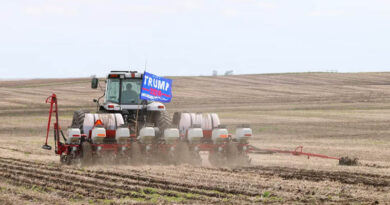
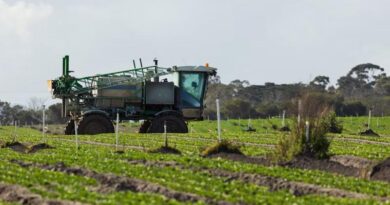
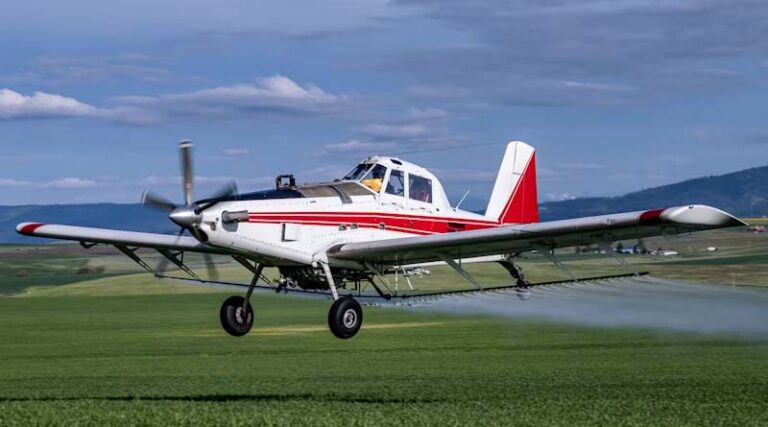
Neonicotinoids are among the most widely used insecticide classes in Brazilian row-crop agriculture, applied against pests including whiteflies, aphids and stink bugs in soybean, cotton and cereal production, much of it via fixed-wing aircraft given the scale of Brazil’s largest farming regions. A nationwide, enforceable ban on aerial application, rather than the patchwork of partial administrative measures in place since 2022, would force growers and aerial application contractors in major producing states to shift affected treatments to ground-based or drone application, or to substitute other insecticide chemistries for the aerial pass, within the ruling’s compliance window once it is formally published and MAPA issues implementing rules.
The ruling does not restrict ground-based use of any of the four insecticides, and existing registered products remain legal to sell and apply by non-aerial methods while MAPA works through the implementation deadline. It also does not, on its own, cancel any product registration outright, instead compelling the regulatory agencies to finish and formally act on assessments most of which were already substantively complete years ago.
This is at least the second major court intervention into Brazil’s pesticide regulatory pipeline reported this month, following a separate Brasília labor court ruling in early September that froze new glyphosate product registrations for 90 days, underscoring how frequently Brazilian courts are now stepping in where prosecutors argue that MAPA and Ibama have been slow to act on completed scientific reviews.
Also Read: CropLife India Flags Narrowing Crop Protection Options for Farmers
Global Agriculture is an independent international media platform covering agri-business, policy, technology, and sustainability. For editorial collaborations, thought leadership, and strategic communications, write to pr@global-agriculture.com