Olive Growers and Cooperatives Urge Caution Over Olive and Olive Oil Crop Estimates Amid High Temperatures
05 September 2026, Seville: The new table olive and olive oil campaign is facing a series of challenges and opportunities that require careful consideration to find a path toward greater profitability and sustainability for the olive sector.
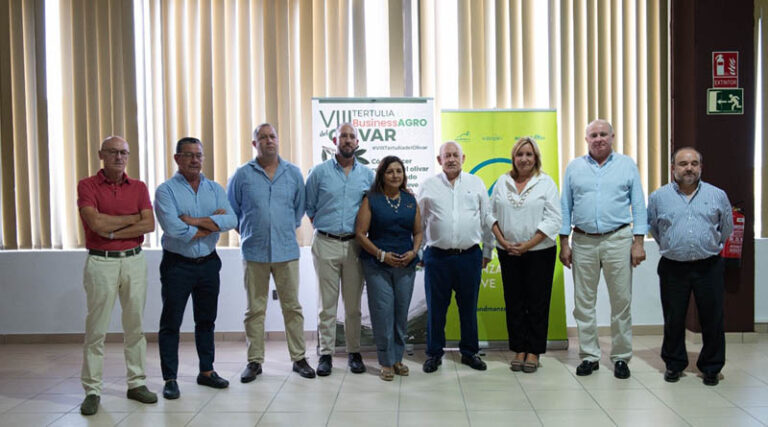
Against this backdrop, the 8th BusinessAGRO Olive Industry Roundtable was held yesterday at the facilities of Oleand Manzanilla Olive in La Puebla de Cazalla, Seville. The event brought together representatives from the production and business communities and marked the start of the table olive and olive oil campaign in the province of Seville.
Organized by Siete Agromarketing and eComercio Agrario, together with Oleand Manzanilla Olive and COAG Sevilla, the event was held under the theme “How to Make Olive Growing Profitable in a Changing World.”Participants shared their views on the current state of the olive industry and examined some of its most pressing challenges, ranging from labor shortages and crop mechanization to rising costs, unfair competition from third countries and the impact of climate change.
During the opening session, Consolación Vera Sánchez, Deputy Minister of Agriculture, Fisheries, Water and Rural Development of the Regional Government of Andalusia, accompanied by Antonio Candil Cabeza, president of Oleand Manzanilla Olive, highlighted the Andalusian government’s support for the sector and the various measures, subsidies and initiatives being implemented to build a “competitive, profitable and sustainable olive sector.”
Vera Sánchez also pointed out that Andalusia accounts for 80% of Spain’s olive-growing area, while the province of Seville is the leading producer of table olives in Andalusia.
The Andalusian Ministry of Agriculture expressed optimism about the new table olive and olive oil campaign, with initial crop estimates indicating high production levels. However, both Cooperativas Agro-alimentarias de Sevilla and COAG Sevilla called for greater caution regarding these forecasts, particularly given the high temperatures recorded in recent days, which they said are certain to affect production.
“Therefore, caution is needed when considering these crop estimates, which will not be definitive—at least for table olives—until November,” stressed Gabriel Cabello López, president of Cooperativas Agro-alimentarias de Sevilla.
For Francisco Manuel Fernández Pérez, national representative for table olives at COAG, producers should wait until the current heatwave affecting Andalusia passes.
“We will have to wait for this new heatwave affecting Andalusia this week to pass. If it continues, production forecasts will be considerably reduced,” he said.
Lack of Generational Renewal
Another key topic discussed during the roundtable was the lack of generational renewal in olive farming. Sebastián González Lineros, provincial secretary of COAG Sevilla, highlighted the issue at the beginning of the event, warning that both labor shortages and the lack of generational succession are limiting the modernization of olive groves.
Against this backdrop, crop mechanization and the adoption of new technologies are emerging as key solutions.
The mayor of La Puebla de Cazalla, Antonio Martín Melero, highlighted during the opening session that the municipality is an agricultural community “committed to technology so that the olive groves of the future can be more profitable.”
A Range of Solutions to Improve Sustainability and Efficiency
The BusinessAGRO Olive Industry Roundtable was not limited to identifying challenges. It also served as a platform for connecting industry problems with practical solutions, with a range of technologies and innovations presented to improve sustainability, efficiency and profitability.
One example was the presentation by Gabriel Beltrán Maza, senior researcher at IFAPA Centro Venta del Llano, who shared highly promising results from adding enzymes during the olive-mashing process to improve the quality of extra virgin olive oil (EVOO).
The study has already been presented at the European level, with researchers hoping that the use of certain enzymes in the extraction of extra virgin olive oil will once again be authorized.
With the aim of improving efficiency, reducing costs and ultimately increasing profitability, Teresa Molina Cobo, product manager at BIO LAINCO, presented the natural biostimulant Droopy. The product has been developed to facilitate olive fruit detachment at harvest, increasing harvesting efficiency while improving the economic sustainability of olive cultivation.
New varieties are also expected to play an increasingly important role in improving profitability. Of particular interest was the presentation by Alfonso Gómez Porras, director and marketing director at Todolivo, who outlined new varieties developed through the company’s genetic improvement program. These varieties stand out for their high productivity and ease of management in olive groves.
Regenerated Water as a Response to Water Scarcity
Water is another area where next-generation technology can play an important role. Antonio Hoyas Pablo, technical manager for Western Andalusia at Caudal, explained that, in a context of increasing water scarcity, Spain must invest in irrigation technologies that enable water regeneration and reuse.
“Only 2% of Spain’s water is regenerated. It is imperative to incorporate regenerated water into the system,” he warned.
However, the use of regenerated water also presents challenges. To address some of these issues, Caudal presented several of its innovative solutions, including functionalized pipes.
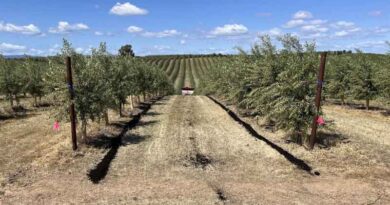
These sustainability and efficiency technologies are already moving beyond theory and being implemented across the sector. Obdulia Parra Rivero, R&D&I specialist at Cooperativas Agro-alimentarias de Andalucía, shared several videos as part of the Choice Programme, demonstrating the impact of measures such as sensor technology and the use of ground covers in olive groves.
Unfair Competition and the Promotion of EVOO
Another central topic was the impact of competition from third countries on Spanish olive growers.
Participants in the roundtable argued that Spanish producers are among the best in the world, but that there is significant room for improvement in promotional campaigns to differentiate Andalusian olive production from international competitors.
Countries such as Egypt and Turkey, which benefit from lower labor costs and, in some cases, less stringent phytosanitary controls, are putting pressure on Spanish producers, forcing them to reduce prices at origin and putting further pressure on profitability.
“We are the world’s leading power in olive oil production, but we have a lot to improve as entrepreneurs,” said Gabriel Cabello López, president of Cooperativas Agro-alimentarias de Sevilla.
A similar view was expressed by Ángel Abellán Hernández, export sales manager at Oleand Manzanilla Olive, who said that some olive-growing regions are competing with Egypt and Turkey despite the latter having lower production costs.
“But we have to find a way to differentiate ourselves,” he said.
Finally, Gissele Falcón Haro, managing director of Siete Agromarketing, emphasized the importance of industry forums in strengthening the sector.
“The major challenges facing the sector cannot be addressed through isolated perspectives. We need to listen, connect capabilities and turn knowledge into decisions,” she said.
Global Agriculture is an independent international media platform covering agri-business, policy, technology, and sustainability. For editorial collaborations, thought leadership, and strategic communications, write to pr@global-agriculture.com