EU Farmers Block Roads as Fuel Costs Outrun Falling Crop Prices
03 October 2026, Serpa, Portugal: Farmers blocked a major highway linking Portugal and Spain on October 2, the latest and most visible sign of a cost squeeze that fresh European Union data shows is hitting farm incomes across the bloc just as the autumn planting season begins.
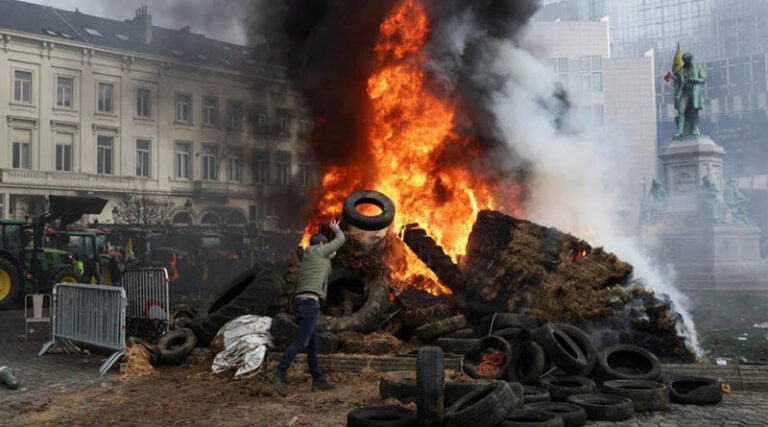
Dozens of tractors and farm vehicles shut down National Road 260 near Serpa in southern Portugal early that morning, backing up traffic for roughly two kilometers and halting freight trucks headed for the Spanish border. The Serpa Agricultural Producers Association organized the action, with local growers saying high diesel prices have made some farming operations barely viable heading into the new planting cycle. Only vehicles carrying urgent Spanish cargo were allowed through. Portugal’s agriculture minister, José Manuel Fernandes, said such demonstrations were understandable but would not by themselves resolve the deeper problem, which he described as farmers needing more financial flexibility to cope with unpredictable costs.
The Portuguese protest was not an isolated event. Spanish farm unions, including Asaja, COAG and UPA, have been organizing or threatening nationwide protests of their own over the same issue, and French farmers and fishermen have separately staged demonstrations over record fuel prices in recent weeks.
EU figures show a widening gap between costs and crop prices
The protests coincide with new European Commission data, released around the same time, showing that EU agricultural output prices fell 5.8 percent year on year in the second quarter of 2026, the third consecutive quarterly decline, while input costs rose 4.7 percent over the same period. Milk prices fell particularly hard, down 16.6 percent, with cereals down 5.6 percent. Output prices declined in 20 of the EU’s member states, with Denmark recording the steepest fall at 17.2 percent and Ireland close behind at 16.2 percent.
On the cost side, energy and lubricants rose 22 percent and fertilizer costs rose 13.4 percent across the bloc, with Lithuania seeing the largest input cost increase at 16.4 percent and Romania close behind at 11.7 percent. In other words, the average European farmer is now selling into a weaker market while paying noticeably more to plant, fuel and fertilize the next crop, a combination that squeezes margins from both directions at once.
Brussels has already moved some money toward affected farmers. The European Commission allocated 540 million euros in July to compensate growers hit by the price swings, with France receiving around 107 million euros and Spain about 50 million euros. The Commission also published a fertilizer action plan in May aimed at improving the affordability and availability of fertilizer and strengthening the EU’s domestic production capacity, a response in part to the fertilizer market disruption caused by the ongoing Strait of Hormuz crisis, which has curtailed Gulf region shipments of urea and ammonia for much of this year.
Farm groups argue the compensation has not kept pace with the scale of the problem, and Spanish unions have warned they will escalate protests if the government does not provide additional relief before the main autumn sowing window closes. The timing is pointed: diesel is a non negotiable input for planting, and a farmer facing a thin or negative margin on this year’s harvest has little room to absorb a further jump in fuel costs before next year’s crop even goes into the ground.
The dispute also sits alongside Europe’s long running argument over the EU Mercosur trade agreement, which many European farm groups blame for adding cheaper South American imports to an already oversupplied market, even as the deal remains tied up in European Parliament ratification. That tension is likely to resurface if farmer protests spread beyond the Iberian Peninsula in the coming weeks.
Also Read: Indonesia Raises October Palm Oil and Cocoa Reference Prices
Global Agriculture is an independent international media platform covering agri-business, policy, technology, and sustainability. For editorial collaborations, thought leadership, and strategic communications, write to pr@global-agriculture.com