In Croatia, FAO Director-general Highlights Youth, Innovation And Science For Sustainable Agrifood systems
07 September 2026, Osijek: During a four-day visit to Croatia, FAO Director-General QU Dongyu highlighted the importance of investing in the next generation, supporting innovation and appropriate technologies, as well as strengthening science-based cooperation to build sustainable and resilient agrifood systems.
The visit included the High-Level Ministerial Conference on Generational Renewal in Rural Areas, the 71st World Ploughing Championship, field visits across Croatia’s agricultural, food processing and aquaculture sectors, and the inauguration of the FAO General Fisheries Commission for the Mediterranean (GFCM) Adriatic Sea Technical Unit in Split.
Investing in the next generation
Opening the High-Level Ministerial Conference in Osijek, Qu called for an inclusive approach to generational renewal, stressing that young people need access not only to land, finance, knowledge and technology, but also to the services and opportunities that make rural life attractive.
“Generational renewal is about choice,” Qu said. “Our responsibility is to create the conditions in which young people can choose agriculture; they can choose to live in rural areas; and they can choose to invest their talent, knowledge and energy in transforming our agrifood systems.”
Seeing Croatia’s agrifood systems first-hand
Field visits showcased the diversity of Croatia’s rural economy and agriculture and the links between production, processing, tradition and innovation.
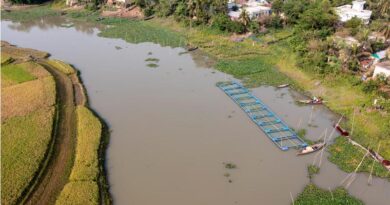
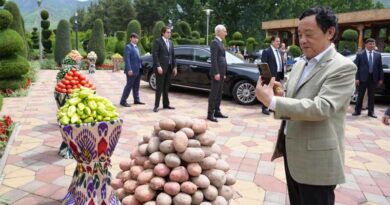
In Orahovica, Qu visited a vineyard, and observed the preparation of šaran na rašljama, traditional carp roasted over an open fire. In Grudnjak, he visited a large area of fish ponds connected to a fish processing facility, seeing Croatia’s freshwater aquaculture sector first-hand.
In Dragodinac, the Director-General visited the country’s largest irrigated hazelnut orchard and its irrigation reservoir, highlighting the importance of water management and resilient agricultural production in the face of climate pressures.
Qu also visited a modern meat processing facility in Osijek, further highlighting the importance of value-added foods in agrifood systems.
The visits demonstrated how local production, traditional knowledge and modern infrastructure can generate value and livelihoods in rural communities.
Farmers, tradition and innovation
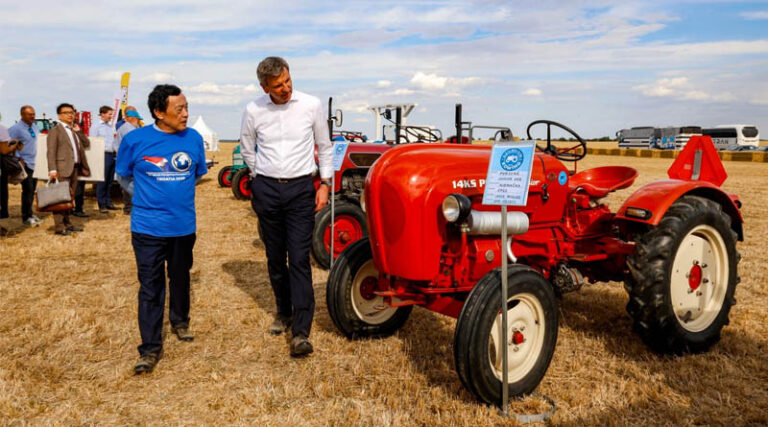
At the 71st World Ploughing Championship in Osijek-Baranja County, Qu met competitorsr withtheir tractors in the site for the event which was located in the flat arable croplands that are typical of that region. He also saw an exhibition of historic tractors, as well as local agricultural products. He then addressed the opening ceremony.
The event brought together agricultural tradition, farmers’ practical knowledge and modern approaches to mechanization and technology.
“I am delighted to be among the farmers of the world. You are ploughing the soil to sow the seeds of peace and I hope we have a bumper harvest,” he said.
Science and cooperation for the Adriatic
In Split, the Director-General inaugurated the new FAO GFCM Adriatic Sea Technical Unit at the Institute of Oceanography and Fisheries. The Unit will strengthen scientific cooperation and fisheries management among Albania, Bosnia and Herzegovina, Croatia, Italy, Montenegro and Slovenia.
Qu emphasized the importance of reliable data, research and innovation in responding to pressures from fishing activity, climate crisis and growing demand for aquatic foods.
“We are here in Split,” the Director-General said. “But we are not split – we are in fact more united towards efficient, inclusive and sustainable approaches to the fisheries in the Adriatic sea”.
Building a sustainable future
From young people considering a future in rural areas, to farmers preserving traditions while embracing new technologies, and scientists working across borders to protect shared marine resources, the visit highlighted the central role of people, knowledge and cooperation in transforming agrifood systems.
FAO will continue working with Croatia and its Members to advance better policies, science and innovation, sustainable investment, family farming, rural development and meaningful youth participation.
Together, these efforts support FAO’s Four Betters – better production, better nutrition, a better environment; and a better life, leaving no one behind.
Also Read: Syngenta Welcomes Trevor Watson As Turf Territory Manager For Mid-atlantic And Northeast Region
Global Agriculture is an independent international media platform covering agri-business, policy, technology, and sustainability. For editorial collaborations, thought leadership, and strategic communications, write to pr@global-agriculture.com