Valuing Disaster Prevention: Desert Locust Monitoring Protects Lives And Saves Billions Of Dollars
17 June 2026, Rome: Across Africa, the Middle East, and Southwest Asia, desert locust are among the most destructive agricultural pests. A single swarm can consume enormous amounts of vegetation, threatening food supplies in those regions, yet much of the damage are prevented, thanks to early monitoring and control systems.
According to the Food and Agriculture Organization of the United Nations (FAO), effective surveillance and early warning systems are critical for preventing locust outbreaks from becoming humanitarian crises.
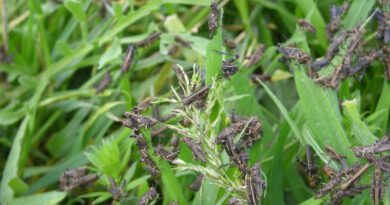
FAO estimates that a single square kilometer of locust swarm has the capacity to consume the same amount of food in one day as 35,000 people, posing a serious threat to crops, livestock feed, and food security of millions.
The power of prevention
A recent study, “Valuing disaster prevention: desert locust monitoring and control” by the National Bureau of Economic Research, reveals that prevention efforts generate benefits far greater than their costs. Moreover, researchers found that monitoring systems do far more than track insects, they protect livelihoods, child health and national economies.
Since 1978, through the Desert Locust Information Service (DLIS) FAO coordinates one of the world’s longest-running desert locust monitoring and early warning systems. FAO helps countries detect and control outbreaks before they spread across borders.
Suggestive evidence for the effectiveness of the locust monitoring and control system comes from the declining frequency of plague events: Between 1861 and 1960 there were seven major locust plagues, some lasting decades. Between 1961 and 2000, there were only two, neither lasting longer than 4 years.
When monitoring stops, damage grows
Disaster prevention systems are often difficult to value because success means disasters never fully materialize. However, what happens when surveillance systems fail and swarms go undetected?
Researchers discovered that reduced monitoring leads to more locust swarms, particularly when favorable rainfall creates ideal breeding conditions. As swarms grow, they destroy crops and pastureland, reducing food availability for vulnerable communities.
The consequences extend beyond agriculture. The study found that children exposed to locust outbreaks during pregnancy or early childhood face significantly higher risks of stunted growth. Exposure around birth was associated with an increase in childhood stunting risk of more than seven percentage points, highlighting the long-term human costs of agricultural disasters.
Locusts do not specifically seek out foods “that would have been eaten by people.” Instead, they are entirely indiscriminate, consuming any green vegetation in their path. Because they are herbivores with massive appetites, the primary crops they devour happen to be the exact plant-based foods that sustain human populations.
In remote breeding areas, armed conflict and other disruptions can prevent field teams from conducting surveillance. Without timely monitoring and control measures, locust populations expand and spread into populated agricultural regions.
As climate change increases the frequency and intensity of environmental shocks, early warning systems are becoming more important than ever. Desert locust monitoring demonstrates how proactive surveillance can prevent local outbreaks from escalating into regional disasters.
Innovating with consistency
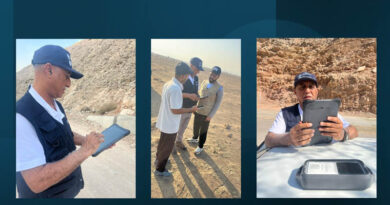
FAO has deployed several innovative tools to strengthen locust monitoring and early warning systems. These include eLocust4 and eLocust3K, rugged satellite-enabled tablets and mobile applications that allow field officers to collect and transmit critical locust and environmental data in near real time, even from remote areas without mobile network coverage.
At the national level, RAMSES (Reconnaissance and Management System of the Environment of Schistocerca) is installed in locust control centers. This Geographic Information System (GIS) automatically integrates data received from the eLocust tools with historical locust records, rainfall information, and satellite imagery to assess outbreak risks and support decision-making.
FAO also utilizes advanced remote sensing and mapping applications to monitor ecological conditions, particularly rainfall patterns and the development of green vegetation, which provide favorable breeding habitats for locusts. Together, these technologies enhance early detection, forecasting and response to potential locust outbreaks.
A remarkable return on investment
One of the study’s most striking findings is the economic value of monitoring. The researchers estimated that eliminating the desert locust monitoring system would result in approximately USD 25 billion in annual losses due to reduced childhood nutrition and future productivity.
By comparison, maintaining monitoring and control programs costs only a fraction of that amount. The estimated benefit-cost ratio ranges from 160:1 to 680:1, meaning every dollar invested in prevention can generate hundreds of dollars in social and economic benefits.
“Disaster prevention is not merely an agricultural investment, it is an investment in public health, economic development, and human well-being,” the study notes.
FAO’s success at monitoring and control
FAO’s experience during the 2020–2021 desert locust upsurge demonstrated the importance of continuous surveillance, preparedness, and international cooperation in protecting food security and livelihoods.
The lesson learnt was that preventing disasters is far more effective and far less costly than responding after they occur. Desert locust monitoring provides a powerful example of how investment in early warning systems can protect millions of people, improve child health, and save billions of dollars every year.
Also Read: FMC and Corteva Partner to Expand Rimisoxafen Herbicide Access Across the Americas
Global Agriculture is an independent international media platform covering agri-business, policy, technology, and sustainability. For editorial collaborations, thought leadership, and strategic communications, write to pr@global-agriculture.com