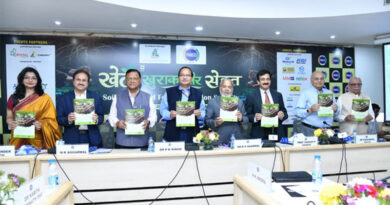
18 March 2026, New Delhi: Union Minister of Food Processing Industries Chirag Paswan called for a roadmap for the food processing and nutraceutical sector, stating that it should align with India’s goal of becoming a developed nation by 2047. Speaking at ASSOCHAM’s “NutriBharat 2026: National Conference on the Role of Nutraceuticals and Functional Foods in Strengthening Nutrition Security,” he said the sector should define targets for the short, medium, and long term and work with policymakers and regulators.
Paswan said India has moved from food scarcity to food security and the next step is nutrition security to address malnutrition. He said the food processing industry has a role in providing safe and nutritious food.
A joint knowledge paper titled NutriBharat@2047 – India’s Nutritional Transition through Nutraceuticals and Functional Foods, released by EY and ASSOCHAM, calls for a shift from a food security framework to a “nutrition for all” approach.
The paper recommends changes in the regulatory system, including structured health-claims governance, tiered evidence standards, AI-based validation systems, and a national quality seal. It highlights the role of agriculture in nutraceutical production and calls for farm-to-formulation value chains based on GAP-certified farmer producer organisations, biofortified crops, botanicals, and plant proteins.
Amit Vatsyayan, Partner and Social Sector Leader, EY India, said an industry-led and agriculture-linked nutrition system can support public health outcomes. He said linking AYUSH-based practices with clinical evidence and manufacturing standards can support value chains connecting farmer groups, biofortified crops, botanicals, and plant proteins, supported by traceability and testing systems. He added that investment in research, farmer partnerships, and consumer awareness will be required to expand access and support rural incomes.
Paswan said maintaining quality standards is necessary, adding that rejected export consignments can affect India’s reputation. He also called for innovation, manufacturing practices, and coordination between industry, regulators, and research institutions.
He said India can become a global supplier of food products, supported by agriculture, food processing capacity, and trade partnerships, but this will require adherence to quality and consumer trust.
Takayuki Hagiwara, FAO Representative in India, said the global focus is moving from food security to nutrition security and nutraceuticals can help address dietary gaps. He said agri-food systems should focus on reliability, innovation, and hygiene.
Dr Alka Rao, Advisor (Science, Standards and Regulations), FSSAI, said regulatory systems based on science and stakeholder consultation are required to support the food sector. She said work is underway on frameworks for nutraceuticals, probiotics, and functional foods, along with alignment with global standards through Codex Alimentarius.
Global Agriculture is an independent international media platform covering agri-business, policy, technology, and sustainability. For editorial collaborations, thought leadership, and strategic communications, write to pr@global-agriculture.com