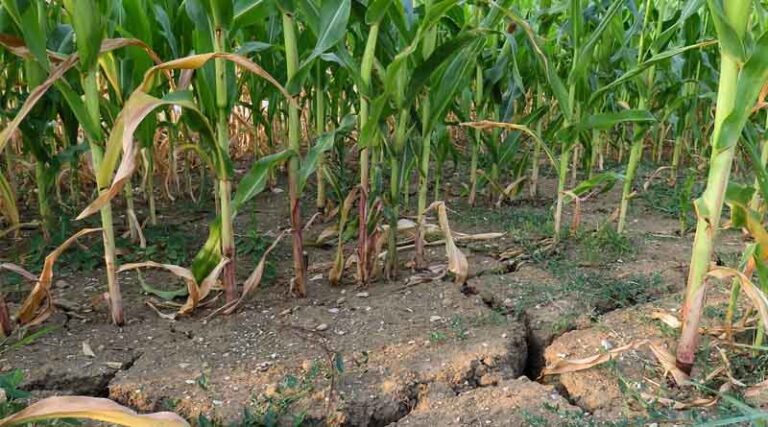
22 October 2026, Athens, Georgia, USA: Researchers at the University of Georgia are building a new generation of plant sensors designed to warn farmers about drought, disease and insect damage days or even weeks before any of those problems become visible to the eye.
The work is led by Liang Dong, who joined UGA in 2025 as the Georgia Research Alliance’s Eminent Scholar in Precision Agriculture after nearly two decades at Iowa State University. Precision agriculture refers to using data and technology, rather than uniform treatment of an entire field, to manage crops at a finer scale, often down to individual plants or small zones within a field. Dong holds a joint appointment in UGA’s College of Engineering and its College of Agricultural and Environmental Sciences, and he serves as associate director for research at the university’s Institute for Integrative Precision Agriculture (IIPA), a center that brings together engineers, agronomists and extension specialists to develop and test farm technology.
Dong’s team is developing small sensors that attach directly to plants and track the chemical signals plants produce when they come under stress. The approach, which Dong describes as giving plants “a voice,” borrows a comparison from consumer electronics: much as a smartwatch tracks a person’s heart rate to flag health problems early, these plant-worn sensors are meant to pick up on internal warning signs long before a farmer would notice wilting leaves or discolored patches in a field.
Specifically, the sensors are designed to detect reactive oxygen species (byproduct molecules that build up inside plant cells when they are under stress), phytohormones (the plant equivalent of hormones, which trigger changes in growth and defense) and volatile compounds that plants release into the air, sometimes described as a plant’s chemical alarm system. Together, these signals form a kind of internal communication network tied to how a plant grows and responds to trouble. The same sensor platform is also designed to track nutrient levels, water loss through transpiration and photosynthetic activity, alongside separate sensors for soil moisture and surrounding conditions such as temperature and humidity.
Testing for an early warning, not just a diagnosis
The central question driving the research, according to Dong, is whether these combined signals can reliably flag a drought, a disease infection or an insect attack before any visible symptom shows up in the field. If they can, growers could act on an early warning rather than reacting after damage is already done, whether that means adjusting irrigation, scouting a specific block more closely or applying a targeted treatment before an outbreak spreads across a field.
The project is still in its first year, and Dong’s team has not yet published quantitative accuracy data, such as how often the sensors correctly flag a real problem or how far in advance of visible symptoms they can do so. Rather than moving straight to data collection, the team spent its initial months consulting with Georgia farmers, crop researchers and UGA Cooperative Extension specialists to identify which stresses growers most need an early warning about, and in which crops. That input reportedly spans vegetable and fruit crops common to the state, and the team has specifically flagged coastal Georgia’s soil salinity as a condition it wants the sensors to help monitor as the work progresses.
Dong’s longer-term goal, by his own account, is to develop sensors that are both low-cost and reliable enough for routine on-farm use, rather than laboratory instruments that require samples to be removed from the field and analyzed elsewhere. That would mark a shift from the input-side precision agriculture tools many growers already use, such as soil moisture probes and satellite-based canopy mapping, toward sensors that read a plant’s internal chemistry directly and continuously, closer to the plant’s own early response to stress.
Beyond row and vegetable crops, the team has also pointed to possible future applications in poultry, livestock and forestry, suggesting the underlying biosensor approach, reading chemical signals in real time, could extend well beyond field crops if the technology proves reliable and affordable.
Global Agriculture is an independent international media platform covering agri-business, policy, technology, and sustainability. For editorial collaborations, thought leadership, and strategic communications, write to pr@global-agriculture.com