Tomato Plants’ Daily Rhythm Could Help Develop Drought-Resilient Crops
26 August 2026, Jerusalem: A previously overlooked daily rhythm in tomato plants could help breeders develop varieties that maintain productivity while using water more efficiently under drought and heat stress, according to new research from the Hebrew University of Jerusalem.
The study, led by Dr. Sanbon Chaka Gosa and Prof. Menachem Moshelion of the Robert H. Smith Institute of Plant Sciences and Genetics in Agriculture, found that the timing of stomatal activity—the opening and closing of microscopic pores on leaves—may be as important as the number of stomata a plant possesses.
Stomata allow plants to take in carbon dioxide needed for photosynthesis, but they also release water through transpiration. The researchers found that continuously tracking how plants regulate water throughout the day provided a better indication of drought resilience than measurements taken at a single point in time.
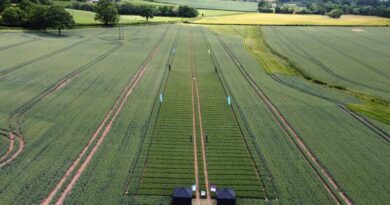
Published in Plant Science, the study combined years of field performance data with advanced greenhouse phenotyping to evaluate drought responses across genetically diverse tomato lines.
The strongest-performing plants showed a pronounced increase in stomatal activity during the early morning, when sunlight was sufficient for photosynthesis but temperatures and atmospheric dryness had not yet reached levels that would cause excessive water loss. The researchers describe this period as a physiological “golden hour,” when plants can balance carbon uptake with water conservation.
“Plants don’t simply save water during drought—they manage it strategically,” said Prof. Moshelion. “Understanding these dynamic patterns gives breeders entirely new traits to target when developing crops that can thrive under increasingly unpredictable climate conditions.”
The study found that high-performing tomato lines were also able to recover more quickly after drought and maintain greater biomass and water-use efficiency. Interestingly, plants that consumed more water under favorable conditions were often better able to recover after water became available again.
While the better-performing plants generally had higher stomatal density on the underside of their leaves, the researchers found that stomatal anatomy alone was not sufficient to predict drought resilience. Instead, continuous measurements of stomatal behavior and whole-plant water use provided more meaningful insights into how plants respond to changing environmental conditions.
“Our work shows that a plant’s daily rhythm matters,” said Dr. Gosa. “By measuring how plants respond continuously rather than at a single moment, we can identify resilient varieties much earlier and with far greater precision.”
The researchers believe this approach could help accelerate the identification of promising crop varieties and support the development of crops capable of maintaining productivity under drought conditions. The methodology could potentially be extended beyond tomatoes to other crops as agriculture faces increasing pressure from rising temperatures and water scarcity.
Research Paper
Gosa, S.C., Gebeyo, B.A., Patil, R., Mencia, R., & Moshelion, M. Stomatal density and aperture dynamics regulate drought response and yield in tomato. Plant Science, 2026.
DOI: 10.1016/j.plantsci.2026.113170
Authors: Sanbon Chaka Gosa, Bogale Abebe Gebeyo, Ravitejas Patil, Ramón Mencia, Menachem Moshelion
Affiliation: The Robert H. Smith Institute of Plant Sciences and Genetics in Agriculture, The Robert H. Smith Faculty of Agriculture, Food and Environment, The Hebrew University of Jerusalem, Rehovot, Israel.
Also Read: Jefferies Maintains Buy Rating on UPL, Sees 14% EBITDA Growth in FY27
Global Agriculture is an independent international media platform covering agri-business, policy, technology, and sustainability. For editorial collaborations, thought leadership, and strategic communications, write to pr@global-agriculture.com