China’s Egg Industry Turns to Cage-Free Production, Traceability and AI
21 October 2026, China: China’s egg industry is shifting its focus from production volumes to product quality, traceability, branding and digitalisation as producers face price volatility, narrow margins and risks associated with capacity expansion.
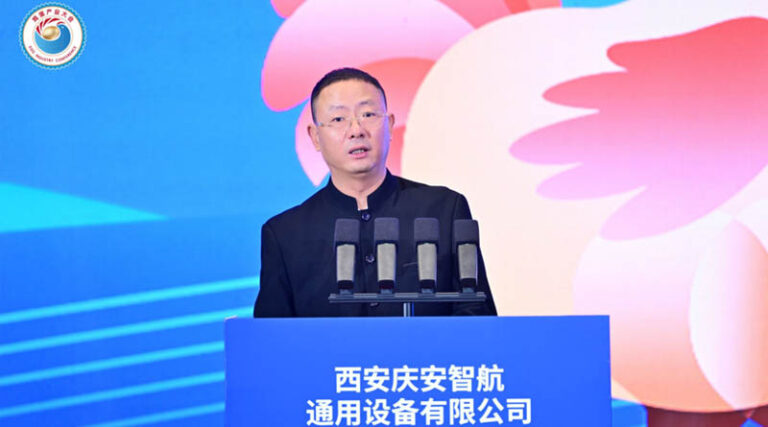
The shift was a central theme at the 8th China Egg Industry Conference, held in Xi’an from September 20–22, 2026. More than 1,600 producers, retailers, researchers and technology companies attended the event, which was organised around the theme “Digital & Smart Egg Chain.”
China is the world’s largest egg producer and consumer, but its egg brands have limited market influence and the country’s egg exports remain low, according to Yao Jianzheng, Chairman of Gerun Food Group. Industry discussions focused on strengthening brand value and product differentiation rather than relying solely on production growth.
Cage-Free Production Gains Attention
Cage-free egg production featured prominently at the Global Cage-Free Layer Development Forum, where participants discussed production models, consumer premiums, disease prevention and the challenges faced by smaller producers.
Huang Mutzu, Program Director of Lever China, presented an overview of global cage-free layer farming trends, highlighting international market experience as a reference for Chinese producers. Gong Xiaolei, Product Manager at Chengdu Xiaojuren Animal Husbandry Equipment Co., Ltd., called for cage-free production models adapted to China’s conditions.
Professor Ning Zhonghua of China Agricultural University identified breed selection as a key requirement for successful cage-free production. Discussions also examined the economic considerations and disease-management requirements associated with the transition.
Proposed ‘One Egg, One Code’ System
Traceability was another priority at the conference. More than 30 experts discussed a proposed “one egg, one code” system that would assign an individual code to each eggshell and link it to information about production, packaging and distribution.
Hou Ning, Secretary-General of the Agricultural Product Supply Chain and Traceability Industry Collaborative Innovation Alliance, said gaps in supply-chain traceability and quality risk management were increasing the need for digital systems.
The proposed approach would enable more detailed tracking of eggs through the supply chain, providing a mechanism to document their origin and movement from production to distribution.
AI Enters Egg Branding and Market Analysis
Artificial intelligence was presented as a tool for both production management and commercial decision-making.
Han Zhihui, President of Guanghua Bost Marketing Consulting Agency, released the 2026 China Egg Industry AI Brand Competitiveness Report. The report uses AI-based data analysis to assess the position of egg brands and provide companies with a reference for brand development.
The conference discussions highlighted potential applications of AI in identifying consumer trends, evaluating brand positioning and guiding decisions on marketing and product development.
Smart farming and digital management were also discussed in the context of connecting farm operations with sales. Yan Tieshan, Chairman of Hubei Jiameixian E-commerce Co., Ltd., outlined how brand strategy, intelligent equipment, data management and regional public brands could be integrated across production and marketing.
Gao Yaqi discussed the commercialisation of breeding technologies and investment in technology development.
Digital Platforms Link Breeding, Logistics and Distribution
The conference saw the launch of the Cold Chain Duoduo Smart Cloud Breeding Platform, which connects breeding operations, cold-chain logistics and distribution through digital systems. Its cross-border expansion project aims to support access to international markets for Chinese eggs.
Guolian Co., Ltd. and the Egg Eye View Platform also announced a strategic partnership focused on smart farming and international market development.
These initiatives reflect efforts to connect production data, logistics and market information across the egg value chain.
E-commerce and Processing Offer Routes to Higher Value
Online retail is becoming an increasingly important part of the sector’s approach to product differentiation. Li Guangfeng, Head of the Egg Category at JD Century Trading, presented the “JD Standard” for a good egg, a framework covering supplier standards, product specifications, quality control, supplier management and customer management.
E-commerce platforms offer producers an opportunity to communicate product quality and distinguish their eggs in the marketplace. Consistent quality, documented production practices and recognisable brands could help companies compete beyond price.
A separate roundtable examined egg-product processing, including ready-to-eat products, demand from the catering sector and locally adapted processing equipment. Participants discussed processing as another route to higher-value products and a means of reducing exposure to fluctuations in fresh-egg prices.
The conference discussions indicate that China’s egg industry is placing greater emphasis on how products are produced, verified, marketed and delivered. Cage-free production, traceability systems, AI-based brand analysis, digital supply chains and processing are emerging as areas of focus as companies seek to strengthen their market positions.
Also Read: USDA Reports Record Soybean Yield, Bigger Corn Crop in October Forecast
Global Agriculture is an independent international media platform covering agri-business, policy, technology, and sustainability. For editorial collaborations, thought leadership, and strategic communications, write to pr@global-agriculture.com