India’s Agrochemical Industry Body Seeks Rs 5,000-7,000 Crore Government Scheme to Cut China Dependence
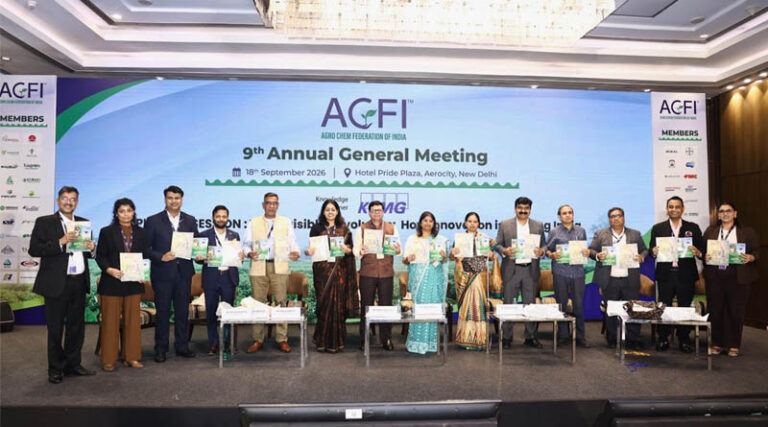
21 September 2026, New Delhi: The Agro Chem Federation of India (ACFI), the country’s crop protection industry body, has asked the government to launch a dedicated Rs 5,000-7,000 crore support programme running seven to eight years, including two to three years for plant commissioning, to build self-reliance in agrochemical technicals and intermediates and reduce the industry’s structural cost disadvantage against China. The proposal, developed with consultancy KPMG, was announced through a knowledge paper released during the annual general meeting of the industry body in New Delhi.
Rahul Dhanuka, ACFI’s chairman, said India’s next phase of growth in crop protection should be anchored in strengthening ecosystem competitiveness, accelerating the commercialisation of innovation, enhancing supply chain resilience and reducing structural cost disadvantages. The federation’s report argues that closing this competitiveness gap requires targeted government support rather than permanent subsidies, and that biologicals represent a significant growth opportunity if research and commercial deployment can be better linked.
The specific asks in the ACFI-KPMG proposal include a 5 to 8 percent incentive on incremental sales for domestic technical and intermediate manufacturers, along with subsidies of 30 to 40 percent on industrial electricity costs and shared common effluent treatment plants, two of the biggest recurring cost items for chemical manufacturers competing with Chinese producers. The plan also calls for capital grants to support specialised research and development, investment thresholds calibrated separately for large companies and smaller firms, the creation of agrochemical parks with shared utilities and cluster-based infrastructure, and a single digital platform to streamline both central and state-level regulatory approvals. On biologicals specifically, the federation is seeking support for pilot manufacturing facilities and Good Laboratory Practice (GLP) certified testing labs, infrastructure India currently lacks at scale.
India is one of the world’s largest producers and exporters of crop protection products by volume, but much of that output depends on technical-grade active ingredients and chemical intermediates sourced from China, a vulnerability the domestic industry has flagged repeatedly in recent years as Chinese producers benefit from larger scale, cheaper power and established chemical parks. ACFI’s new proposal is the clearest articulation yet of what the industry believes it would take to close that gap, translating a longstanding policy grievance into a specific investment ask ahead of budget discussions.
The proposal has not yet been taken up as government policy. It remains an industry recommendation submitted for consideration, and its journey toward an actual scheme, if one materialises, will depend on budgetary allocation and coordination between the Ministry of Chemicals and Fertilizers, the Ministry of Agriculture and state governments that would host the proposed agrochemical parks. No timeline for a government response has been announced.
This matters to global agribusiness readers because India’s competitiveness in technical-grade agrochemical manufacturing has direct implications for global supply chains. India already supplies technical actives and formulated products to markets across Africa, Latin America and Southeast Asia, and a successful push to localise intermediate production would reduce the country’s own exposure to Chinese supply disruptions or price swings, the kind that rattled glyphosate and other herbicide markets in recent years. A well-funded scheme could also accelerate India’s push into biologicals manufacturing at a moment when global demand for bio-based crop protection is rising, potentially reshaping where multinational and Indian generic manufacturers choose to locate new capacity over the next decade.
Also Read: CropLife India Flags Narrowing Crop Protection Options for Farmers
Global Agriculture is an independent international media platform covering agri-business, policy, technology, and sustainability. For editorial collaborations, thought leadership, and strategic communications, write to pr@global-agriculture.com