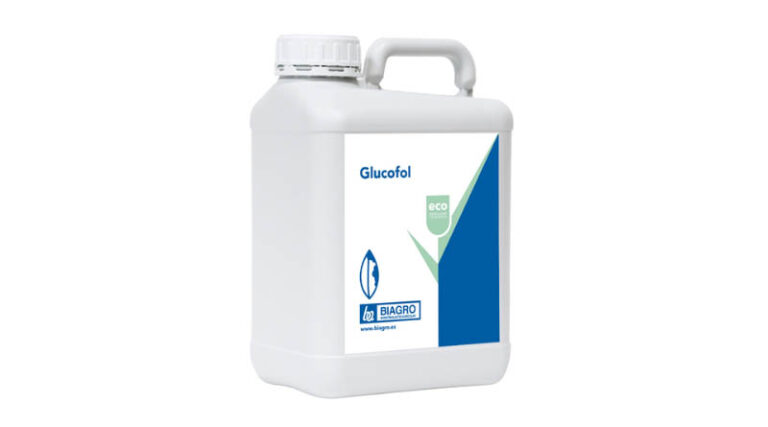
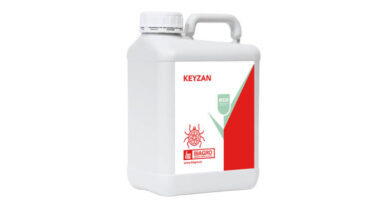
03 August 2026, Valencia: The chemical form in which copper is delivered to a crop significantly influences both how effectively it’s absorbed and how it moves within the plant once applied — considerations that matter considerably whether the primary goal is correcting a copper nutritional deficiency or supporting the plant’s broader defensive capacity against disease pressure. Glucofol addresses this formulation challenge through copper heptagluconate technology, a complexed liquid copper solution engineered specifically for strong systemic action and reliable delivery.
Heptagluconic acid serves as the complexing agent in Glucofol’s formulation, binding to the copper ion in a way that maintains its solubility and supports more effective movement through plant tissue compared to less sophisticated copper formulations. This complexation matters because copper, in its simpler mineral salt forms, can be prone to binding tightly to plant cell walls at the point of initial contact, limiting its movement beyond the immediate application site. The heptagluconate complex is specifically designed to overcome this limitation, supporting genuine systemic movement that allows the copper to reach plant tissue beyond just the directly sprayed surface.
This systemic characteristic distinguishes Glucofol from purely contact-based copper products, offering practical advantages in both coverage consistency and the reliability of the response achieved. Contact-only copper formulations depend entirely on thorough, even spray coverage to be effective, since any leaf surface not directly reached by the spray receives no protective or nutritional benefit. A systemic product like Glucofol, by contrast, can distribute copper to some degree beyond the initial contact point, offering a degree of protection against the inevitable gaps and unevenness that occur in real-world field spray applications, even with well-calibrated equipment and careful application technique.
Copper’s dual role as both an essential plant micronutrient and a long-established disease management tool means a well-formulated copper product like Glucofol offers value on both fronts simultaneously. Nutritionally, copper supports lignin synthesis and various oxidative enzyme systems central to structural integrity and stress response, while its disease-suppressive activity stems from its broad-spectrum disruption of fungal and bacterial cellular processes — a mode of action that has proven durable against resistance development compared to many more narrowly targeted synthetic alternatives.
The liquid formulation of Glucofol supports straightforward integration into standard foliar spray programs, with the complexed heptagluconate structure specifically engineered to maintain stability and solubility within typical spray tank mixing conditions, reducing the risk of precipitation or compatibility issues that can sometimes complicate copper product use alongside other crop protection or nutrition inputs within a combined tank mix.
Application timing for a copper product like Glucofol typically follows preventive principles common to copper-based disease management generally — applying ahead of anticipated disease-favorable conditions, such as periods of high humidity or specific temperature ranges known to favor the development of relevant fungal or bacterial pathogens for a given crop, rather than waiting for disease symptoms to become established before treating. This preventive orientation reflects copper’s generally protective rather than curative mode of action, meaning its greatest value comes from establishing a protective presence on plant surfaces before pathogen pressure builds, rather than attempting to reverse an already-established infection.
For growers seeking a copper product engineered specifically for enhanced systemic movement and reliable delivery — whether the priority is copper nutritional correction, broad-spectrum disease suppression, or both simultaneously — Glucofol’s heptagluconate complexation technology offers a formulation designed to overcome some of the practical limitations associated with more basic copper salt alternatives, supporting more consistent results across variable field application conditions.
Global Agriculture is an independent international media platform covering agri-business, policy, technology, and sustainability. For editorial collaborations, thought leadership, and strategic communications, write to pr@global-agriculture.com