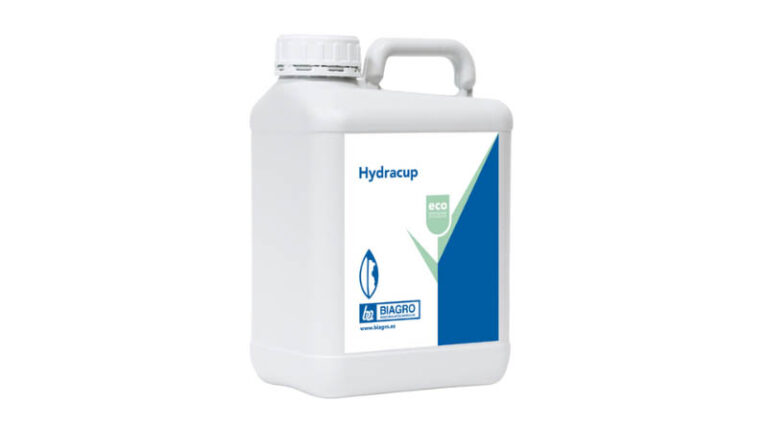
03 August 2026, Valencia: Copper and zinc, while both essential micronutrients in their own right, serve quite distinct physiological functions within the plant — copper contributing to lignin synthesis and oxidative enzyme systems, zinc governing hormone-driven cell elongation and reproductive development. Hydracup was formulated to address both nutrients together, combining copper and zinc through citric acid hydrazide technology in a single solution designed to support balanced correction of these two commonly co-occurring micronutrient needs.
The citric acid hydrazide formulation technology employed in Hydracup represents a specific approach to stabilizing and delivering these two metal micronutrients together. This kind of specialized carrier and complexing technology helps maintain the solubility and compatibility of both copper and zinc within a single formulated product — a meaningful formulation challenge, since combining multiple metal ions in one product can sometimes create compatibility issues or reduce the effective availability of one or both elements if not properly managed through appropriate complexing or chelating chemistry.
Zinc’s essential role centers on its function as a cofactor in auxin synthesis, the plant hormone governing cell elongation and, by extension, shoot architecture and internode development. Zinc-deficient plants commonly display shortened internodes and clustered growth at shoot tips, alongside broader impacts on fruit set and development given zinc’s supporting role in various reproductive-stage processes. Copper, meanwhile, contributes to lignin synthesis — supporting structural cell wall rigidity that has implications for both general plant structural integrity and physical resistance to pathogen penetration — alongside its role in various oxidative enzyme and photosynthetic electron transport processes.
Because copper and zinc deficiencies can each independently limit different aspects of plant performance — zinc affecting growth hormone regulation and reproductive success, copper affecting structural integrity and various enzymatic processes — a combined product like Hydracup offers practical efficiency for growers managing soils or crops where both elements tend to run short simultaneously, a pattern that can occur in various soil conditions, including some sandy soils with generally poor micronutrient retention capacity or soils with a documented history of imbalanced fertilization favoring macronutrients at the expense of micronutrient maintenance.
Copper’s additional relevance to disease management, given its broad-spectrum activity against various fungal and bacterial pathogens, means a combined copper-zinc product like Hydracup can offer supportive benefits beyond pure nutritional correction, potentially contributing a degree of protective activity alongside its primary role in addressing copper and zinc nutritional status. This dual functionality — nutrition plus supportive defensive activity — reflects copper’s characteristic dual identity in crop production more broadly.
Application timing for Hydracup benefits from consideration of when each nutrient’s physiological role is most critical: zinc availability matters particularly during periods of active shoot growth and ahead of flowering, when auxin-driven cell elongation and reproductive development are most active, while copper’s relevance spans a somewhat broader window given its combined nutritional and disease-supportive roles. Many growers find that applying a combined product like Hydracup during the general period of active vegetative growth through flowering captures the periods of highest relevance for both included nutrients.
Practically, Hydracup’s liquid formulation supports foliar spray application, integrating into standard spray programs where growers can address both zinc and copper nutritional needs in a single, consolidated treatment rather than managing these two micronutrients as entirely separate inputs.
For growers managing crops or soils where zinc and copper deficiencies tend to occur together, Hydracup offers a formulated solution designed to address both nutritional needs efficiently, supported by citric acid hydrazide technology engineered to maintain the stability and availability of both included micronutrients.
Global Agriculture is an independent international media platform covering agri-business, policy, technology, and sustainability. For editorial collaborations, thought leadership, and strategic communications, write to pr@global-agriculture.com