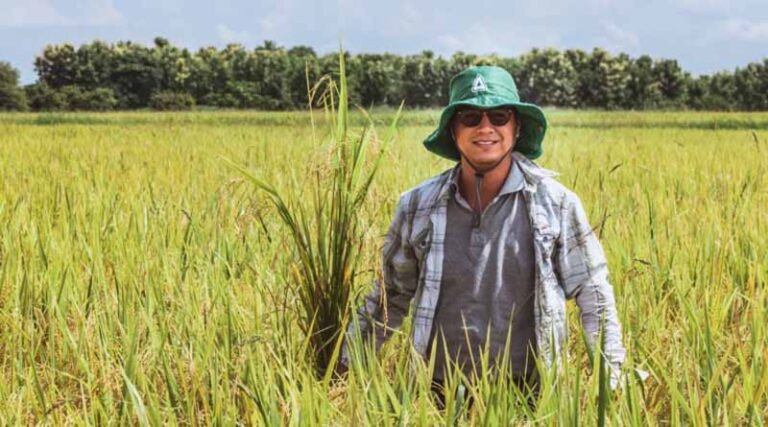
29 May 2026, New Delhi: Across India’s fertile plains, flooded fields stretch to the horizon, fed by seasonal rains and rich soils. These conditions create an ideal environment for rice, a crop that has sustained communities for generations.
Millions of growers rely on rice for income and stability. The crop alone accounts for more than 40 percent of India’s total food grain production. When rice production suffers, the consequences are felt quickly by rural producers, threatening livelihoods and testing the resilience of growers.
Among the threats facing rice, the Brown Plant Hopper (BPH) remains one of the most destructive. In severe outbreaks, can cause yield losses of up to 70 percent.
This rapidly spreading pest can undo months of work in a matter of days, with an impact that lasts well beyond a single harvest. When crops are damaged or lost, it can threaten financial security, disrupt long-term planning and put future seasons at risk.
This was the reality the ADAMA India team encountered when they spent time in rice-growing regions, hearing directly from growers about the challenges they face and the factors shaping their decisions each season.
Understanding The Need
Wherever they went, the team heard the same frustrations from growers. Many felt their current options for BPH management were either inconsistent, slow to act or unaffordable. They needed protection that could be trusted and fit the economic realities of their farms.
During field visits, the team saw strong, healthy rice fields deteriorate even after growers had applied available solutions. These observations highlighted a clear gap. Growers did not simply need curative treatment—they needed assurance their crops could be protected before the pest caused visible damage. This reinforced the importance of designing a solution that met real practical needs and offered reliable preventive protection.
These field conversations laid the foundation for BAZAK®, our advanced formulation designed to provide robust protection for rice crops against the destructive BPH.
Field Trials Shaped the Approach
Field trials across multiple states revealed how significantly conditions vary, even within a single region. Temperature, humidity and rainfall patterns influence the timing and severity of BPH activity. These differences affect the consistency of solutions, since waiting for symptoms often means missing the opportunity to protect yield potential.
In the field, growers described the difficulty of making the right call at the right time, often with little margin for error. The data pointed toward the need for a preventive strategy, which meant BAZAK® needed to be designed to be applied before pest pressure escalates, offering a more dependable line of protection.
Its combination of Pymetrozine and Dinotefuran provided complementary modes of action, while its patented Effervescent WDG Formulation increased solubility and improved mixing consistency. This made the product easier for growers to use under real field conditions.
“BAZAK® was positioned as a prophylactic shield, a line of defense applied before the threat could strike,” said Ramkishan Thanugula, Director of Portfolio and Innovation, ADAMA India. “This strategic approach helped us redefine the product, presenting it not merely as a pesticide, but as a proactive partner in prevention. This was our innovation strategy in action.”
The goal was a product that provided strong agronomic performance while remaining accessible for the growers who needed it most. Let’s look at how it delivered in the field.
Cross-Functional Execution in Action
With the Kharif season fast approaching, the priority was clear: get a reliable solution into growers’ hands, exactly when they needed it. The development of BAZAK® moved forward under tight timelines, with teams working rapidly to overcome complex formulation and production challenges.
Every effort was focused on ensuring this solution could be delivered safely and on time. Regulatory teams engaged proactively with authorities to support timely approvals, while marketing aligned agronomic guidance to help growers adopt a preventive approach.
The initial launch delivered a strong early impact. BAZAK® reached approximately 120,000 growers and covered 160,000 hectares. Early feedback showed high satisfaction with its performance against BPH, reinforcing ADAMA India’s confidence in its efficacy.
The Road Ahead
The success of the BAZAK® launch highlighted the importance of staying close to growers and designing solutions around their realities. As rice production continues to evolve, priorities such as resistance management, preventive strategies and affordability will remain central.
By listening to growers, learning from field experience and delivering practical innovation, ADAMA India continues to support agricultural resilience and strengthen food security where it matters most.
Global Agriculture is an independent international media platform covering agri-business, policy, technology, and sustainability. For editorial collaborations, thought leadership, and strategic communications, write to pr@global-agriculture.com