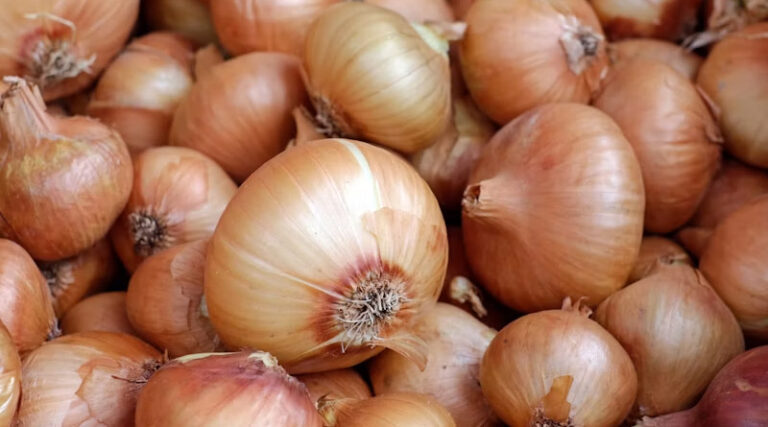
Government deploys rail-and-road logistics to supply major consumption centres as festive-season demand approaches
27 August 2026, New Delhi: India has begun a calibrated release of onions from its strategic buffer stocks as the government seeks to maintain domestic availability and limit seasonal price pressures ahead of the major festive and wedding season.
The intervention combines railway rakes and road transport to move onions from producing regions to major consumption centres. The government said the scale, geographical coverage and distribution channels will be adjusted according to market prices, arrivals and demand conditions.
Onion production remains broadly stable
Domestic onion supplies are expected to remain adequate, supported by estimated production of 30.737 million tonnes (307.37 lakh tonnes) in 2025-26, broadly unchanged from 30.767 million tonnes (307.67 lakh tonnes) in the previous year.
For 2026-27, the government has set a target of procuring 200,000 tonnes (2 lakh tonnes) of rabi onions for the Price Stabilization Fund (PSF) buffer. Procurement began on 15 May 2026 through the National Agricultural Cooperative Marketing Federation of India (NAFED) and National Cooperative Consumers’ Federation of India (NCCF), with around 121,000 tonnes (1.21 lakh tonnes) already procured.
For the first time, the Central Warehousing Corporation (CWC) has been engaged as the storage agency for the PSF onion buffer for 2026-27, with the aim of strengthening storage management and operational efficiency.
The government expects seasonal demand to increase during Onam, Ganesh Chaturthi, Durga Puja, Dussehra and Diwali, as well as during the wedding season. These periods can put additional pressure on onion prices because of higher consumption and supply-chain requirements.
Buffer stocks moved through rail and road networks
The government has started releasing buffer onions through a hybrid logistics model, combining railway transportation with road distribution.
The approach is designed to enable faster movement from major producing areas to markets where prices or supply conditions warrant intervention. Additional quantities and destinations will be determined according to market developments.
A key component of the programme is the Kanda Express, a dedicated rail-based initiative for transporting onions from producing regions to major consumption markets.
During 2024-25, 14 railway rakes transported nearly 12,000 tonnes of onions to five cities. The programme expanded considerably in 2025-26, when 86 railway rakes moved approximately 88,000 tonnes to 16 cities across India.
The first Kanda Express of the current financial year has departed from Nashik for New Delhi, with the consignment expected to reach the Delhi-NCR region. Road shipments are also being used to supply Chennai, Kolkata, Ernakulam, Guwahati, Varanasi, Lucknow, Patna, Chandigarh, Jammu and Amritsar.
Retail onions to be sold at ₹35 per kg
As part of the consumer-focused intervention, onions will be sold at ₹35 per kg through retail outlets and mobile vans operated by NCCF and NAFED, along with Safal and Kendriya Bhandar outlets.
| Retail channel | Outlets | Mobile vans |
|---|---|---|
| NCCF | 9 | 40 |
| NAFED | 13 | 50 |
| Kendriya Bhandar | About 100 | — |
The targeted sales programme is intended to improve access to affordable onions in markets experiencing seasonal price pressure.
Onion exports remain strong
Despite the domestic market intervention, India’s onion exports have remained robust.
Between April and June 2026, the country exported approximately 382,000 tonnes (3.82 lakh tonnes) of onions. Major export destinations included Malaysia, Sri Lanka, the United Arab Emirates and Nepal.
The government said continued export activity reflects the country’s comfortable overall onion availability.
Daily price monitoring guides market intervention
The Department of Consumer Affairs tracks the daily prices of 41 essential commodities across 579 centres nationwide. Onion prices, market arrivals, supply availability and demand trends are used to determine where and when buffer stocks should be released.
The government said it will continue monitoring markets across states and adjust interventions where necessary to prevent unwarranted price increases while maintaining adequate supplies.
Other essential food prices remain stable
The government reported that prices of key pulses, including tur, gram, masur, urad and moong, as well as tomatoes and potatoes, remain broadly stable and range-bound.
The all-India average retail prices recorded on 26 August 2026 were:
| Commodity | All-India average retail price |
| Tomato | ₹38.33/kg |
| Potato | ₹22.63/kg |
| Chana Dal | ₹86.71/kg |
| Atta | ₹40.48/kg |
| Tur Dal | ₹123.30/kg |
| Milk | ₹60.82/litre |
| Onion | ₹37.87/kg |
Tomato, potato and chana dal prices were reported to be lower than their levels a year earlier.
Balancing consumer affordability and farmer returns
India’s onion market demonstrates the challenge of managing seasonal food-price volatility while protecting both consumers and producers. By combining buffer procurement, storage, targeted releases and expanded logistics, the government is seeking to respond to short-term market pressures without relying solely on production-side measures.
The continued monitoring of arrivals, prices and demand will determine the scale and destination of future buffer releases as India enters a period of higher seasonal consumption.
Also Read: Jefferies Maintains Buy Rating on UPL, Sees 14% EBITDA Growth in FY27
Global Agriculture is an independent international media platform covering agri-business, policy, technology, and sustainability. For editorial collaborations, thought leadership, and strategic communications, write to pr@global-agriculture.com