Poverty Emerges as Key Driver of Biodiversity Loss, Says Study
18 June 2026, Hyderabad: Efforts to conserve biodiversity in tropical forests may fall short unless they address the underlying socio-economic realities of forest-dependent communities, according to a new international study published in Nature Sustainability. The research argues that poverty alleviation and access to affordable, clean energy are as important for biodiversity conservation as traditional forest protection measures.
The study, titled “Advancing Biodiversity Through Poverty Solutions,” was co-authored by researchers from the Indian School of Business (ISB), the University of Notre Dame, the University of Michigan, Yale University, and other global institutions. Drawing on more than two decades of field data from 322 community-managed forests across 15 countries in Asia, Africa, and Latin America, the research examines how poverty, energy dependence, governance systems, and land-use practices influence biodiversity outcomes in tropical forest ecosystems.
The findings reveal a strong connection between poverty and biodiversity decline. Forests located in regions with higher population densities and larger concentrations of poor households experienced significant reductions in tree species richness. The decline was particularly pronounced among dominant tree species, which play a crucial role in maintaining ecosystem stability and resilience.
The study also identified dependence on fuelwood as one of the most significant drivers of biodiversity loss. Communities lacking access to affordable alternative energy sources showed stronger correlations with declining forest diversity, underscoring the importance of energy security in long-term conservation strategies.
“Global conservation frameworks have often treated environmental protection and human development as separate objectives,” said Professor Ashwini Chhatre, Executive Director of the Bharti Institute of Public Policy at ISB and one of the study’s lead authors. “Our findings demonstrate that in human-dominated tropical landscapes, poverty solutions are biodiversity solutions. Sustainable conservation requires investment in the socio-economic well-being of forest-dependent communities, not merely stricter regulations or protected-area boundaries.”
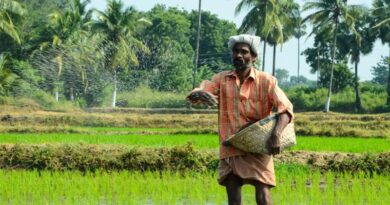
The research also challenges conventional assumptions regarding agriculture’s role in biodiversity conservation. Contrary to the perception that agricultural activities inevitably harm forest ecosystems, the study found that communities relying more heavily on subsistence farming often maintained higher levels of tree species richness. Researchers suggest that diversified, localised farming systems can coexist with forest landscapes and may even contribute to ecological regeneration.
In contrast, the study found limited evidence that governance structures alone determine biodiversity outcomes. Whether forests were managed by local communities or government agencies showed no statistically significant relationship with changes in tree diversity. Similarly, livestock grazing did not emerge as a major predictor of biodiversity loss.
The findings arrive at a pivotal moment as countries work toward meeting global biodiversity and ecosystem restoration targets by 2030. The authors argue that conservation strategies focused primarily on regulations, protected areas, or governance reforms may not deliver desired outcomes unless they simultaneously address poverty, energy access, and rural livelihoods.
For policymakers, development agencies, and conservation organizations, the study offers an important lesson: biodiversity protection and human development should not be viewed as competing priorities. Instead, they are deeply interconnected goals that must be pursued together.
The authors conclude that achieving long-term conservation success will require a fundamental shift in perspective from viewing local communities as pressures on forest ecosystems to recognizing them as indispensable partners in environmental stewardship. Expanding economic opportunities, improving access to clean energy, and enhancing quality of life may ultimately prove just as critical to protecting biodiversity as preserving forests themselves.
Global Agriculture is an independent international media platform covering agri-business, policy, technology, and sustainability. For editorial collaborations, thought leadership, and strategic communications, write to pr@global-agriculture.com