Climate Adaptation Can Worsen Inequality, But It Shouldn’t
07 August 2026, Africa: The purpose of climate adaptation is simple enough: help people manage risk before risk becomes crisis. But complications abound.
Many adaptation efforts still start from the assumption that vulnerability is mainly a technical problem. That is, if we improve the seeds farmers use, and introduce new practices to them, the results will be all round gains. But that is rarely how adaptation works in real life.
In every farming system, vulnerability is shaped by local power dynamics especially when interventions are introduced: i.e. who has control over the land, do they have direct access to capital, which groups are expected to absorb the loss that will come from the intervention, and so on.
Consider lowlands in parts of Africa, many of which are difficult to farm. Heavy rains often leave them flooded, while dry periods can make water unreliable. For that reason, they are often described as marginal land.
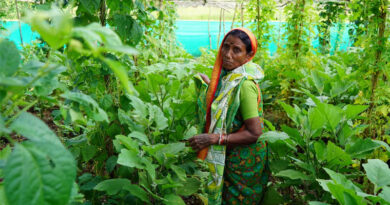
But marginal land is not empty land. Women, migrants, poorer households and other groups with limited access to better farmland may depend on these areas precisely because they have no other alternatives.
Now imagine an adaptation project improves water management in those lowlands. In time, flood and drought risks will reduce and the land becomes more productive. On paper, the project will look like a success.
But productivity changes politics.
Once the land becomes valuable, people with stronger customary, social or economic claims may move in. This happened in Sikasso in Mali when the government funded project “Aménagement bas fonds Sikasso” improved water management in lowlands. Men took over plots women were using. Local groups pushed out migrants. Wealthier households captured the new benefits. The people who survived on marginal land became the losers of an adaptation project.
This is not a small implementation problem. It goes to the heart of how adaptation is judged. A project can reduce climate risk for one group while increasing vulnerability for another. In other words, good agronomy can end up being bad development.
The pattern is not limited to land and water. In Barguidena, Mali, the IFDC- funded “Integrated Seed Sector Development in the Sahel (ISSD/Sahel)” disseminated drought tolerant rice varieties, which helped farmers withstand dry seasons. However, the benefits were uneven. Farmers with pre-existing advantages like access to cash, information, distribution networks or advisory support, were better able to use the seeds, while the larger group remained exposed.
This is not an argument against technology. CGIAR exists because science, evidence and agricultural innovation offer huge gains with improved seed, better water management, climate services and farming practices. But none of these things are deployed in a neutral setting. They enter places shaped by land rights, gender norms, migration status, income and political influence.
That is why locally led adaptation cannot be a box ticking exercise. It is how we test whether adaptation is truly reaching the people it claims to protect.
Local leadership cannot mean inviting communities to comment after the solution has already been designed. The people most exposed to climate risk must help define the problem to be solved, the depth or extent of changes that will be implemented, and how costs and benefits are shared at the grassroots.
Local engagement is a foundation for effective and sustainable action, not a barrier to implementation. Projects that move quickly without meaningful local involvement often miss the needs and priorities of the people they are supposed to serve.
For researchers and funders, we should tackle the difficult questions early but identifying the beneficiaries and who among them lacks title, status or a voice? If the land, water or technology becomes more valuable, who stands to gain and are gains evenly spread? Who can block access after the project leaves? And so on/
These questions are not additional layers to adaptation. They are fundamental to designing adaptation actions that are effective, inclusive, and sustainable.
Food, land and water systems need far more investment as climate risks intensify. But more finance will not fix weak models. If adaptation treats local power as an afterthought, it will keep producing uneven results.
We need to raise the standards. Adaptation should be judged by whether it reduces climate risk, yes. It should also be judged by who shaped the intervention, who could use it, and who shared in its gains.
Otherwise, we are not reducing vulnerability. We are simply kicking it down the road.
Also Read: Syngenta Appoints Eladio Robles as India Managing Director
Global Agriculture is an independent international media platform covering agri-business, policy, technology, and sustainability. For editorial collaborations, thought leadership, and strategic communications, write to pr@global-agriculture.com