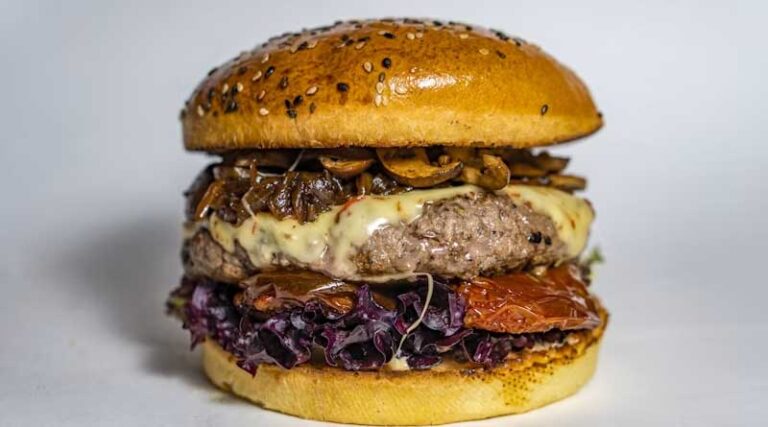
Why Your Burger Might Cost More This Year, and It’s Not Just an American Problem
22 September 2026, Washington, D.C.: The United States Department of Agriculture has cut its 2026 beef production forecast for the fourth straight month, and the ripple effects are starting to reach well past American ranches and feedlots.
In its September 11 World Agricultural Supply and Demand Estimates (WASDE) report, USDA lowered its 2026 beef production forecast to 24.877 billion pounds, a reduction of 90 million pounds from August’s already-reduced estimate. It is the fourth consecutive monthly downgrade: the forecast has now fallen from 25.500 billion pounds in May to 24.877 billion pounds today, a decline of 623 million pounds, or 2.4 percent, in just four months of updates. Measured against 2025’s actual production of 25.614 billion pounds (USDA’s National Agricultural Statistics Service, Livestock Slaughter 2025 Summary), the 2026 forecast now sits 2.9 percent lower year over year.
USDA attributes the latest cut to a slower pace of fed cattle marketings and lighter carcass weights through the third quarter, along with an expected drop in cow slaughter later in the year. Those are technical descriptions of a simpler underlying story: America’s cattle herd has been shrinking for years, and there are fewer animals moving through the system to slaughter. The agency also lowered its average fed steer price forecast for 2026 to $237.35 per hundredweight, down $8 from its August projection, even as prices remain historically elevated.
What makes this more than a domestic supply story is the United States’ unusual position in the global beef market: it is simultaneously the world’s largest beef producer and its largest beef importer. When domestic production falls, the US does not simply absorb less meat, it buys more from abroad to make up the difference. According to USDA’s Economic Research Service Livestock, Dairy and Poultry Outlook (released August 18, 2026), 2026 beef imports are forecast to rise 14 percent year over year to 6.132 billion pounds, with Australia and Mexico among the largest contributors to that increase. At the same time, US beef exports are projected to fall 10 percent to 2.333 billion pounds, with shipments to China down roughly 133 million pounds year to date, more than half of the total export decline.
That combination, a shrinking domestic herd pulling in more imports while sending less abroad, means the United States is effectively competing harder for beef that would otherwise go to other buyers. Supply that might have gone to importers in Asia or the Middle East is instead being drawn toward the US market, tightening availability and putting upward pressure on prices in beef-exporting countries as well. For a country like Brazil or Australia, a bigger US order does not appear out of nowhere; it comes out of a finite pool of exportable beef, and someone else in the global market ends up paying more or waiting longer for it.
For now, the trend shows no clear sign of reversing. USDA’s next WASDE update is due October 9, and if the pattern of the last four months holds, it will not be the last downward revision to the 2026 forecast. Whether that continues to show up as higher grocery store and restaurant prices in the US, or as tighter beef markets in the countries now supplying more of America’s beef, will depend largely on how quickly the US herd can begin rebuilding, a process that, given cattle biology, tends to be measured in years rather than months.
Also Read: India Approves Pioxaniliprole, First Insecticide Active Ingredient Discovered in India
Global Agriculture is an independent international media platform covering agri-business, policy, technology, and sustainability. For editorial collaborations, thought leadership, and strategic communications, write to pr@global-agriculture.com