BIPA Calls for 25% Reduction in Chemical Inputs Through Biological Integration
12 September 2026, Hyderabad: The BioAgri Input Producers Association (BIPA) from India has called for a phased 25% reduction in chemical fertiliser and pesticide usage through the scientific integration of biological inputs. The association estimates this could potentially save the national exchequer around ₹40,000 crore annually, while reducing import dependence, lowering farm input costs, improving soil health and strengthening Indian agricultural exports.
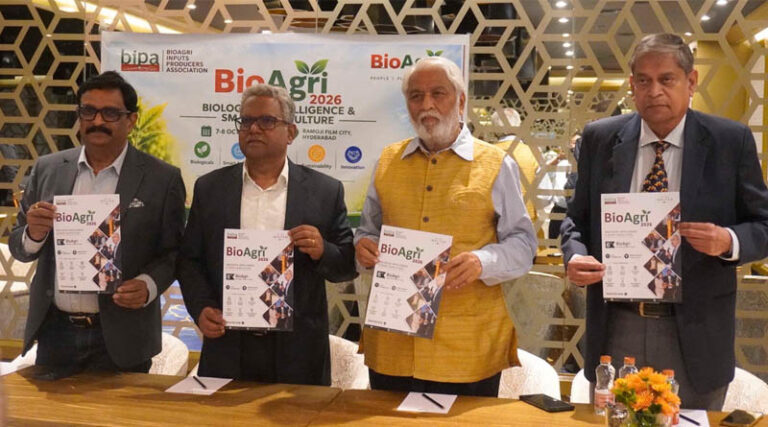
The proposal will be a key focus of the 6th Annual BioAgri Industry Summit, BIOAGRI 2026, to be held on October 7–8 at Ramoji Film City, Hyderabad, under the theme “Biological Intelligence & Smart Agriculture.” The summit is expected to bring together 250+ delegates, 35+ speakers and 50 exhibitors from industry, research, startups, academia and government.
BIPA President Dr. A. John Peter said biological inputs such as biofertilisers, biostimulants and biopesticides should not be viewed merely as substitutes for chemical inputs, but should be scientifically integrated into existing agricultural systems.
“India needs to move from a predominantly chemical-dependent agricultural model towards an integrated system in which biologicals and chemicals work together scientifically and responsibly. A phased 25% reduction in chemical fertiliser and pesticide usage can deliver significant economic, environmental and agricultural benefits,” said Dr. A. John Peter.
India consumes around 35 million tonnes of urea annually and depends substantially on imported raw materials for DAP, potash and other fertilisers. With the annual fertiliser subsidy bill exceeding ₹1.75 lakh crore, BIPA believes reducing chemical dependence could help contain subsidy expenditure and foreign exchange outflows.
The association has also urged the government, industry, research institutions and academia to develop a national programme to improve soil organic carbon and biological activity, which it considers fundamental to the long-term health and productivity of Indian soils.
BIPA Secretary General Dr. Venkatesh Devanur highlighted the growing importance of pesticide residue management as international markets impose increasingly stringent Maximum Residue Limit (MRL) requirements.
“Food safety and residue standards are becoming increasingly stringent across global markets. Agricultural produce from India has also faced rejection. India cannot afford to lose valuable markets because of avoidable residue-related issues. Greater adoption of Integrated Pest Management and scientifically validated biological crop-protection solutions can contribute to a safer and more export-competitive agricultural system,” he said.
Following BIOAGRI 2026, BIPA plans to publish a White Paper on “Integrating Biologicals into the Framework of Chemical Fertilisers and Pesticides” and initiate discussions towards a National Policy on Biological Input Integration, covering scientific protocols, research, innovation, responsible adoption and regulation.
Also Read: UPL Expands Nature-Based Agriculture Portfolio with Investment in Japan’s PhytoChrome
Global Agriculture is an independent international media platform covering agri-business, policy, technology, and sustainability. For editorial collaborations, thought leadership, and strategic communications, write to pr@global-agriculture.com