Home » Ag Tech and Research News » CGIAR, ICRISAT and ICAR come together to train Partners in Ethiopia on Agroecology-Based Natural Resources Management
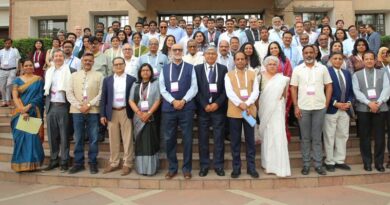
03 September 2026, Ethiopia: The CGIAR Capacity Sharing Accelerator (CapSha) and the CGIAR Multifunctional Landscapes Science Program, with ICRISAT, conducted an international training program on Agroecological/Landscape-Based Natural Resource Management (NRM) for Ethiopian national agricultural research and development partners from 28–31 July 2026 in Arba Minch, Ethiopia.
The training brought together nearly 28 participants from Ethiopia’s Ministry of Agriculture, including representatives from CALM, RLLP and PACT projects; the Agricultural Transformation Institute (ATI); Ethiopian Institute of Agricultural Research (EIAR); Amhara Agricultural Research Institute (APARI); universities including Bahir Dar University, Haramaya University, Hawassa University and Sodo University; GIZ; World Resources Institute (WRI); NGOs including World Vision, Farm Africa, Welthungerhilfe (WHH), RCBDO and TDA; and national think tanks.
Experts from the Indian Council of Agricultural Research (ICAR) and ICRISAT shared Indian experiences and innovations in agroecological and landscape-based approaches to natural resource management, creating opportunities for South–South knowledge exchange and mutual learning.
ICRISAT leadership joined the program virtually, with Dr Himanshu Pathak, Director General, and Dr Stanford Blade, Deputy Director General – Research and Innovation, addressing participants alongside Charles Kleinermann, Leader, CGIAR Capacity Sharing Accelerator, and Dr Cargele Masso, Researcher, Agroecological Livestock Systems, International Livestock Research Institute (ILRI).
“Landscape challenges do not exist in isolation. Land, water, agriculture, ecosystems and livelihoods are deeply interconnected, and our responses must reflect that reality. This training is an important step in sharing practical experience, strengthening scientific capacities and co-creating solutions that can be adapted to local contexts in Ethiopia and across the Global South.” stated Dr Himanshu Pathak, Director General, ICRISAT
The four-day program was designed around a training needs assessment conducted with participants ahead of the event. Emphasizing co-learning, co-creation and mutual knowledge sharing, the training showcased Indian experiences from diverse landscapes, including interventions in Uttar Pradesh; soil and water conservation practices suited to different agroecological conditions; standard operating procedures and methods for capturing key minimum-dataset parameters; and the use of data and evidence to develop decision-support systems for landscape interventions.
The training also provided a platform to explore how experiences from India can inform landscape-based approaches in Ethiopia while encouraging participants to adapt, test and co-create solutions suited to their own ecological and institutional contexts.
“Capacity sharing works best when knowledge moves in both directions. This training brings together Ethiopian and Indian expertise to learn from each other, build lasting institutional relationships and co-create approaches that are grounded in local realities.” Noted Dr Charles Kleinermann, Leader, CGIAR Capacity Sharing Accelerator
Dr Ramesh Singh, Global Research Program Director – Resilient Farming Systems (RFS), ICRISAT; Dr Gizaw Desta Gessesse, Senior Scientist, ICRISAT; and Dr Kumara Charyulu, CGIAR CapSha Accelerator Centre Delegate, ICRISAT, outlined the objectives and expected outcomes of the training.
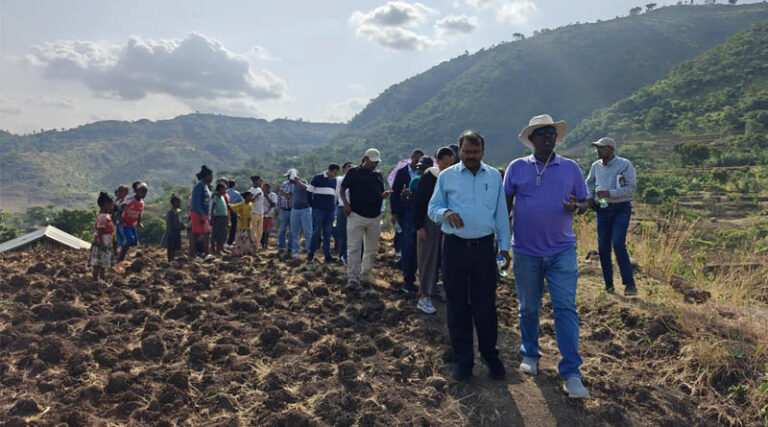
The program combined classroom sessions with field-based learning. Participants visited a landscape/micro-watershed managed with support from GIZ, providing an opportunity to connect technical discussions with on-ground landscape management practices.
The technical team included Dr Kaushal K Garg, Principal Scientist I – Natural Resource Management; Dr K H Anantha, Principal Scientist I – Natural Resource Management; Dr Rohan Khopade, Scientist – Horticulture, and other ICRISAT scientists. shared recent developments and field experiences across a range of areas, including water budgeting and hydrology, ecosystem services, banana value-chain and enterprise models, aerobic composting, biochar preparation, and the development of decision-support systems for landscape interventions.
The training concluded with reflections on the importance of continued collaboration, peer learning and institutional partnerships to strengthen landscape restoration and climate-resilient agricultural systems. Dr Zenebe, CGIAR Multifunctional Landscapes Science Program, joined virtually and congratulated participants on the successful completion of the training.
Global Agriculture is an independent international media platform covering agri-business, policy, technology, and sustainability. For editorial collaborations, thought leadership, and strategic communications, write to pr@global-agriculture.com