Five years of research culminate in the launch of a foliar fertilizer with integrated biofertilizer, delivering yield gains of up to 42.6% across multiple crops in agronomic trials
31 July 2026, Brazil: Brazilian agricultural technology company Agrocete has introduced GRAP MAX MASS, a new foliar fertilizer with an integrated biofertilizer designed to improve nutrient-use efficiency during the reproductive stage of crops. Developed over five years of research, the technology demonstrated yield increases of up to 42.6% in field trials conducted across Brazil and selected international markets.
The launch comes as growers face increasing pressure from higher fertilizer prices and the need to maximize returns from existing nutrient applications. Brazil imports approximately 88% of its fertilizer requirements, making the agricultural sector highly vulnerable to fluctuations in global input markets. Against this backdrop, technologies that improve fertilizer efficiency are becoming increasingly important for sustainable crop production.
According to Agrocete, field evaluations conducted across nine agricultural regions in Brazil recorded yield increases of up to 16.4% in soybean, 42.6% in wheat, 15.2% in rice, 10.7% in sugarcane, 11% in common bean, and 42.2% in potato.
Focus on Nutrient Efficiency During Grain Filling
GRAP MAX MASS combines essential macronutrients with a biofertilizer produced through enzymatic hydrolysis, a process that preserves biologically active L-amino acids. The formulation is designed to support nutrient utilization, photosynthesis, photoassimilate translocation, and grain, fruit, or storage organ filling during the final reproductive stages of crop development.
The product is recommended for soybean, corn, wheat, rice, common bean, cotton, coffee, citrus, sugarcane, potato, and vegetables, with application rates ranging from 300 mL to 1 litre per hectare, depending on the crop and management programme.
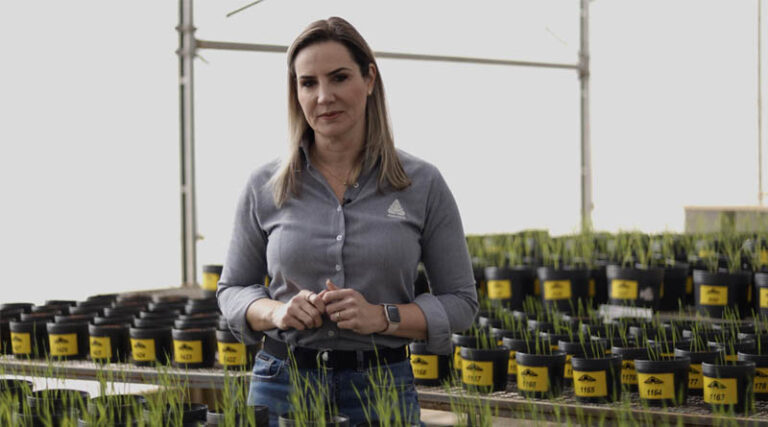
Andrea de Figueiredo Giroldo, Marketing and Technical Development Director at Agrocete, said the objective was not to replace conventional fertilization but to improve the efficiency of nutrients already available to crops.
“The challenge is not to apply more fertilizer, but to ensure that a greater proportion of the nutrients already available is effectively utilized by the plant, especially during the grain-filling stage. GRAP MAX MASS was developed to help growers increase harvest weight and maximize the value generated by their crops.”
Integrated Biofertilizer Technology
According to Agrocete, the product integrates mineral nutrition with a biofertilizer produced through enzymatic hydrolysis, preserving naturally occurring L-amino acids that are readily absorbed by plants. The formulation is designed to enhance metabolic activity, nutrient utilization, and the movement of photoassimilates to developing grains, fruits, and storage organs while also helping crops better withstand abiotic stress during the reproductive stage.
The company also states that the product is compatible with most crop protection products, allowing it to be incorporated into existing crop nutrition, pest, and disease management programmes without requiring additional field operations.
Andrea said the technology was developed to complement conventional fertilizer programmes rather than replace them by improving the efficiency of nutrients already supplied in the field.
Five Years of Product Development
Development of GRAP MAX MASS involved five years of research by Agrocete’s Research & Development and Technical and Market Development teams. During this period, researchers evaluated 127 formulations, with 18advancing to large-scale validation before selecting the commercial formulation. The development programme generated more than 57,000 technical data points through extensive agronomic testing.
The technology was validated across grain crops, fibre crops, tubers, fruit crops, coffee, tomato, and vegetables under diverse production environments in Brazil as well as Uruguay, Panama, and Nicaragua before commercial launch.
Field Trials Show Yield Improvements Across Crops
Soybean evaluations conducted in Paraná showed yield improvements of up to 10 bags per hectare, representing gains of as much as 16.4% compared with commercial standards. Trials in Tocantins also produced the highest thousand-grain weight and highest overall yield among eleven formulations evaluated.
Rice trials in Rio Grande do Sul recorded productivity increases of approximately 2.04 tonnes per hectare (15.2%), while another trial in Tocantins reported gains of 1.07 tonnes per hectare (17%) over untreated plots.
In wheat, field trials in Paraná demonstrated yield increases of 1.29 tonnes per hectare, equivalent to 42.6%, alongside improvements in thousand-grain weight.
Positive responses were also recorded in other crops. Sugarcane trials in São Paulo produced an additional 12.3 tonnes per hectare (10.7%), while sugar yield increased by 400 kilograms per hectare. Common bean trials in Minas Gerais recorded gains of 3.93 bags per hectare (11%), and potato evaluations in Goiás showed tuber weight per plant increasing by 42.2% compared with untreated controls.
Supporting Higher Returns from Fertilizer Investments
As fertilizer costs remain volatile, Agrocete believes improving nutrient-use efficiency will become increasingly important for growers seeking higher productivity without proportionally increasing fertilizer inputs.
“Productivity is not the result of a single application, but rather the outcome of a series of management decisions made throughout the crop cycle,” Andrea said. “GRAP MAX MASS helps transform the reserves accumulated since planting into higher productivity by enabling plants to make better use of available resources.”
Global Agriculture is an independent international media platform covering agri-business, policy, technology, and sustainability. For editorial collaborations, thought leadership, and strategic communications, write to pr@global-agriculture.com