What Does the Red Tip on Bananas Mean?
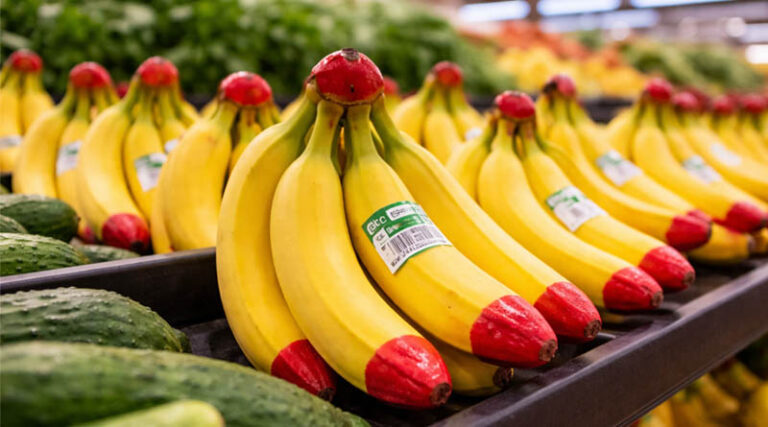
17 March 2026, London: A bunch of bananas with bright red-dipped ends is increasingly catching the eye of shoppers in modern retail stores. The unusual colouring often prompts curiosity and sometimes confusion about whether the fruit is safe, organic, or somehow different from regular bananas.
The answer lies in a simple but deliberate marker used within the banana supply chain.
A Visual Signal, Not a Cosmetic Feature
The red tip seen on some bananas is created by dipping the end of the fruit in a food-grade wax. This is not done for preservation or appearance, but to act as a visual identifier.
In retail environments where loose bananas are often displayed without packaging, such markings help distinguish fruit produced under specific cultivation systems from conventional produce.
According to industry practices, this method allows producers to communicate production standards directly on the fruit without relying on stickers or plastic wraps.
Linked to a Different Growing Approach
Bananas with red tips are typically associated with farming systems that aim to reduce the intensity of chemical inputs while maintaining commercial yields. These systems generally rely on:
- More targeted use of crop protection products
- Biological pest management
- Improved soil health practices
- Efficient input use
While not classified as organic, they are positioned as a lower-input alternative within mainstream agriculture.
What Consumers Should Know
For consumers, the red tip is essentially a point-of-sale indicator, a quick way to recognise that the bananas have been produced differently.
It does not change the taste, shelf life, or nutritional value of the fruit. However, it may influence purchasing decisions for buyers who are increasingly attentive to how their food is grown.
Retailers also see it as a way to simplify communication in stores, where detailed labelling is often limited.
Is the Wax Safe?
Yes. The wax used is food-grade and applied only to the peel, specifically at the tip, which is not consumed. It does not penetrate the fruit or affect its safety.
Not the Same as Organic
One important distinction is that red-tipped bananas are not necessarily organic. Organic certification requires strict compliance with standards that prohibit synthetic inputs. In contrast, the farming systems linked to these bananas allow controlled and minimal use of such inputs, while focusing on sustainability.
A Subtle Shift in Food Labelling
The appearance of red-tipped bananas reflects a broader shift in how food is presented to consumers. Instead of relying solely on packaging or certifications, producers are experimenting with simple, visible cues that communicate production practices instantly.
For shoppers, it means one less label to read—but one more decision to make.
Also Read: India Could Face Sulphur Shortage if Gulf Supply Disruptions Continue, Fertiliser Sector on Alert
Global Agriculture is an independent international media platform covering agri-business, policy, technology, and sustainability. For editorial collaborations, thought leadership, and strategic communications, write to pr@global-agriculture.com