USDA’s Surprise Yield Hike Sends Corn Futures to an Eight-Week Low
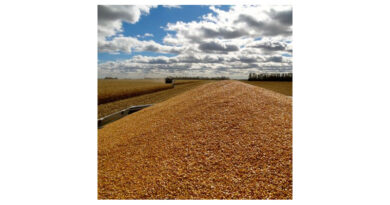
12 October 2026, US: The US Department of Agriculture’s October World Agricultural Supply and Demand Estimates report, released October 9, delivered a sharp surprise to grain markets by raising its 2026 US corn yield estimate rather than cutting it as most analysts had expected, triggering a steep sell-off that pushed December corn futures to their lowest close since mid-August. USDA lifted its average corn yield projection by 2.7 bushels per acre to 181.2 bushels per acre, against trade expectations for a slight reduction to around 177.7 bushels per acre, according to figures reported independently by AgWeb and Farm Progress/Farm Futures.
The yield increase lifted total US corn production by about 234 million bushels to just over 16 billion bushels, still roughly 5.5 percent below 2025’s record harvest but the second-largest crop on record. Ending stocks for the 2026-27 marketing year were raised by 282 million bushels to 1.849 billion bushels, well above the roughly 1.67 billion bushels analysts had anticipated, pushing the stocks-to-use ratio back above the psychologically significant 10 percent threshold to 11.3 percent, up sharply from 9.7 percent in September. December corn futures fell about 20 cents on the day to settle near $4.80 per bushel, down roughly 13 percent from a three-year high touched in early September.
Soybeans and wheat also surprise higher
USDA also raised its soybean yield estimate to a record 53.1 bushels per acre, up from 52.8 bushels per acre in September, again exceeding trade expectations that had called for the figure to hold steady. November soybean futures initially fell to a six-week low before recovering some ground to close modestly higher on the day, as a comparatively smaller demand offset cushioned the production increase. Domestic soybean crush demand held at 2.78 billion bushels, marking a record for the sixth consecutive year, while export demand estimates were also nudged higher. For wheat, USDA raised domestic ending stocks to 740 million bushels even as world ending stocks edged slightly lower to 276 million metric tons; December wheat futures also fell to an eight-week low on the day.
The report’s underlying survey data, drawn from roughly 8,300 producers between September 24 and October 5, arrived against a backdrop of unusually slow harvest progress. Heavy rains across parts of the Corn Belt had limited fieldwork, with corn only 23 percent harvested nationally as of October 4, compared with a 27 percent five-year average, and soybeans at 25 percent against a 33 percent average. Iowa’s corn harvest stood at just 7 percent complete, though the state’s yield estimate held steady at 219 bushels per acre, well above last year’s 210. Nebraska’s yield estimate jumped 11 bushels per acre to 188, and South Dakota rose 6 bushels per acre to 151, among the sharpest state-level revisions in the report.
Brady Huck, principal and adviser at Empower Ag Trading, said USDA’s yield assessment was essentially the inverse of what most traders had positioned for ahead of the release, and noted that the resulting price pullback could draw renewed buying interest from China and Mexico, two of the largest export destinations for US corn and soybeans.
Also Read: Syngenta Launches New Fungicide Kadexa SC in Canada
Global Agriculture is an independent international media platform covering agri-business, policy, technology, and sustainability. For editorial collaborations, thought leadership, and strategic communications, write to pr@global-agriculture.com