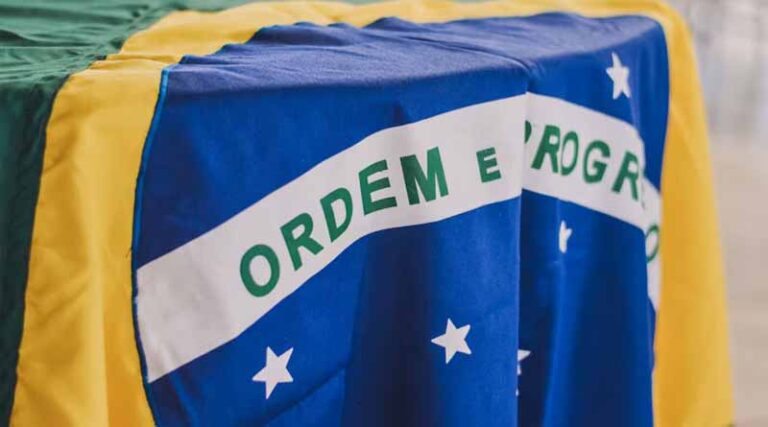
02 November 2026, Brasília, BR: Luiz Inácio Lula da Silva won Brazil’s presidential runoff on October 25 with 51.79% of the vote against 48.21% for challenger Flávio Bolsonaro, according to Brazil’s top electoral court, securing a fourth, nonconsecutive term. Lula had trailed Bolsonaro in the first round of voting on October 4 before overtaking him in the decisive second round.
The result immediately moved currency and commodity markets. Brazil’s real weakened by about 11% against the US dollar following the vote, a swing that lowers the cost of Brazilian soybeans for foreign buyers even as it raises the price of imported fertilizer and other inputs for Brazilian farmers. US soybean futures fell by more than 20 cents a bushel in the immediate aftermath of the result before recovering some of that ground, a move one market analyst described as a headline-driven reaction that gave way within hours to ordinary supply and demand considerations.
A currency swing with trade consequences
A weaker real has historically been a tailwind for Brazilian agricultural exports. Citing data from the US Department of Agriculture, market analysts have pointed to five earlier devaluations, in 1999, 2001, 2009, 2015 and 2021, that each coincided with gains in Brazil’s farm exports. The mechanism is straightforward: a cheaper real lets Brazilian exporters undercut rivals on price while still turning a profit in local currency, even as it adds to the cost of dollar-denominated inputs such as imported potash and urea.
The timing matters for the ongoing contest between Brazilian and US soybean exporters for Chinese demand. China imported 74.6 million metric tons of soybeans from Brazil in 2024 against 22.1 million metric tons from the United States; in 2025, Brazil’s shipments rose to 82.3 million metric tons while US shipments fell to 16.8 million metric tons. The US-China Business Council has estimated that American soybean growers accounted for 1.5 billion dollars of the 9.2 billion dollars in US agricultural export losses recorded in 2025. Under the trade truce struck between Washington and Beijing, China is expected to purchase roughly 25 million metric tons of US soybeans, a commitment market analysts say is likely to be met regardless of the election outcome, though a weaker real strengthens Brazil’s hand in competing for any volumes beyond that floor.
Brazil’s politically influential farm lobby had backed Bolsonaro. The Ruralist Caucus in Congress, which represents agribusiness interests and wields substantial influence over farm policy, supported his candidacy, and his loss is widely seen within the sector as a setback for a bloc that has shaped legislation on land use, pesticide regulation and rural credit for more than a decade.
Not all agribusiness voices framed the result as a crisis. Lucas Costa Beber, president of the Mato Grosso soy growers’ association Aprosoja-MT, said the election result should be respected and argued that the incoming government needs to focus on the country’s broader economic health rather than output alone. Ingo Ploger, president of the Brazilian Agribusiness Association, said producers want the new administration to prioritize production costs, access to inputs, rural development and competitiveness, pressures that have mounted on Brazilian farmers already carrying high debt loads and facing elevated interest rates.
Lula’s Workers’ Party has signaled it will emphasize social program spending, land redistribution and environmental protection in its approach to rural policy, though the specifics of any changes to export taxation or trade negotiations, including the long-pending EU-Mercosur agreement, have not yet been detailed.
The political aftermath has extended beyond policy. US President Donald Trump questioned the legitimacy of the vote, calling it “another rigged election” without providing evidence, while saying he had not endorsed either candidate and that he gets along well with Lula. Flávio Bolsonaro has since left Brazil for Miami with his family, as Brazilian authorities seek to secure his passports as part of ongoing investigations.
Global Agriculture is an independent international media platform covering agri-business, policy, technology, and sustainability. For editorial collaborations, thought leadership, and strategic communications, write to pr@global-agriculture.com