Corn Is Offering a Surprising Solution
Replacing the petroleum in 10% of the world’s plastics with corn-based feedstocks could create 6.6 billion bushels of demand.
07 September 2026, US: For generations, farmers have grown corn to feed people and livestock. For decades, it has also fueled vehicles. Today, research and manufacturing innovation is creating even more opportunities for corn in surprising places, like bioplastics and other biobased products
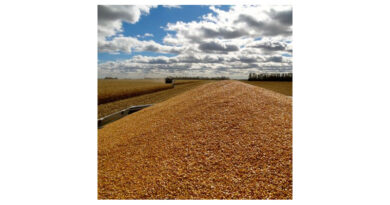
And corn growers need new markets. Even with record exports so far this marketing year, there’s extra supply – and likely more to come with continued advancements in genetics and technology.
Corn-based inputs have a huge opportunity in biomanufacturing, replacing traditional chemicals and materials produced from fossilized sources. This shift is already underway as many manufacturers work toward more renewable, non-fossilized alternatives.
How big is this opportunity?
The global plastics market, just one sector of products where corn could solve the fossil-based inputs problem, is an economic giant. Plastics – used in everything from household items to packaging, and beyond – represent a world of potential for corn and corn-based ethanol as feedstocks to make the shift to a biobased economy.
As consumers continue to search for renewable and sustainable materials, the sustainable corn U.S. farmers already produce can meet that demand. Replacing petroleum in just 10% of the world’s plastics market would lead to 6.6 billion bushels of new demand every year. And plastic is not the only potential use. Corn-based feedstocks can be used to improve sustainability for everything from cosmetics to automotive parts.
Farmers like Tyler Oliver from Virginia recognize the demand for a more sustainable product that helps the environment. “Bioplastics are not only a sustainable choice for the environment but also create an additional market for the American farmer to grow corn for a sustainable future,” said Oliver, who serves on NCGA’s Research & New Uses Action Team. “There’s nothing I love more than seeing a product that is 100% biobased and made from U.S. corn!”
What kind of products can be biobased?
The sky’s the limit. Nearly anything that’s made today using a carbon chain – often with a nonrenewable feedstock like petroleum – could be replaced with a corn-based alternative. In fact, corn, often first converted to ethanol, can then become an identical molecule to today’s plastics, providing a sustainable, resilient product with the same functional properties.
A few possible uses include…
- Diapers, maximizing absorbency with biobased, instead of petroleum-based, acrylic acid.
- Carbon fiber, which can be used in the shell of cars and tractors.
- Face creams with hyaluronic acid are popular as moisturizers. Biobased hydrocolloids do an even better job locking in moisture.
“In recent times of upended supply chains, a need to diversify the makeup of our everyday products has emerged. Bioplastics made from corn present an exciting opportunity to do just that,” explained Michael Dibbern, who farms in Nebraska and serves on the Research & New Uses Action Team. “Nearly every product one can think of that is made of common plastic can be made with corn-based bioplastic.”
What still needs to happen?
Biobased products need to compete on both price and function with existing petroleum-based products in the marketplace. On function, corn-based feedstocks already provide identical or near-identical benefits.
- Investment across research and development helps identify and scale high-volume uses for corn, helping innovative companies overcome the “valley of death” and demonstrate proof of concept as they grow.
- Policies that support growth of plant-based feedstocks will expand infrastructure and incentivize scaled production, addressing cost concerns.
- A market-driven strategy to build awareness and adoption of corn in this market will help increase demand for corn and corn-based products.
As awareness and adoption grows, this surprising solution to replace petroleum with plant-based, non-fossilized corn feedstock in everyday products may even command a premium price.
The Bottom Line
“Corn-based bioplastics and other biobased materials are possibly the most exciting new demand potential for our corn industry,” said Minnesota farmer Nick Peterson, who also serves on NCGA’s Research & New Uses Action Team. “The variety and scope of the products we will produce is in fact the biggest strength of this industry and will provide the greatest market elasticity.”
Also Read: Syngenta Welcomes Trevor Watson As Turf Territory Manager For Mid-atlantic And Northeast Region
Global Agriculture is an independent international media platform covering agri-business, policy, technology, and sustainability. For editorial collaborations, thought leadership, and strategic communications, write to pr@global-agriculture.com