High Yielding Paddy Variety: Pusa Basmati 1886
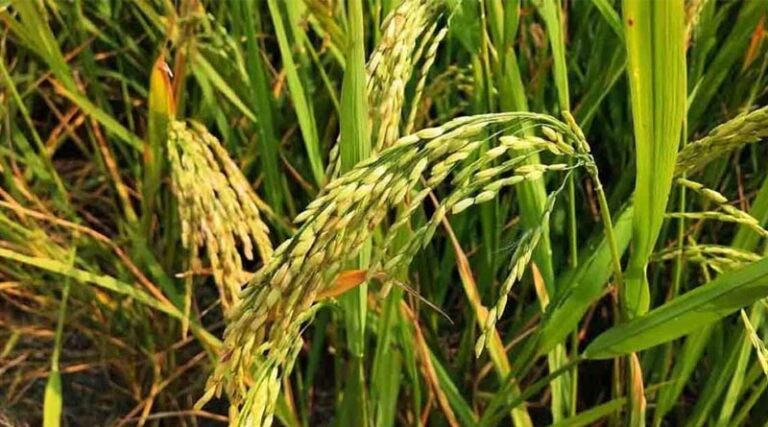
30 May 2026, New Delhi: Pusa Basmati 1886 is a remarkable high yielding paddy variety developed through Marker-Assisted Selection (MAS) at ICAR-IARI, New Delhi. It is a near isogenic line (NIL) of the widely popular Basmati rice variety Pusa Basmati 6. What makes this variety particularly significant is its inbuilt resistance to two of the most devastating diseases of rice — bacterial blight and blast — while retaining all the premium grain quality traits that have made its parent variety famous. Pusa Basmati 1886 is recommended for cultivation in the Basmati GI growing regions of Haryana and Uttarakhand.
Disease Resistance: A Game Changer
One of the most critical advantages of Pusa Basmati 1886 is its dual disease resistance. The variety carries two genes for bacterial blight resistance — xa13 and Xa21 — and two genes for blast resistance — Pi54 and Pi2. This multi-gene resistance significantly reduces the risk of yield losses due to these diseases and allows farmers to avoid the heavy use of antibiotics and fungicides, thereby reducing input costs and improving the sustainability of production.
Agronomic and Quality Profile
Pusa Basmati 1886 is a semi-dwarf, non-lodging, and non-shattering Basmati variety with seed-to-seed maturity of 143 days. Nursery transplantation is recommended between June 1 and June 15. With an average yield of 4.49 t/ha and a plant height of 95 cm, it is well adapted to the transplanted irrigated ecosystems of northern India. The grains are extra-long slender (7.77 mm) with excellent kernel elongation on cooking (15.21 mm), intermediate amylose content (23.71%), strong aroma, and no grain chalkiness.
Quick Reference Table
| Parameter | Details |
| Variety Name | Pusa Basmati 1886 |
| Type | MAS-derived NIL of Pusa Basmati 6 |
| Developed By | ICAR-IARI, New Delhi |
| Yield | 4.49 t/ha |
| Plant Height | 95 cm |
| Nursery Days | 21 days after sowing |
| Sowing Date | June 1 to June 15 |
| Maturity Date | October 20 to November 5 |
| Days to Maturity | 143 days (seed to seed) |
| Bacterial Blight Resistance Genes | xa13, Xa21 |
| Blast Resistance Genes | Pi54, Pi2 |
| Kernel Length (Before Cooking) | 7.77 mm |
| Kernel Length (After Cooking) | 15.21 mm |
| Amylose Content | 23.71% (Intermediate) |
| Aroma | Strong |
| Recommended States | Haryana, Uttarakhand |
Global Agriculture is an independent international media platform covering agri-business, policy, technology, and sustainability. For editorial collaborations, thought leadership, and strategic communications, write