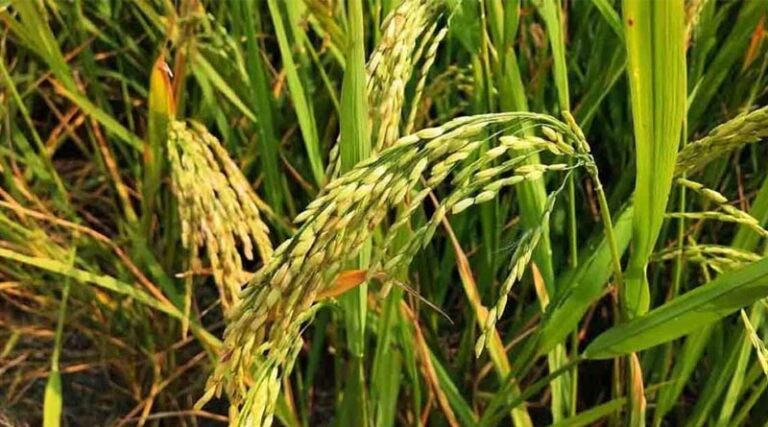
High Yielding Paddy Variety: Improved Pusa Basmati 1
30 May 2026, New Delhi: Improved Pusa Basmati 1 holds the distinction of being the first product of molecular breeding in rice in India, marking a historic milestone in the application of biotechnology to crop improvement. Developed through a collaboration between ICAR-IARI and the National Research Centre on Plant Biotechnology (NRCPB), this high yielding paddy variety was officially released in 2007 by CVRC. It is recommended for Basmati growing areas across Punjab, Haryana, Delhi, Western UP, Uttarakhand, and Jammu & Kashmir.
A Landmark in Indian Rice Breeding
While Pusa Basmati 1 was acclaimed for its grain quality and productivity, it was susceptible to bacterial leaf blight. Scientists at IARI used marker-assisted backcross breeding to introgress bacterial leaf blight resistance genes into the Pusa Basmati 1 background — creating Improved Pusa Basmati 1 without altering its valued grain quality traits. This paved the way for the entire family of MAS-derived Basmati varieties that followed.
Key Features
Improved Pusa Basmati 1 retains all the characteristics of Pusa Basmati 1 — its semi-dwarf plant type, excellent grain quality with soft texture and pleasant aroma, and suitability for multiple cropping systems in northern India — with the critical addition of resistance to bacterial leaf blight disease.
Quick Reference Table
| Parameter | Details |
| Variety Name | Improved Pusa Basmati 1 |
| Type | Molecular Breeding (MAS) derived from Pusa Basmati 1 |
| Developed By | ICAR-IARI & NRCPB, New Delhi |
| Year of Release | 2007 |
| Released By | CVRC |
| Plant Type | Semi-dwarf |
| Key Improvement | Bacterial Leaf Blight Resistance |
| Aroma | Strong (Basmati) |
| Historical Significance | First molecular breeding product in rice in India |
| Recommended States | Punjab, Haryana, Delhi, Western UP, Uttarakhand, J&K |
Global Agriculture is an independent international media platform covering agri-business, policy, technology, and sustainability. For editorial collaborations, thought leadership, and strategic communications, write