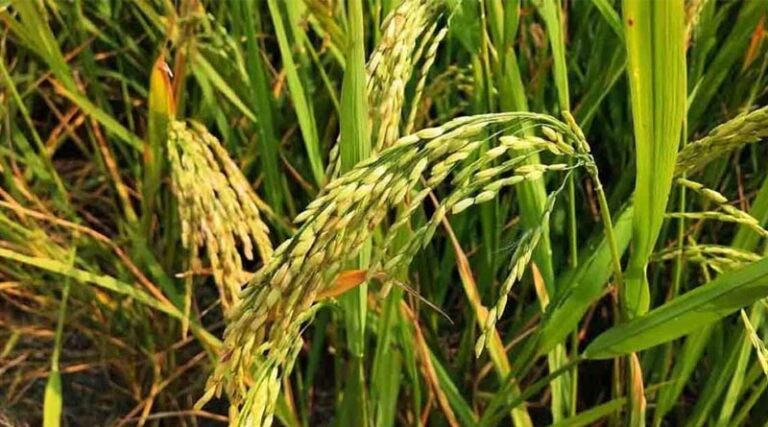
High Yielding Paddy Variety: Pusa Basmati 1692
30 May 2026, New Delhi: Pusa Basmati 1692 is a high yielding paddy variety developed at ICAR-IARI, New Delhi, that stands out for its exceptionally short seed-to-seed maturity of just 110 to 115 days. Recommended for the Basmati GI growing regions of India, this early-maturing variety is particularly suited to the rice-wheat cropping system, where timely paddy harvesting is critical for enabling timely wheat sowing.
Early Maturity: A Strategic Advantage
The 110–115 day maturity of Pusa Basmati 1692 allows farmers in the Basmati belt — Punjab, Haryana, Delhi, Western UP, and Uttarakhand — to harvest their paddy crop earlier, leaving sufficient time for land preparation and wheat sowing within the optimal planting window. This timely clearance also supports the reduction of stubble burning, contributing to improved air quality in north India during the critical October–November period.
Yield and Agronomic Features
Pusa Basmati 1692 delivers an impressive average yield of 20.0 to 24.0 quintals per acre (approximately 5.0 to 6.0 t/ha) in just over 110 days, representing outstanding per-day productivity. Its semi-dwarf, non-lodging, and non-shattering characteristics ensure this high yield potential is fully realised at harvest without losses. The seed requirement is modest at 5 kg per acre for transplanted cultivation.
Quick Reference Table
| Parameter | Details |
| Variety Name | Pusa Basmati 1692 |
| Developed By | ICAR-IARI, New Delhi |
| Yield | 20.0–24.0 q/acre (approx. 5.0–6.0 t/ha) |
| Days to Maturity | 110–115 days (seed to seed) |
| Plant Type | Semi-dwarf, Non-lodging, Non-shattering |
| Seed Requirement | 5 kg per acre |
| Cultivation Type | Irrigated Transplanted |
| Environmental Benefit | Supports stubble burning reduction |
| Cropping System | Ideal for Rice-Wheat Double Crop |
| Recommended Area | Basmati GI Growing Regions of India |
Global Agriculture is an independent international media platform covering agri-business, policy, technology, and sustainability. For editorial collaborations, thought leadership, and strategic communications, write