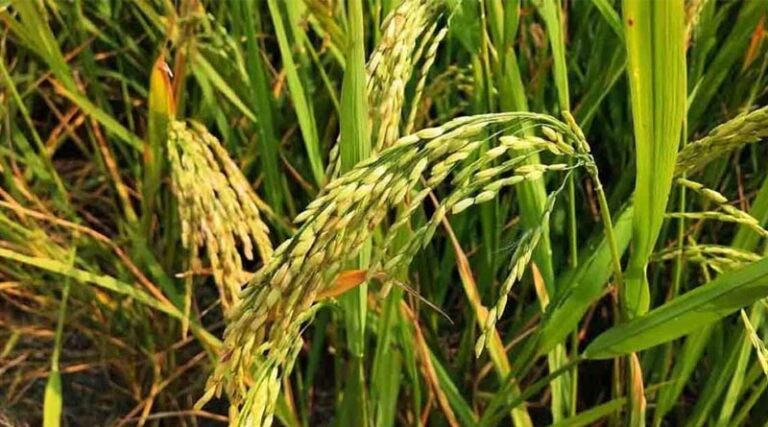
High Yielding Paddy Variety: Pusa Basmati 1718
30 May 2026, New Delhi: Pusa Basmati 1718 is a high yielding paddy variety recommended by ICAR-IARI, New Delhi, for cultivation in the Basmati-growing states of Delhi, Punjab, and Haryana. Bred for irrigated transplanted conditions, this variety is particularly valued for its resistance to bacterial leaf blight, making it a dependable choice for progressive farmers in the region.
Agronomic Traits
Pusa Basmati 1718 is a medium-duration Basmati rice variety that reaches harvestable maturity in approximately 136 to 138 days after sowing. For transplantation, the seed requirement is 5 kg per acre, and the recommended spacing is 20 cm row-to-row and 20 cm plant-to-plant. This spacing encourages healthy tiller development and reduces competition among plants.
Yield and Disease Resistance
Pusa Basmati 1718 delivers an average yield of 18 to 20 quintals per acre. Its resistance to bacterial leaf blight (caused by Xanthomonas oryzae pv. oryzae) reduces the need for antibiotic sprays, lowering input costs and improving food safety by reducing chemical residues on grain intended for export.
Quick Reference Table
| Parameter | Details |
| Variety Name | Pusa Basmati 1718 |
| Developed By | ICAR-IARI, New Delhi |
| Cultivation Type | Irrigated Transplanted |
| Yield | 18 to 20 q/acre |
| Days to Maturity | 136 to 138 days after sowing |
| Seed Requirement | 5 kg per acre |
| Transplanting Spacing | 20 cm × 20 cm |
| Disease Resistance | Resistant to Bacterial Leaf Blight |
| Recommended States | Delhi, Punjab, Haryana |
Global Agriculture is an independent international media platform covering agri-business, policy, technology, and sustainability. For editorial collaborations, thought leadership, and strategic communications, write