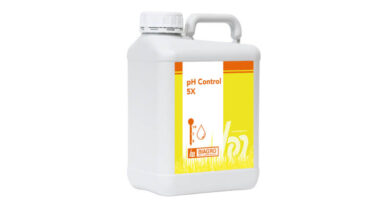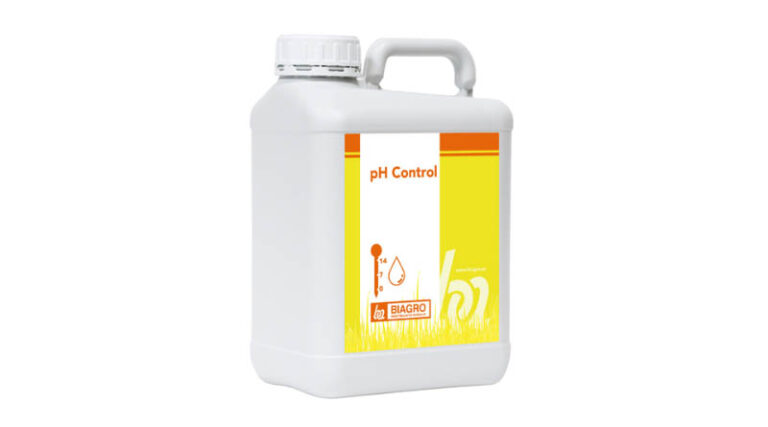
pH Control — NP Solution
02 August 2026, Valencia: Water pH plays a foundational, though often underappreciated, role in determining how effectively fertigation and foliar-applied nutrients actually perform once they reach the crop. Alkaline irrigation water, common across many agricultural regions, can compromise the solubility and stability of numerous nutrients before they ever reach plant roots or leaf surfaces, while also potentially reducing the efficacy of various crop protection products applied through the same water source. pH Control was formulated specifically to address this foundational water chemistry challenge, offering a liquid, phosphorous-based product designed to lower the pH of irrigation and spray water solutions.
The product’s phosphorous salt-based formulation approach to pH reduction reflects a practical, dual-purpose strategy: rather than using a purely acidifying compound with no additional agronomic value, pH Control’s phosphorus content contributes genuine nutritional benefit alongside its primary pH-adjustment function. Phosphorus supports critical energy transfer processes throughout the plant and plays a particularly important role during periods of active cell division, meaning growers using pH Control to manage water chemistry are simultaneously supplying a nutrient with independent agronomic value, rather than simply neutralizing water alkalinity through an agronomically inert acidifying agent.
Alkaline water conditions create several practical challenges relevant to fertigation and foliar spray program effectiveness. Many micronutrients — including iron, zinc, and manganese — become considerably less soluble and available under high-pH conditions, meaning fertilizer products containing these elements may deliver reduced actual nutrient value when mixed with unadjusted alkaline water compared to their performance in water with more favorable pH characteristics. Additionally, various crop protection products, including certain fungicides and insecticides, can experience accelerated chemical breakdown under alkaline conditions — a phenomenon known as alkaline hydrolysis — potentially reducing the effective residual activity and overall efficacy of these products when mixed with untreated alkaline water sources.
By actively lowering water pH before it’s used to mix and deliver other fertigation or spray products, pH Control helps establish more favorable chemistry conditions for the broader nutrition and crop protection program a grower is implementing, supporting better solubility and stability for the various products being applied through that treated water. This foundational water chemistry management represents a practical, often overlooked lever for improving overall program effectiveness across essentially all products subsequently mixed and applied through the treated water source, rather than requiring reformulation or adjustment of each individual product separately.
Growers managing irrigation water sources with known alkalinity challenges — a common characteristic across many agricultural regions, particularly those relying on groundwater sources with naturally high bicarbonate content, or surface water sources in limestone-influenced watersheds — often incorporate a water pH management product like pH Control as a standing, foundational component of their fertigation program, treating water pH before subsequent nutrient and crop protection products are introduced, rather than addressing water chemistry issues only reactively after observing reduced efficacy from their broader nutrition and protection program.
Practically, pH Control’s liquid formulation is designed for straightforward integration into fertigation systems, applied to adjust water pH ahead of or in conjunction with the broader range of nutrition and crop protection products a grower’s program includes.
For growers working with alkaline irrigation water sources, pH Control offers a practical, dual-benefit solution — establishing more favorable water chemistry conditions for the broader fertigation and spray program while simultaneously contributing genuine phosphorus nutrition, helping ensure the rest of a grower’s nutrition and crop protection investments deliver their full intended value rather than being undermined by unfavorable underlying water chemistry.
Also Read: Bayer Launches New Insecticide Trance for Cotton in India
Global Agriculture is an independent international media platform covering agri-business, policy, technology, and sustainability. For editorial collaborations, thought leadership, and strategic communications, write to pr@global-agriculture.com